I just can't bring myself to feel the author's anger, in any capacity. He wants to position this as a jab against those who build their own PCs, but that is utterly irrelevant. What percentage of those 600 million five-year-old PCs do you really think are being thoughtfully maintained by modders? Does the author realize that most people do not want the responsibility of maintaining their own hardware? Or that they don't have the knowledge to do so?
Allow me to paint a more realistic picture: many of those PCs are junky, dusty boxes, running some outdated version of windows, filled with bloatware and riddled with security issues. Inside them are a bunch of spinning platters just waiting to fail. And when they do eventually fail (due to wear, or a virus, et al), someone's Grandmother is going to be shit out of luck, with no way to get at her email, saved photos, or anything else.
A properly configured iPad, leveraging iCloud for device backups, photo backups, email credentials etc, solves all of these problems. And they'll even configure the iPad for you in the store, so grandma doesn't need to know how to do any of it. Do YOU want to be the poor sap attempting data recovery on a failed disk, then realizing that even if you do recover grandma's data, you've still got to go buy a replacement drive, find a copy of windows that grandma knows how to recognize, and install everything exactly as it was before you got there? I've been that guy before, in both a personal and professional capacity. You will eventually fail, memories will be lost, tears will be shed.
We must not gloss over the fact that the iOS ecosystem does solve some very real pain points for real people.
I have two 10-year old PCs in active use on my desk right now - both are running Windows 10, one is playing back Netflix right now while I type this on a third (brand new) machine.
The kicker? Those two 10-year old "PCs" are actually MacBooks. They still run fine & do everything I need those machines to do - but I had to install Windows 10 on them, because Apple stopped supporting their own hardware. A machine that maxed out at Snow Leopard is capable of running Windows 10... I think that says something about the way Apple now treats its customers.
I don't think it's fair to expect Apple to support 32-bit processors anymore. OS X will run on Core2Duo, which is nearly 10 years old. My parents' iMac is a 2006 and runs El Cap.
I think it's understandable, but also interesting when juxtaposed with Microsoft still making 32-bit versions of Windows 10 in 2016. They're supporting the same hardware that Apple won't, and also an additional 10 years of security updates (Windows 10 End-Of-Life for those 32-bit machines is October 14, 2025 [1]).
I also have a 64-bit Core 2 Duo that Apple no longer supports. OS X Lion was the last release for the 2007 MacBook 3,1.
It is interesting, but perhaps it doesn't mean much in the end. All it really signifies is that Macbooks are PC-compatible. Microsoft is under a lot more pressure to support 32-bit processors, as they're still kicking around - Apple meanwhile only have to support their own hardware.
I would also say that Microsoft's End-Of-Life security update promises mean a lot less now that they've demonstrated willingness to subvert that system to force-upgrade people.
stop denying apples active agency in their policies and cultivated culture...
they are actively pro-consumerism
they are actively pro-waste
they actively don't care about your slighly older product.
you are advocating holding them to a lesser standard of culpability and support than M$ and I find it ridiculous.
There's a palpable issue here. One shouldn't try to deny it.
I don't understand what you mean. Are you saying that Apple doesn't support their customers well because they don't spend time writing software for 10 year old hardware?
> Are you saying that Apple doesn't support their customers well because they don't spend time writing software for 10 year old hardware?
This isn't even close to what he said, and it only makes sense if you have an extremely reductive black-and-white view of the world. There are places on the spectrum between "perfect support" and "absolute shit support", and the phrase "count against" simply implies that supporting decade old hardware is a notch higher than the same support setup without that advantage.
Once you have cross-platform support, keeping it is not very hard. And most of their code works on 32-bit Arm. So it would not be an unreasonable burden.
Computers have slowed down. Basic support for for 10 years is not a crazy idea.
You cannot have 100% platform support of 100% quality 100% of the time. Compromise has to be made. If you're not making an explicit compromise by mercilessly cutting platform support, you're implicitly compromising schedule and quality. Apple have always been the best by far at prioritizing quality, and making hard choices, well above and beyond anybody within any industry they enter. They have always fixed the most painful problems first, and leaving the less important ones to later or never. They are willing to leave a gap in their lineup for two or three quarters because an SKU would fail some obscure quality metric[1][2]. Even so, thy have already had some unpleasant bug creep over the past few years[0]. It's not like they are leisurely coasting and twiddling their fingers — had they been supporting old hardware, software on new hardware would have been measurably worse.
>had they been supporting old hardware, software on new hardware would have been measurably worse
Might not have been measurable, and might just cost an extra engineer without really harming anything.
If they had gone 64-bit-only, I'd be much more in agreement with you. But if you're still supporting a 32 bit platform, you have a lot of restrictions put on you, and the marginal cost of keeping support for a second 32 bit platform is not a big deal.
You vastly underestimate both how different these old systems are, how many resources it takes to support every additional platform, that the burden increases non-linearly, and what kind of weird release-blocking bugs those extra platforms may introduce, delaying fixes and hogging resources.
At minimum, slow systems require gracefully degrading GUI, which increases complexity by an order of magnitude. The graphics card capabilities are a much better first approximation than the word width.
If it took just a few extra engineers, or a few thousand, to fix the bugs that they have, Apple would have done it. The Mythical Man-Month, and all that.
They still support slow systems, just ones that happen to be 64 bit. You're being ridiculous when you say a few thousand engineers couldn't do it. This could be almost completely separate from ongoing development. man-month would not be a problem.
This. The computer that by far gets the most use in my house is a 2009 Mac Book Pro. I've upgraded the hard drive to an SSD so it's still quite snappy. The monitor is still bright and colorful. All the keyboard keys still have good action. The mouse pad physical click is the only thing that has fizzled out and I could fix that for $100.
So yeah, it doesn't look great when Apple says "replace your 5 year old computer" but as a whole, they do a great job of making products that last. Also, news flash, they are in the business of making money.
They used to. Retina Macbooks? Zero upgrade path. Can't even replace the batteries in them without risking your life. And eventually Apple stop providing battery replacements, and your machine is dead.
My PC, however, has components that are oh, 10 years old? Sure, it has a 1-year old motherboard, CPU, 3 year old RAM, a 2 year old GPU, and a mix of SSDs and HDDs, but the case I bought in 2006, as with my MX518 mouse.
This kind of longevity of components is good for us. Throwing out your appliance every 5 years because Apple decided to solder RAM instead of sacrifice 1mm of thinness and provide a slot is good for Apple, and Apple alone.
Most likely you can fix the trackpad click quite easily yourself.
There are some annoying 3-wing screws holding the battery but besides that there isn't much in the way.
There's one single screw that sets the trackpad's click sensitivity. I loosened the click even during the warranty period because it was too strong (and loud) for my taste.
A tiny bit of rotation and ideally loctite to fix it.
Yup, had this with my 2006 MacBook, and a new battery fixed it.
(Incidentally, when I last went to buy a replacement battery from an Apple Store, they wouldn't let me install it myself even though the polycarbonate MacBooks had user replaceable batteries. They insisted I bring in my MacBook and leave it with them overnight to have a Genius install it. I ended up cancelling it and getting a NewerTech battery replacement, which is both cheaper & has better battery life than the Apple model.)
Interesting. I have a mid-2011 iMac. I ran Win 7 in Bootcamp for a few years until upgrading to 8.1 last month because Apple said Windows 10 wasn't supported on my machine.
I have two issues that can be worked around (this is for the 2006 MacBook 1,1, which requires Windows 10 32-bit). The first is that the Apple Bootcamp drivers refuse to install under Windows 10 due to Apple blocking it - I had to modify the install to bypass the Windows version check.
The main glitch is that the backlight doesn't always activate on login. The first Windows logo appears, but at login the brightness is set to zero. I can type in my password, hit enter & then the backlight activates on logging in. So it's just a glitch, but it is annoying, and I wish either Apple or Microsoft would fix it.
Otherwise, it's fine and everything else seems to work - Boot Camp Assistant works, and even the Apple Remote works to control volume. I don't think I've tried the webcam though. But I have got Cortana to work (even on a 10 year old MacBook!) and it's been fun calling out across the room to ask it questions. It's a little fiddly to get running, but it definitely works.
Have you ever tried to do any multimedia application or driver development on windows? What a friggen nightmare compared to OSX. That support for old machines comes at a price.
Edit: that said I am a little sad Im gonna have to do something about my 2007 mac mini now that chrome is ending support for lion.
I guess it depends on the interpretation of Phil Schiller's statement.
You are basically arguing "for many people an iPad is a better computing device than a PC because there is less that can go wrong with it". Which I think is a very valid point, however it does not hinge on how old these PCs are - your argument works just as well for new PCs without properly configured backups and anti-virus protection.
If you read Phil Schiller's statement in this way - "it is sad that many people are using PCs which were better off using iPads" - then one might still disagree, but it is not offensive, especially coming from an Apple executive. :)
What the author of the article finds offensive - and which also put me off when watching the live presentation - was the suggestion that using old hardware is "sad". When you read Phil Schiller's statement as "it is sad that many people are still using five-year-old hardware" (which was my first interpretation as well) it really reads like advocacy for blind throw-away consumerism. Which also makes a mockery out of the picture Apple was trying to paint just 30 minutes earlier during the same presentation: That Apple products are built to last so that you do not have to throw them away every other year to replace them with something new because they stop receiving upgrades, their hardware fails, etc. (Which, unlike the author, my experience by the way supports - my old iPhone, old iMac and old iPad still work flawlessly, especially when I compare them to the number of Android / PC devices my friends have already rotated through in the same time period.)
> What the author of the article finds offensive - and which also put me off when watching the live presentation - was the suggestion that using old hardware is "sad".
Using old hardware is sad. I work in a depressed area and we constantly fix our students computers. 5 years is a long time on a hard drive and the forced Windows 10 upgrade has been a pain to people on 5 year old hardware. Its fine for technical people, but for the nontechnical that HD failure is devastation. Having your stuff stored on iCloud or the Google equivalent is a life saver.
The economics of apps on iOS and Chrome while painful for developers are great for normal people. With the better security and lessened management requirements, these computers make a fairly good replacement case. Technical people often forget what a pain in the butt Windows, OS X, and BSD/Linux are to maintain. Also, the iPads are lasting a fair bit (making for some interesting iPad sales numbers).
Chromebooks are viable, and if Apple sold an Apple TV with a keyboard and mouse (or other pointing device) that had Pages, etc., I would recommend that. As is, iPads are fine. Heck, if Microsoft had got their stuff together a Microsoft Continuum[1] style device would be great.
Plus, the author is using the "I have an agenda and will be twisting your word" version of a quote. I'm a bit sick of people pulling this stunt since its wall to wall in election coverage.
That's actually how I took the comment. Granted, I read a live blog instead of watching the stream so maybe the author missed a part of it, but what I took away from the comment was "we at Apple are failing to show the value of replacing an old PC with an iPad".
Its also sad for our support people and the owners trying to keep some of these machines running. It takes time that they could be using elsewhere since they don't really want to learn how to fix the computer, they just want to drive.
This is a great point as well, and I wish I did a better job articulating that in my own comment.
Ultimately, there is nothing noble about "good hardware" in a vacuum. Hardware and software can achieve nobility only when they're serving humanity, be them rich or poor, technical or non-technical.
yes, forgive us for trying to resolve an essential issue of how our tech isn't green nor is there lifecyle management even on the horizon...
i see that apple and their ilk are expressing pure altruism.
because that's what consumers need, more convenience...
well, Apple has created a good deal of inconvenience, what with iTunes confusing "management" of all iOS devices and all... but god forbid anyone be inconvenienced on the way to the cash register...
> yes, forgive us for trying to resolve an essential issue of how our tech isn't green nor is there lifecyle management even on the horizon...
Compared to the machines I see, Apple tech is green and recyclable.
> i see that apple and their ilk are expressing pure altruism.
Nobody said that, but you go with the hyperbole
> because that's what consumers need, more convenience...
Yes, they do. Time spent on computing maintenance is time they could be spending getting work done or trying to learn something new.
> well, Apple has created a good deal of inconvenience, what with iTunes confusing "management" of all iOS devices and all..
The people here with iPads and iPhones don't use iTunes at all. It might be a crappy experience, but it is avoidable.
> but god forbid anyone be inconvenienced on the way to the cash register...
People want stuff that just works. Forcing people to invest time to fix and learn arcane things is not a solution and impacts poor people's ability to do things. They don't have the spare time or resources.
Nope. The Mac mini is more expensive ($499 versus $149) and harder to maintain. Apple spends quite a bit of time on self managing. I'm hoping Apple or one of the Android devices will fill this niche. I keep looking, but all I keep seeing are failed kickstarters.
>A properly configured iPad, leveraging iCloud for device backups, photo backups, email credentials etc, solves all of these problems.
The iPad first came out in 2010. How many of those iPads are still being used? The original iPad can't even run the latest iOS anymore, while you can still load Windows 10 on five-year-old PCs, or many modern versions of Linux.
To add to your grim picture, those PCs that came out five years ago were starting to get Windows 7 installed by default. Maybe in the time since, people owning those PCs didn't upgrade to Windows 8 because of the cost, but Windows 10 was released as a free upgrade to Windows 7 users. Either way, Windows 7, 8 and 10 are still receiving security updates, and Windows 7 still looks and feels like a modern operating system.
Also, buying a replacement drive and copy of windows will still come out a lot cheaper than buying an iPad, and with an iPad there's no way in hell you're going to "install everything exactly as it was before you got there".
I've got an original iPad still in (occasional) use. Kids still play on it. They're frustrated when various apps or app updates won't install, because it's stuck on iOS 5.5 for many years now (since 2.5 years after release), but we've got cheap Android devices that almost always can do what they want.
At some point, we'll probably get a newer iPad - almost snagged an iPad mini 2 at Black Friday prices, but meh. No compelling use cases for our too-many-devices-already family.
Laptops for most work. Chromebook is really popular for getting school internet stuff done. Android devices and an iPod Touch for entertainment. New iPad would be solidly in the "entertainment" category.
Yes, this is the moment in the post when he moves the goalposts:
> I also own a desktop PC that’s five years old. I haven’t upgraded that either. Why? Because it’s a desktop PC: I can pull out parts and replace them with newer versions as they age. I don’t need a wholesale upgrade.
In the course of 3 sentences the standard went from "upgrade" to "wholesale upgrade", which is of course not what Phil Schiller said. A PC that has had a bunch of new parts installed is not what Schiller was talking about.
That said, I largely agree with the author that it was a dumb thing for Schiller to say. It doesn't make any point about the iPad Pro, and it makes Apple look like they are mocking people who can't afford their products--never a good look for any company, and undercuts the "doing good" message the rest of the keynote attempted to deliver.
> I just can't bring myself to feel the author's anger
I wouldn't go as far as saying that I'm angry or shocked by Phil Schiller comment but I too find it a bit condescending.
First, many people are happy with their 5-years+ hardware because it still works.
Second, there are people that unfortunately can't afford new hardware (schools, developing countries), and I don't think Apple is in the business of helping them.
I think the "price of being poor" is a thing to be considered here as well. Similar to the boots theory[1], I've seen my mother in law spends hundreds of dollars every year on support with Dell, and other people to keep her crappy old Windows machine running. It truly is sad, to pay someone $300 to fix a machine that's worth less than that but what is her option? Honestly, she would be much better off with an iPad for playing Youtube videos and getting email.
If youtube and e-mail is her use case, she doesn't need that crappy old Windows machine or a new $600 iPad, she needs something like a Samsung Galaxy Tab 4 (about $150) or if the physical keyboard is important, an ASUS Transformer book ($250). There are also Chromebooks from Acer, HP, Samsung, Lenovo, etc. for under $200. All cheaper than the $300 she's paying to repair the old Dell.
I think that's a big piece of what makes the original quote from Apple seem so off-putting. They don't create hardware that's at a reasonable price point for people who are struggling with their crappy old Dell and keep paying the guys at Best Buy $300 to keep it running for another year. Your MIL has a lot of good options that she could try, but none of them are from Apple, and they give no indication that they plan to change that.
You are right that iOS could solve pain points for some of these customers, but then THAT is how Apple should sell people on it. That's what their marketing of old was like. Insulting those people does no one any good. Most likely the people running the types of PCs you speak of do not even know any better.
I'm sure a large percent of the PC users are content also. It's not like iOS is some magic piece of software. I've been using it since iPhone 1, and it has really regressed a lot since iOS 6. My parents have trouble doing a lot of things that should be and used to be easy. I have trouble too from time to time.
As for me, I am still using a 6.5 year old, 11 inch MacBook Air. I have wanted to upgrade for a year or two now but Apple has yet to give me a compelling reason to do so.
It is unbelievable that they have not been able to produce an air with a Retina display in that time. The 12 inch MacBook is the closest they have come, but that has its own shortcomings that have kept me away (no MagSafe, single USB port, keys that barely move when you type on them). The MacBook pros are nice but even the smallest, thinnest one still weighs more than my old air.
If Apple had made an 11 inch air exactly the same body as the one I bought over six years ago and added a Retina display I would have bought it immediately.
I think if Apple expects people to upgrade every couple years then they should give people more compelling reasons to.
"You are right that iOS could solve pain points for some of these customers, but then THAT is how Apple should sell people on it. That's what their marketing of old was like. Insulting those people does no one any good."
Marketing of old was "I am a PC" which always left me feeling like the PC guy, not the wise ass Mac guy. Apple has always had this snottiness about PCs, which probably appeals to the hard core Mac audience but is mostly impenetrable to the "I am a PC" guy because he is going to look at the iPad Pro, see it has no keyboard and no mouse and costs however many hundreds, and he's not even going to think of buying it despite whatver snottiness Apple rains out.
I used to have an 11" MacBook Air of a similar age. It broke so I was about to buy a new one before I discovered that they still don't have retina displays and have a very small amount of ram.
They quoted such a high price for repairs that I was able to purchase a Chromebook with 4GB of RAM and an Intel NUC with 16GB of RAM for the same amount. Both are running Linux, and I'm very happy.
For some reason I had never heard of the NUC. Just looked it up and it's incredible for the price. F* the Mac Mini! Thank you very much for mentioning the NUC!
Where does the article say anything about building one's own PC? The article positions this as a jab against products built to last, against "well-built" PCs that work "year after year."
I don't think Apple is thinking about the money aspect here. Instead they find it sad because many of these people are missing out on _progress_. Especially with regards to ease of use. Many of these people would be much better served with an iPad than with the PCs that they use now.
How is replacing an open-ish general computing device with a locked down tablet "progress?" These people have PC's for a reason, because PCs allow them to do so much and are not merely devices to consume media on.
Apple very much plays the class warfare card. Lets stop excusing sociopathic corporate cultures.
Most people don't understand computers and don't want to. They would be better served by a locked down device that they find simpler to understand than a complicated "open" device for the same reason that they don't run Linux or some other open source operating system on their current computer. It's progress because they can do more with an iPad then they can with their current PC because it's more understandable to them.
But then what does the age of the computer have to do with it? Computers haven't changed a lot in the last five years. Someone who would be overwhelmed trying to keep a Windows box from 2011 virus-free would be just as overwhelmed with one bought in 2016.
(Am I the only one who thinks of desktop computers when reading "PCs"?)
> What percentage of those 600 million five-year-old PCs do you really think are being thoughtfully maintained by modders?
I read the article and did not get this "modder" subtext into my head anywhere. There is simply none of that there. He is talking about regular people.
There is one small blurb about parts being replaceable. So are parts in cars. Not everybody who goes to a mechanic to have a part replaced is a "modder". When my 70-something parents, not techies, have issues with their PC they take it to a local shop and they replace a bad disk or whatever.
Maybe you just throw out entire machines when they break but I think you underestimate the extent to which other people, yes regular people, try to avoid that if they can.
+1. To most people, a (computer, laptop, tablet, phone, ...) is a tool. For many, it's a tool that lets them use Facebook/Instagram/Word/Excel; they don't care HOW or WHAT they use as long as it lets them do those things in a way that doesn't slow them down.
An iPad Pro is very good at filling in the gaps for MANY MANY people. The only problem with it is that its much more expensive than a second-hand computer (a relatively new Dell refurb with low end, but "good enough" parts, costs ~$400 with a monitor. Same deal with a cheap laptop).
Perhaps, but the keyboard, mouse, and monitor on an iPad suck compared to even an ancient PC. Nevermind its complete lack of ability to run the software that you've been using for years (or anything that will read your datafiles). Or new software that isn't locked-in to Apple.
I'm currently using a PC that's about 10 years old (bought it used a few years ago for super-cheap). Hardware has never been upgraded, maintained, or modded (although it was upgraded from Vista to Windows 7). Only pain point is that the RAM is maxed out for what the motherboard can handle (4GB) and some of the newest software is too bloated for that. So I'll probably replace it this year.
But an iPad doesn't seem to solve any pain point. Would it provide more than 32GB of RAM, a better mechanical keyboard, better 24" monitor, better 5-button+scrollwheel mouse, better compatibility with legacy DOS, Windows, and Linux software, better compatibility with modern software? No, it would fail at all of the above. That's why a 10-year old PC is better than a new-model iPad. Go ahead, call it sad and laugh, I have good enough reason to call the latest iPad sad and laugh.
In the last 3 months I bought 2 Toshiba 13 inch Chromebook for $300.
"A properly configured iPad, leveraging iCloud for device backups, photo backups, email credentials etc, solves all of these problems."
but a Chromebook does all of that with close to zero configuration with a device that has a built-in keyboard, and a 13 inch 1080P screen. You do loose the touch interface, but end up paying roughly half of the iPad's price.
So true, and it gets even better. If you have to be the one doing the setup and IT support for Grampa, and he needs maintenance for his Chromebook, you just show him how to reset it. Now HE can do his own maintenance.
And if drops it or leaves it on a bus? It costs half and iPad to replace, and the new one is completely reconfigured, software installed, and personal data all ported by...turning it on and logging in.
If it's for watching videos or reading, an iPad might be a better choice, but if it's a replacement for a PC for writing your memoirs, responding to email, doing a budget in a spreadsheet, and other basic, productive work, a Chromebook is better.
Not everyone in the world has access to fast internet. Or even internet that would allow large bandwidth consumption as you are forced to have with iCloud. (not going into the general unreliability of Apple services)
Why don't poor people just eat something from the fridge when they're hungry?
Those some good points, but if some one is living paycheck to paycheck they still can't afford a new device. Also iCloud backup only does so much data before it costs something, so that could be another additional cost that some people are not going to be able to afford.
But that's the problem: the good points about hardware quality are objectively true regardless of an end user's ability to afford a replacement or the article author's proclivity to get offended.
Things are improving, but many components in a PC are known to eventually give out — the metric for hard drive longevity is literally known as "mean time to failure," batteries have cycle counts, etc.
Nor is the gap between quality components and inferior alternatives bridged suddenly because someone heard Phil Schiller say something they didn't like. An $150 Acer trackpad is going to be significantly worse than a $1500 MacBook trackpad. I highly doubt this article gets published if the author had tried to use a 2011 budget PC laptop.
I still use a computer bought 10 years ago. I never upgraded it because I don't need to. It still runs XP but I am fine with it because it works. The author's point is very relevant here. You would take other options if you ever needed one.
For context: a 5-year old PC is running a 2nd Generation Sandy Bridge processor on a Z68 Motherboard.
Its actually incredibly relevant today, and is low 10%ish slower than a modern machine. 5 years ago, PCs were running... erm... Windows 7, which has a free upgrade to Windows 10. So... software isn't out of date at all.
Making fun of 2nd generation 2000-series i7 owners is... kinda dumb. Really. Just because you iPad users have to upgrade your system every year doesn't mean you get to make fun of reliable work-horses like an Intel 2600k i7 / Windows 7 (free upgrade to Win10) box.
Note that Windows 8 is a 4-year old OS (out in 2012). PCs simply have a longer lifespan than iPads. This is a problem of iPads / tablets, not a problem with PCs.
i get rather upset in reading your comments as you don't acknowledge the active role Apple plays in pushing for more consumption of products that are damaging to our environment to produce and dispose of, that still don't have lifecycle management strategies in place.
I have a 2011 13" macbook pro that works fine, but I must remain on Lion for various software versions I own (purchased licenses, some are not upgradeable at all)
this means: no XCode past 4.2, which means no iOS dev past 6...
Chrome and numerous other apps are no longer supported
etc.
and when M$ tried to retire WinXP after over a decade of service they were still met with resistance...
The author's comments were more one how Schiller went ahead and phrased his thoughts, which gives insight on what Apple might really think about people who use PCs and just consider them as 'sad'. I might agree that you may be able to do better with upgrading your hardware and buy an Apple product, but as a PC user I'm more likely to be interested in Schiller explaining to me exactly why that would be a good idea and if it's really a good investment for me to do so (for example: by saying what you have said in a more presentable way). But just saying that that is 'sad', and have the audience face palming and applauding because they believe so too just shows how biased everyone in the audience just is. I'm likely to listen/engage if they give valid reasons to switch, not because they call people sad if they didn't use Apple.
I didn't read any "anger" in the article... I thought the points were well founded. I also like the comments to the article regarding the recycle-ability of the materials Apple uses and their program - however, as I mentioned in another comment, I have had 17 different iPhones and I have no clue what happened to ~15 of them.
So I think, in general, we REALLY need to start (I need to start) becoming more conscientious of how we consume personal electronics.
EDIT: I just want to point out that your comment is fantastic, and you make great points! I just wanted to state that I didnt perceive "anger" in the OP article.
I can't imagine how I would replace my laptop with iPad. Some tasks are definitely doable: Web browsing, Mail processing, Music listening, Skype (though chatting on iPad is terrible because you have to switch around all the time, losing your focus, may be split apps might help, can't experience it, because my iPad have RAM like 15-year old PC).
Generally speaking for power user every activity on iPad is strictly worse. I can't easily download ZIP, unzip it, open some text file, edit it, send it via Mail. Probably I can do it with right apps, but it would require much more clicks or taps.
What I can't even imagine doing on iPad: using Intellij Idea, using XCode, using Google Chrome to debug and develop web apps, using image editors like Sketch and Pixelmator (I know that I can get some kind of image editing, but I don't think that I can do what I'm doing on PC).
Now things I could theoretically do but probably can't, because of walled garden: using Terminal to embrace full Unix power, downloading files with BitTorrent, using BitCoin. Probably possible with Jailbreaking, I'm not sure. Also I'm not sure whether I could download some huge 20GB file and watch it using another app without duplicating (does iOS copy file when I open it with other app or just hardlink?).
And, of course, keyboard is necessary. Mouse would be useful too, but iPad doesn't support mouse, AFAIK.
So probably the only users who can easily migrate from PC to iPad are very casual users, who use their devices to browse web, chat and play simple games. There could be some professionals who work with iPads, it's theoretically possible, but I can't imagine anyone.
> [From the article] I don’t need a wholesale upgrade.
The newest component in my desktop PC is likely 3-4 years old. The entire machine is, obviously, a good deal more powerful than an iPad - it can drive the DK2 just fine, and Oculus have specifically called Apple out on performance.[1] You don't even need to participate in frequent piecewise upgrades to match or exceed the iPad.
What Schiller might be missing is that people are using their PC in addition to an iPad. This is an strikingly obvious conclusion but doesn't fit the typical Apple marketing rhetoric.
I think the iPad Pro project is Apple's last try to re-vive the tablet form factor. Tablet sales are going back, no one I know makes real good use of them (even my elderly mother prefers her MacBook to her iPad for browsing, etc). My friends all own an iPad in some incarnation but it usually is just a dust collector. And I don't have only techie friends.
If the iPad Pro fails as the iPad did I think Apple's going to discontinue that product line all together. Tablets are just in a weird spot between personal computer and phones.
I get that C level execs are in love with tablets because it's the ideal platform for their administrative tasks. But everyone else who has to do "hands on" work is going to prefer a proper computer.
First of all, the iPad did not fail in any sense of the word. The problem with the iPad is that it delivers on its mission so well that there is little reason to upgrade. For typical content consumption, multi-year old devices work fine.
The iPad pro is an attempt to keep the ball moving forward on replacing a full laptop with an iPad. For me personally, this will never happen unless OSX comes over onto the iPad. For others though, who might mainly use their phone now for as a 'computer' an iPad pro might be enough.
My parents bought me an iPad 2 about 4.5 years ago. I never found much use for it, and it too collects dust now. I'm not even certain it can be charged any more, as those 30-pin connectors are always breaking.
It has been a white elephant from day 1. I got stuck with it mainly because my Dad is an Apple fanboy. In contrast, the laptop I spent $300 on at around the same time has been used every day since I got it.
It isn't just the tablet form factor. Using the iPad feels like I'm diddling around with someone else's locked-down, crippled, coin-operated Internet kiosk, rather than working with my own computer.
If you stuck it in a laptop shell, it would still feel like someone else's computer. Mostly, that's because of the walled garden OS. Using that iPad is one of the major reasons why I prefer Android devices now, even though they also have some issues. But even the iOS/Android phones and tablets in the house still feel like toys with just the touchscreen input. They feel even more toylike than a Nintendo DS or WiiU touchscreen controller, because at least those devices have some actual, pushable, tactile buttons on them.
That's the problem I have with tablets. The interface stinks. I like buttons that I can push with just my fingers, rather than my fingers and my eyes, with my eyes getting frustrated because my fingers are opaque.
Put a multi-touch sensor on the back of the device, and put a tactile "display" over it--like a touchscreen for blind people. Bonus points if you can get a "click" feel out of it when you press. Then I might reconsider giving up mouse and keyboard.
Just an anecdote, but I have an iPad and use it all the time. I bought a logitech keyboard for it. If it weren't for that, I also would never use it. I have a 15" MBP and I don't like carrying that around with me. But the iPad I have no problem bringing anywhere that I won't need a full laptop (for coding, etc.)
That said, my iPad is a couple of generations back now. I don't feel compelled to upgrade it at all, it does what I need it to (browse the web, read e-mail, take notes, play some games, etc.) For this I find the iPad Pro too big and it certainly won't replace my MBP for real development work anytime soon.
And another data point, I just upgraded from an iPhone 4S to an iPhone 6S+. The only real reason I upgraded was because the 4S was a 16GB phone (it was a work phone) and the battery isn't lasting much anymore. Other than that, I honestly wouldn't feel the need to upgrade.
I think you're absolutely right. There are now larger phones that do most of what a tablet does yet are much more mobile. Phones are also a device everyone can justify buying.
For everything that involves producing content, a laptop is going to be more comfortable and more powerful than a tablet. And the new Surface tablet's killer feature is... A keyboard! So you can use it as a laptop. Of course you're going to need a keyboard. Every student out there needs to write essays. Everyone else is writing e-mails, reports and blog posts.
Lastly, the price point of tablets, and their specs, are just awkward. Less than 500 gets you some device with a weak processor, very little RAM, and almost no storage. To get a higher end model you need to pay 700-900. For that price, you can get a very good laptop.
Anecdotally I'd have to disagree - my iPad is easily the most used device at home. Not a day without multiple hours of use goes by. That's not to say that I could ever imagine replacing my desktop iMac with it - that's not going to happen, but unless I'm coding or working in audio (where the iPad also comes in handy as a controller), I'll prefer using the iPad compared to the iMac. So I do "real work", just not as frequently as reading, browsing, writing emails etc.
Don't own a laptop because it would it would sit around idle for weeks. iPad + Microsoft Universal Mobile Keyboard is a very mobile and comfortable combination. And for "truck work" I prefer a real, powerful desktop with a big display to a MacBook.
There's not much a context can change with a sentence like "ultimate pc replacement"... The word "ultimate" doesn't leave anything up to interpretation.
Maybe they should drop the 'pro' labelling on the ipad pro. Because the surface pro line is a perfectly acceptable laptop replacement for power users and professionals looking to do computing.
> I can't easily download ZIP, unzip it, open some text file, edit it, send it via Mail. Probably I can do it with right apps, but it would require much more clicks or taps.
> Now things I could theoretically do but probably can't, because of walled garden: using Terminal to embrace full Unix power, downloading files with BitTorrent, using BitCoin. Probably possible with Jailbreaking, I'm not sure. Also I'm not sure whether I could download some huge 20GB file and watch it using another app without duplicating (does iOS copy file when I open it with other app or just hardlink?).
Funny that all this is easily more comfortable on Android, yet its tablet market is almost dead. That speaks a lot for the "tablet as a PC replacement" dream.
Exactly why I went back to Android for my phone. We were doing something at our bank and the bank needed a copy of a document I had in Dropbox. Easy. I open the Dropbox app email them the link. But they can't open the link. I try sharing the document with email. But that just sends a link too. I can download the document but it opens in iBooks or other PDF readers and I can't attach it to an email from iOS. On Android, just download the doc, then attach it to an email.
Android tablets were simply not very good. I had a N7 and it was okay for the money, but suffered all sorts of quality issues. A couple updates of Android and it takes minutes to start. The battery life also always stunk. I have a couple Samsung tablets in the office for testing and they always felt cheap compared to the iPads. I'm sure there are great Android tablets out there, but I have not found them.
Speaking of battery life, I can leave an iPad for months in sleep mode and it still have a lot of battery life left when I need to test something. No Android tablet I have lying around can do that (the Kindles being the worst).
Well are we discussing usability or build quality now ? Because there are huge compromises in both (like always in life).
People I know that bought Android tablets bought it for doing stuff vbezhenar blamed iPad being clunky with and explicitly wanting a tablet form factor. Of course it's not as fancy as an iPad and the battery doesn't last as long, but you can do stuff you described with less hassle AND using Bittorent with it.
But more or less it's obvious that those kind of people are in a minority. They rather sacrifice convenience of a tablet form factor to get a more usable one - like a PC.
I have an old Nexus 10 I use casually for watching videos, browsing reddit etc. Its battery usually lasts like 2 weeks without use which isn't tooooo terrible. iPads are still better though.
2 weeks is great! I think the original N7 was just a prototype device and it showed. For the money it was not bad, but it never had the polish of the iPad.
He qualified it as people using PCs that are more than 5 years old. They have usage patterns and goals completely different than anyone on HN. They don't use IDEs. They don't need "full Unix power" or anything similar.
Their usage probably looks like web browsing, sending/receiving email, and listening to music at most.
For them, an iPad is a probably a good functional alternative, even if the price point doesn't work.
I use a PC that's about 6 years old. I use IDEs, I need "full Unix power", but I don't play modern games so 6 year old hardware is good enough. I have a quad core CPU and 8GiB ram so I'm rarely waiting for the hardware. I did upgrade to a bigger SSD but it's not subjectively much faster than the original SSD. A good 5 year old PC is much more powerful than any mobile device.
He didn't mean every single person who has a computer 5 years old or more. Just the average person who has an older PC. Specifically the type that only do a few things on the computer.
Anyone who needs to use an IDE is already excluded from the iPad target market club, because its support for programming is pretty abysmal.
That would include my mother and other extended family members. I would argue that given the number of viruses they've had they would be better off with a limited device and I think that is what this was all about.
If they tech people would replace their desktop/laptop with an iPad they wouldn't make iMac/Mac Pro/MacBook.
The iPad clearly isn't for your use cases. The vast majority of people only want to browse, look at photos, read emails and occasionally write some text. For them it's a cheap ($280 for the cheapest iPad) and easy solution.
Even those tasks are irritating on an iPad - outside of the limited multitasking, viewing multiple things at once is impossible. I can't look at an email and reference a website linked in it. I can't look at a few websites while composing an email. Comparing multiple travel booking sites side-by-side? Nope. If I try switching back and forth, the iPad has probably unloaded one of the tabs in the meantime due to memory pressure - why can't their state be archived to disk and loaded from that, at least?
It's interesting because for a very long time Apple said "maximizing is usually a waste of space" with the zoom button's behavior.
Modern iPads have something called “Split View”, where you can have two apps open and active at the same time. Only two, though, but it mostly solves this problem.
That is the "limited multitasking". You're limited to two, your ability to view information is arbitrarily limited by the application displaying that information.
Want to view two emails side-by-side? Use two emails apps, I guess.
This isn't remotely true and rhetoric like this is why the linux desktop failed. Yes, people want to browse and look at photos and that's 80% of their use, but you're not covering that other 20% and that other 20% is mandatory. Playing a PC only game, using a PC only productivity suite, continue to use their beloved software, use real software suites not dumbed down mobile equivalents, etc.
Taking away a PC and giving someone a locked down tablet is fairly ridiculous. That'll be just as successful as the "Linux Mandrake replaces Windows XP" rhetoric older geeks remember. You guys were wrong then and wrong today.
Car vs Trucks. Apple isn't trying to replace your professional tool.
Apple is trying to make a computer that is easy to use, can handle some light tasks that some people need occasionally, can stream video lightly and can play lots of games.
Implicit in what you're saying is that the iPad is a good "car". I tend to disagree. Its ability to execute even "light tasks", like writing a three- or four-paragraph email, is significantly worse than even a Chromebook. And a perfectly usable Chromebook costs a quarter of what the iPad does. Fewer games, but better actually-important-stuff.
I find the iPad is a great platform to have when you have a lot of different computing options available and just need a lightweight client to bring with you. The most important app for me is Prompt2, an SSH client, that allows me to be work very efficiently, particularly when I pair a wireless keyboard. VMware Horizon lets me pull up an office desktop when I need one. Efficiency aside, I love using my iPad for reading, listening to music, checking news, etc.
But now you're lugging around an iPad and a wireless keyboard. Essentially you've got a 2-piece laptop with twice as many batteries to worry about, with awful performance-per-dollar.
Might as well just get a Chromebook and put Linux on it.
The only performance that really matters to me is the ability to keep up with my typing over SSH, which the iPad handles beautifully. I have used Chromebooks and I do not get nearly the same utility out of them, mostly because I am very happy with the quality of the apps that I have access to and how well it integrates with everything I have at home and at the office. The battery life is excellent, so that is rarely a concern.
I get that there are definitely times when local processing power is necessary, and I lug my laptop around when needed. The iPad definitely works for me 80% of the time for me, and the important thing is that I actually ENJOY using it. That is worth a premium for me.
I completely agree, recently took my Acer c720 with Lubuntu on it with me on my trip to GDC, it cost me £170 new and I could use it for everything I needed, which was basically just working on my game and browsing the internet.
One of those things I could not do on a £800 - £1000 ipad. The other thing I could do on it, with the minor benefit of a retiner HD display
I use Prompt2 on my iPad Pro for SSH/term also - really like the tabs so I can have a shell and a few emacs sessions open and flip back and forth (a little better than flipping emacs buffers).
I made a decision to not buy a keyboard. I can type fast enough on a virtual keyboard and I have 2 Mac and 2 Linux laptops for programming.
My iPad Pro is my most used device at this time. I also have a Chromebook that, like iPads, is something I would recommend to non-tech family and friends to use. Most people don't need a conventional computer.
The only issue with iPads is the cost! I love my iPad Pro, but $800 for a 32GB model seems expensive, especially compared to my Toshiba Chromebook 2 that was under $300 with a 1080p screen.
I'm an Apple-only user at the moment, both mobile and desktop.
When Apple asserts that a desktop computer should be replaced by a locked-down handheld device with very limited capabilities, the odd thing seems to me is they don't realize these devices do very different things and fulfill very different needs.
I don't worry about the demise of the desktop because I'm nostalgic, I worry about the loss of power and productivity incurred by users with desktop-illiteracy. There are many applications for which a handheld device, especially one with the limitations of iOS, is just not suitable - in much the same way a full desktop/laptop computer is not suitable for things mobile devices excel at.
That the hardware is locked down, outdated, and supremely expensive are additional criteria making the disconnect worse, but these are not the crux of the problem in my opinion. I see two outcomes from this, neither one is appealing: either Apple is misjudging the needs of their users, to the point where trendsetters like programmers will be switching away from the platform. Or, they succeed in their vision and breed several generations of technologically illiterate information workers fumbling their way through life with nothing but extremely limited mobile devices as their only productivity tool.
As far as I can see, Apple 'get' the different use cases better than some others in the industry. That's why they've been reluctant to add touch screen to their laptops as Microsoft have done, because they don't see it being useful.
I think this was just an ill-judged offhand comment.
P.S. I'm typing this on an 2010 MBP which, with an SSD upgrade, still works beautifully.
> I think this was just an ill-judged offhand comment.
I don't think you have provided sufficient information as to why you think my comment was bad. You say the 'get' different use cases better than most in the industry, and that used to be something I agree with. However, this effect is shrinking, at least as far as my personal needs are concerned - which is admittedly anecdotal.
> P.S. I'm typing this on an 2010 MBP which, with an SSD upgrade, still works beautifully.
I did the same thing with my 2012 MBP, but I'll have to replace the machine entirely for performance reasons soon, and there is no upgrade path for current MBP models anymore, at all. What you buy is what you'll have.
Conversely, my 7 year old daughter dramatically prefers her guest account on my touchscreen laptop as opposed to the non-touch Chromebook we had intended for her to use. She just has a hard time wrapping her head around the idea of a screen that doesn't do anything when you touch it.
I actually always thought the part of "the mother of all demos"[1], where "the mouse" is introduced is a bit awkward, like they know it's a poor hack. Just because we've got a lot of mileage out of it, doesn't mean it's a great input solution. One IMNHO good indication of that is that children (not just your daughter :) seem to overwhelmingly seem to prefer touch input.
I'm mostly in agreement with the article, but the author also misses some things, I think:
> Yes, the iPad Pro has a very fancy stylus. That’s great for artists, but the vast majority of people aren’t artists and don’t care.
> Yes, the iPad Pro has a very fancy, true-to-color screen. That’s great for artists, but the vast majority of people aren’t artists and don’t care.
I think good touch and pen input really still is the obvious better way to input. It doesn't work well (enough) without a few decades of UI engineering and real-world testing -- but a "real" digital drawing pad and touch interface is probably a very sensible way to spend the improvements Moore's law have given us: My Amiga 2000 had 4?MB of ram and a 7Mhz processor, my current desktop has four cores at 4Ghz and 16GB of RAM. Using some of that to go from 4096 colours and 320x256 to 24bit 4K or 8k along with real-time input in the form of free-form painting/writing seems reasonable.
Just because it's so hard to paint with a mouse that most computer users aren't digital artists, while everyone that's been given pen and paper will have at doodled is a great indication that we need better input for our digital devices. As for the better screen - I think getting pixel resolution on par with print resolution can only be a good thing. Personally I find it much more comfortable to read a thousand pages at high dpi, than at "standard" +/- 1080p on a 20-24" monitor.
I would argue the Surface was the first device that can actually bridge both form factors.
I have a stock HP laptop with a touchscreen and Windows 10, and yeah, I don't really use the touchscreen. But my mother has a Surface and splits the use pretty evenly between typing emails and looking up recipes or travel sites, and also doing jigsaw puzzles using the touchscreen.
I mean Apple's response to the different use cases is "buy two specialized devices", Microsoft's was to create a device that tries to do both. Yeah it's taken them a long time to be successful with that strategy, but I wouldn't say it's failing entirely.
For what it's worth, I really like having a touch screen on my laptops. I don't buy laptops without touch screens anymore. But I don't run Windows, maybe on Windows it really IS pointless.
Personally I think the greatest strength of the MBPs is the display. The touchpad is rather good in terms of quality, but is ultimately irrelevant to me because I wouldn't use it; it's an ergonomic disaster, especially for day-long work.
The big iPad Pro is a 13" laptop with a touch screen, it's just that the keyboard is detachable and it doesn't have a trackpad. The ergonomic issues are even worse since iOS doesn't support mouse and the screen angle isn't adjustable.
> When Apple asserts that a desktop computer should be replaced by a locked-down handheld device with very limited capabilities, the odd thing seems to me is they don't realize these devices do very different things and fulfill very different needs.
Or they do, and they believe that many (if not most) of those users don't have the needs which require desktop computers.
They specifically talked about "600 millions of PCs" "over 5 years old" (a convenient cutoff for them as that's just around the ipad introduction, so those are pre-tablet machines as far as apple is concerned)
> I don't worry about the demise of the desktop because I'm nostalgic, I worry about the loss of power and productivity incurred by users with desktop-illiteracy.
Considering users aren't generally desktop-literate, there really is no loss there.
> There are many applications for which a handheld device, especially one with the limitations of iOS, is just not suitable
Just as there are many applications for which a sedan is not suitable. Does that mean sedans shouldn't exist, or that we shouldn't recommend sedans for people for whom they are a good fit?
> they succeed in their vision and breed several generations of technologically illiterate information workers fumbling their way through life with nothing but extremely limited mobile devices as their only productivity tool
There's nothing to breed, everyone who's made the error of doing tech support for their family knows they already exist and are the majority.
> Apple is misjudging the needs of their users, to the point where trendsetters like programmers will be switching away from the platform
I feel like this. I feel like the content creators (creative or coding) are being left behind by Apple which has pivoted far too far towards consumer tech.
I know professionals aren't profitable compared to the IOS devices, but they surely punch way above their weight on contributing innovation to the Apple ecosystem.
A small detail provides clear evidence of the problem: the drop in fusion-drive NAND Flash from 128 to 24 GB late last year. Probably this still serves 90% of users perfectly well, but it's an insult to power users.
I for one hope Apple will stop the drift of OSX towards IOS-like candification, and that it will keep up a serious effort on the professional market for the Mac. A good start would be a reversal of the Mac-mini "update" joke, which was actually a regression from 2012, with a user-servicable, 32-GB capable, skylake 4C/8T design as in, now, and please, can we have a proper Cinema display that's not 6 years old?
> either Apple is misjudging the needs of their users, to the point where trendsetters like programmers will be switching away from the platform. Or, they succeed in their vision and breed several generations of technologically illiterate information workers fumbling their way through life with nothing but extremely limited mobile devices as their only productivity tool.
I would dispute the 'programmers are trendsetters' assertion.
Apple is probably completely correct in the way that most people use their computer. The majority of users do not use their desktop in a way that would not work on something like an iPad. They browse the web. They use webmail. They listen to music.
Now, do you really think that the only way anyone knows how to use a computer at work is because they use the same thing at home? Users learn click here, here and here and you do your job they don't have to know anything about the underlying system. Which is a good thing, because they are probably using some software at work that they can not get at home. Using a locked down device at home is not going to turn people into drooling morons any more or less than they already are.
The one thing that would be lost if tablets like the iPad or similar Android devices became the primary device at home is that children would not have a system they could learn the inner workings of, explore on and being to learn to create on. I'm talking about learning programming, not drawing or related artistic activities.
"the odd thing seems to me is they don't realize these devices do very different things and fulfill very different needs."
They realize it - remember Jobs' "truck vs. car" analogy - and they're betting that 90% of the population's needs are better met with a car rather than a truck.
And here's the crux. I don't get the vibe as much that they cater to a specific usergroup, but rather steers/controls them in one direction, with the limitations of their systems.
With PC/Linux(/Windows) you can get either the practically grandma safe Ubuntu or Mint installation with everything working, or you can go for Gentoo or Arch or even just a customized Ubuntu or Mint when needing more freedom.
There's a thin line between recognizing user needs and deciding user needs.
With so many of my fundamental apps being cross platform and/or web-based, I don't see why too many users would feel "controlled".
In any case, I think we underestimate the market and normal people in these conversations. Any iPad user can freely access the internet and quickly find out that their device is basically unusable for programming or a lot of forms of content creation and even gaming. As software eats the world, the cachet for programming has never been higher, especially among the kids/teens we "worry" about, and the tools have never been cheaper or more accessible.
I completely agree with the author of the article. Apple is the real-world incarnation of the economic premise of Huxley's "A Brave New World". This was just the mask dropping for a second to pander to the faithful.
I'd like to add, as someone who works at K12 public high school, that I've seen the reality of the article played out. My building is 100% free lunch, most are extremely poor, and yet there is a sizable number with new iphones. Why? Because they don't want to look poor or be thought of as such.
In American society poverty is associated with failure on many levels. We have our caste system as much as India, only ours is economic, and enforced ruthlessly with endless class warfare - largely in one direction.
I am not sure if I was suddenly without money, the iPhone would be what I would want to give up.
The utility of the device is incredible:
Mapping.
Phone.
Internet.
Email.
Alarm Clock.
Calendaring.
Photography.
If anything we should work to get smart phones in the hands of the poor. It would be a great way to improve their lives for a somewhat modest cost. I am not sure it is all for looks. Maybe we could quibble about whether they should have an iPhone or some cheaper smartphone. I am just saying, it could be more for utility than image.
>I am not sure if I was suddenly without money, the iPhone would be what I would want to give up.
If you have an iPhone and then become poor, sure. You probably won't get ahead much by getting rid of your iPhone. If you're already poor, then an iPhone (not a smartphone) is definitely a luxury.
There are capable smartphones for much cheaper then an iPhone that could get the job done. That's what GP was likely getting at.
>If anything we should work to get smart phones in the hands of the poor.
I am not aware of a socialized plan to put phone in the hands of poor people, but they are getting increasingly cheaper. You can get Samsung Galaxy line (not the flagship model) phones from cheap, prepaid carriers. Wi-Fi is becoming increasingly available, which makes the limited data plans not that bad of a drawback.
> If you're already poor, then an iPhone (not a smartphone) is definitely a luxury.
It's not wrong, nor necessarily economically irresponsible, for "poor" people to have a few nice things.
Assuming a lifespan of 3 years, the cost difference between a $600 phone and a $300 phone is barely more than $0.25 per day - and probably even less, considering that iPhones have a higher resale value.
Maybe that "poor person" carrying an iPhone just forgoes $0.25 or $0.50 of other niceties per day so they can afford that iPhone and those $100 shoes - or maybe they just work in a city, because you can literally find that much money on the ground every day if you keep your eyes peeled.
If a person routinely made such purchases, to the detriment of their well-being, certainly that could be a problem. But unless we know somebody's full financial picture we should not presume to make such a judgement.
I'm glad you posted that: everybody should read it and truly try to put themselves in those shoes.
I do not understand the fact that you seem to have posted it as a rebuttal to my post.
My post was meant as a criticism of another indignity that the poor often face: other peoples' (often baseless, and always condescending) criticisms of their financial decisions.
Their criticisms often carry the subtext that poor people are poor because they are wearing a $100 item of clothing or because they own a smartphone - in essence, those criticisms say that these people deserve to be poor and/or poor people don't deserve nice things.
I find such criticisms of poor people to be incredibly classist and devoid of empathy and my post was intended to address that. I don't know how my words could have been read otherwise.
Thanks for the clarification. I think it was mostly this statement :
Assuming a lifespan of 3 years, the cost difference between a $600 phone and a $300 phone is barely more than $0.25 per day
that triggered my response. Rereading it: you're right. I'm still glad to have posted the link :)
What really riles me up is that a lot of people have no clue how expensive it actually is to be poor and how hard is it to break the vicious circle. That's in addition that a lot of poor people work equally hard as the rest of us.
I see what you mean. And you're right: not everybody has an extra $0.25/day or $1.75/week for a nicer phone. $1.75/week for some people is the difference between having oatmeal for breakfast and not having breakfast.
That is an excellent, excellent link. And this:
> What really riles me up is that a lot of people have no clue how expensive it actually is to be poor
Yes! This is the one thing I wish everybody could understand about being poor. Not only do you have less money, almost everything is more expensive.
"Simple" things like buying food when it's on sale and freezing it for later aren't possible if you don't have a second freezer, or even a first freezer, or if you're in danger of having your power turned off, or if you live in a terrible apartment where the power goes off for reasons not even in your control.
Heck, a lot of people can't even clip supermarket coupons because they don't have access to a supermarket. (For anybody scratching their heads at this, Google "food desert")
Or another great example:
Cost of a $150,000 home if you're rich and don't need a mortgage: $150,000 (or $0 in the long run, because you can get that money back when you sell it)
Cost of a $150,000 home if you need a mortgage: $500,000+
(Not that the truly poor can even obtain mortgages, but it's a good illustration of how much cheaper things can get as you go further and further up the income scale)
That's a heart-wrenching list. I love Scalzi's SF, but didn't know that side of him. My parents were poor by any US standard. But basically, I was trained for the Cold War, so hey.
I do recall, however, a friend who was raising two kids on her own. With some horrible history of migration etc. She did indeed know the cost of everything. And budgeted carefully, down to the penny.
I guess a should have clarified: flagship phones of any major manufacturer can last many years past a carrier's upgrade period with a little extra care from the user. Continuous upgrading to the latest flagship phone is a luxury, but owning one is not necessarily a luxury in its own right.
I try not to make judgments about anyone's spending habits unless it's affecting me.
One of my biggest issues online is forgetting that subtext is easily missed. In cases where it is missed, it can be minutes or hours before you have a chance to rectify it. Sorry about that, and thanks for the criticism.
I think people criticise these financial decisions because they feel their tax money is going to people who can afford things they either can't or have to work harder for. They might be failing to see the bigger picture, but I think it's reasonable to at least look at peoples' financial decisions if they are receiving handouts.
I find it quite annoying when people equate owning a smartphone to not being poor. Phones are regularly sold on 18 month contracts, so there are tons of 2 year old perfectly usable smartphones kicking around and probably given to the ex-owners poorer friends.
That's a good perspective for those of us living comfortable middle-class lives in the developed world currently.
But having seen the other side of the coin in the not-so-developed world, I'm sure the author could (and should) add the words "in America" to that essay's title. Being poor elsewhere is far far worse than what he describes here.
I don't think the OP's criticism is on the "poor person", but rather on the fact that Apple's business model and marketing scheme is premised on a false need to buy some new "revolutionary" iThing which actually offers little or no functional benefit over a perfectly fine older PC or less-powerful android.
> It's not wrong, nor necessarily economically irresponsible, for "poor" people to have a few nice things.
I strongly agree with this, but if someone does choose to buy an iPhone they should know it's a luxury. It bothers me that Apple doesn't acknowledge this.
I don't want to totally let producers of consumer goods off the hook here: they are certainly not blameless when it comes to the unhealthy consumer culture we have, and Schiller's comment was tone deaf IMHO.
But generally I feel it's appropriate for companies to tell us how awesome their products are; it's up to us to recognize which things are necessities and which are luxuries.
Other responses disagree with you, but I agree with you... and I'm rather anti-consumerist (it's difficult to pull off completely...).
In fact, I feel a bit silly having paid "only" $300 for my Samsung phone, having read your economic breakdown. I was imagining myself having an extra $200 for stuff... but I go through a lot of wasted time having "only" 16GB.. continuously moving stuff off of it... missed photos and videos I could have taken. Perhaps the pix didn't have economic value worth $200 over 3 years, but the time is probably worth it.
I've also heard the perspective on the poor that if they have to be poor, it helps to have at least one nice thing. the nice thing of choice is the phone.
The real question is, imho, how to leverage these choices to get what helps an individual. e.g. use the phone to get jobs, to shop around for the best price, to buy used things on craigslist to save money, to watch inspiring and encouraging videos, to learn new skills to get better jobs, etc.
Yeah, sometimes (not always) the more expensive option is actually cheaper in the long run, or is at least a justifiable cost. Looking at the $/day or $/hour cost over the lifespan of a product is one way to get a better understanding of the "real" cost.
The danger is that it can be easy to justify too many of those "well, it's only $0.10 a day!" purchases because they can really add up.
(In fact, car salesmen will often try to sell you upgrades in a similar way. "Well, upgrading to the leather seats will only add $25 to your monthly payments...")
The reason I decided to go cheap with smartphone is because I bought a Samsung Galaxy Note 2 with the intention of using it for at least 5 years but the utter piece of junk broke stone cold dead after 2 years and 3 months. I basically got robbed for half the value of the phone because of the attitude that old hardware is bad (read unprofitable) hardware and therefore we don't build stuff to last anymore. Same with the iPhone before it but in Apples case their revolutionary new iOS update made my phone basically unusable. So I voted with my wallet and went for a mid range Android option for $250.
I bought an iPhone 3GS in 2009, that's 6 and a half years ago and my daughter now uses it at school. It even still connects to the App Store. Other than a cracked screen it works fine. Battery life isn't great, but it gets her through the school day.
These things have incredible lifetimes and also keep their resale value very well. So in terms of value, I'm not convinced that iPhones are a frivolous luxury. In my experience they're a reliable long term investment.
Is that relevant to low wage earners? I think so. If iPhones stopped getting software updates 12 months (or less) after launch and ended up in a junk drawer soon after, I don't think they'd sell nearly so well in any demographic range.
To add some real-world numbers: The resale value has dropped about £100 per year for the entire line-up ever since launch. So if I can buy a second-hand used model at a price that I can currently afford, and re-sell it in a year's time for £100 less, and buy the next model. Meanwhile, I have had the best (if not the fastest) computer money can buy, with the latest operating system. For £1.91/week, the price of a bus fare or a cheap meal.
I can go up or down a model at any given time, as the hardware behaves as a commodity, and there is little penalty for trading, both price-wise, and restoring the settings and contents of the device. It is a good store of value, with the only cost of ownership the steady depreciation. And if you can buy below market and sell above market, extracting value from folks who are not as thrifty as you are, you can drive the cost even lower, or possibly even make a profit.
I have bought a "4" in spring 2011 (£350, sold for £40; 1 × battery replacement £10, 1 × screen & button replacement for free from a friend's junker), and a "5S" last year (£230, current re-sale value £170+). The actual cost over the five years has been £1.50/week, £79/year).
I still have an iPad 1 and I have the opposite feeling. Many websites kill the browser and I can't install another one. I'm gradually running out of use cases (browsing the web in a comfortable position is my main use case) and the device hardware itself is in perfect shape.
I also bought the iPad 1 and was similarly burned. The iPad 2 however has had tremendous longevity. I think the iPad 1 came out just one generation too early.
Define "longevity"? I'm typing this on an iPad 3 running iOS 9 and it's definitely showing its age. The hardware is in perfect condition but it struggles to render many web pages and the wifi (although better than on iOS 6-8) is hideously slow compared to my midrange Android phone.
The iPad 2 was sold side-by-side the iPad 3, 4 and iPad Air in Apple's stores. The iPad Mini also is essentially an iPad 2 in a smaller form factor as well.
So if you had gotten an iPad 2 on day 1, I feel like you would have had a reasonably long life on the device.
Your case with the iPad 3 is a little unique. It was the first device with a retina screen and was arguably underpowered for that task. This is why apple replaced the iPad 3 with the iPad 4 just 6 months later in the same year.
The iPad 1 and the iPad 3 are both underpowered for their typical workloads. The other iPads however have stood the test of time fairly well. My iPad Mini 1 (which is essentially an iPad 2) is a little slow, but serviceable and my wife's iPad 4 still works great.
Interesting, thanks for the history lesson! I got my iPad 3 at a discount when they were running out stock, and chose it specifically for the retina screen. It's done well, all things considered, but it definitely seems underpowered these days. Apps are fine but web browsing is quite clunky.
I basically stopped using my iPad2 a couple of years ago because it's too slow, interactively. I do leave a weather radar app running on it in the kitchen, just as a display. If I had to interact with it, it's painful.
I second you on this. My ipad one is perfect but websites are killing it. Reddit and Hcker News are working fine mbasic.facebook.com too but for other websites I expect a crash as soon as I touch the link. People talk about planned obsolescence but it's webdesigners that killed my Ipad1 not Apple.
iPhones are still pretty poor value for money compared to cheap androids, as long as you can get reasonable pay-as-you-go contracts as well.
I'm not sure how that situation changes in the US, where there doesn't seem to be the same market for pay-as-you-go sims that is found in the rest of the world.
Most of the things my family used an original ipad for stopped working after a very short amount of time. It is now essentially garbage that I can't bring myself to throw away.
Not sure what your point is. My point was that the original iPad was nearly unusable in less than 3 years. This is not an anecdote, it's a simple matter of fact.
The original iPad was launched in mid 2010. In September 2012 Apple released iOS 6, which didn't run on the original iPad. Shortly afterward, the apps we used all required a forced update to their iOS6 version (which of course didn't work) and it became a doorstop. YouTube lasted a little longer than most, but eventually it stopped working too.
It's quite possible that the iPad 2 you mention has had a longer life than the original iPad, but this in no way diminishes the fact that the original iPad, a not inexpensive piece of hardware was useless for most purposes after a little more than 2 years (assuming you bought it on release, which I did not).
That reminds me of my iPod Touch, bought in 2008 to help me decide whether I wanted to try a smartphone. The hardware's fine. Runs as well as it ever has. It's a paperweight because of the lack of software and the discontinuation of support for its hardware's video codecs (Youtube, Netflix, et al).
We've got an iPad 2 that is not useless, but much worse after upgrading to ios9. I still play Kingdom Rush games on it but its so slow now its too frustrating to use for internet browsing and other things.
I can't seem to find the link anymore but recently a tool was released which let me downgrade my iPad 2 back to iOS 6 and it's so much faster than it was on iOS 8.
Obviously it's not an official Apple tool.
That is insane. I can load all webpages on any laptop from 5 years ago. A browser doesn't become "slower". Even with bigger pages, they are still web pages, not 3D games.
It means the ipad itself is, for some reason, rendering itself slow. And you can't do anything about it because you can't hack it.
And your idea of the solution to the problem is to buy a new one ?
My god, somebody sell you a self-destructing product in order to force you to buy a new one, and you oblige ?
In the last 5 years, bloat on web pages has increased considerably. Tracking script counts on all pages has gone way up, and I very frequently will find that if I leave some web pages in a background tab, their memory usage will climb into the gigabytes, even for pages that are mostly just text! Since the ram on those older devices is not getting any bigger, of course web pages are going to get slower.
Yes, but it still web pages. Not meteo simulations. And I just tested in on an old asus with a dead battery and a broken screen. It's fine to surf on the web. Watch videos. Listen to music. You could do it 10 years ago already with even older computers. Your ipad is lying to you.
I know Kingdom Rush isn't exactly the latest high-end 3D thing, but I did a double-take at the notion that hardware that's fine for gaming is too slow for internet browsing.
And yet Apple devices have longer software support lifetimes than any Android devices and better resale values for a longer time. That hardly sounds like a set of characteristics you'd associate with products designed to become obsolete.
They are dependent on Apple for updates due to the code signing. Alternative operating systems also cannot be installed once Apple stops supporting them. That ensures obsolensce in the long term, even if it is longer term than their competitors' blob-ridden Android products.
Anyway, plenty of machines sold then and even today are junk, so maybe replacing them is not such a terrible idea. However, I think replacing the software matters more. Linux is an excellent option for these systems in the long term. If Apple made Mac OS X available for them, it would be too.
Is Android the right comparison? Because I don't think Android when I think about my barely useful iPad 2 (because Android tablets are tire fires), I think of the Pentium III Thinkpad that I use for distraction-free writing. They're both about as useful to me, and one is as old as a high school sophomore.
Realistically the early iPhones and iPads were an experiment. Nobody really knew what their useful lifetime would be. The same went for Android devices.
In fact the wisely received wisdom was that Android devices would have longer useful lifespans because open source leads to higher quality software that's maintained and updated for longer, which can be customized by users so it meets their needs better. The reality that many Android devices never see a single software update and are junked up with carrier crapware and poor device drivers hidden in binary blobs still hasn't sunk home for everyone yet.
Even now when I buy a new device I think about how useful it will be and what it's support will be like for 2 to 4 years. Beyond that, there's no way to tell. When my kid's original iPad Minis get replaced, if they still work I'll probably just use them as family photo and video galleries.
I think most people when left to their own devices (heh) would prefer to purchase something that's more expensive to buy but less expensive to own, and in that vein I think the iPhone is much better value than an Android.
> There are capable smartphones for much cheaper then an iPhone that could get the job done. That's what GP was likely getting at.
True enough. And yet, if you yourself are not actually poor, you may not realize the value that a marginal luxury like an iPhone or Air Jordans or a top brand purse (sorry, I don't know what the hot brand of purses is atm) can bring to someone in that situation. Spending a few hundred dollars will not get them a better place to live or a better job or out of debt, but it can get them something that helps them appear less poor to the people around them, who can't see their bank balance or their house, but they can see what phone they are carrying around.
Poor people don't need to 'seem less poor'. They need to be less poor. And admitting you need to save is the first step to doing so. I wonder if this need to seem less poor so often is actually part of how some of them get poor; wasting money/effort trying to influence perception instead of spending it trying to change reality.
You're close, the poor in most cases have self-defeating money habits. Any time they get money, they spend it immediately on things that have a short term feel-good effect, because their life has so little of that otherwise. This might be junk food, cigarettes/booze/drugs, lottery tickets, restaurant meals, gadgets or other "bling" etc.
They rarely have a person in their life who models delayed gratification and saving behavior, let alone strategic investing, so they never see the benefit of doing that.
Budgets rapidly break down when you're regularly faced with unforeseen but necessary expenses that blow your cash reserves out of the water.
A lot of the problems of poverty is that once you get below a certain level, even if you are the most thrifty person around, you lose predictability in ways that end up costing you a lot of extra money.
Suddenly your employer pays you a day late and your carefully arranged bill payment schedule goes out the window and you get charged extra fees, or your car that you depend on to keep your job breaks down and you're forced into ridiculously high interest credit.
The purpose of trying to budget is to stop living from paycheck to paycheck. There might be some people for which this will not work, but the ones leasing new cars every few years (or signing overpriced contracts because of the "free" phone every two years) are not among them. I am sure that many people in such circumstances could find little things that could be cut if they looked (e.g. Cable TV, the landline phone, etcetera). Such things add up.
I have been applying such things to my parents' budget. Just the other day I heard from my mother that she no longer worries when unexpected medical expenses come up because she has found that the savings that my suggestions made more than paid for it. She gets TV for free OTA, replaced her expensive landline with free VoIP through Google Voice using an Obihai ATA, has lower electrical consumption (from various things, but the simplest being putting a lid on the frying pan to reduce evaporative heat loss, which is an efficiency improvement that allows food to cook faster), has a promotional rate for the newspaper she insists on having, has cell phone service that has no monthly fee (through ring plus), obtains heating oil at COD pricing, etcetera. Such things add to a four figure amount each year.
People leasing cars are not who I am talking about - they are not poor. If you are poor you don't get approved for credit to lease cars. At least my definition of poor draws the line well below that point.
I know of poor people in India who lack the ability to get jobs due to disabilities. They either have never had a job to be able to have a pay check or had jobs before they became disabled and are unlikely to see a pay check ever again. I know of a few instances of abject poverty in India through a priest I know. In one instance, the sole provider of a household developed a medical condition that rendered him unemployable. In another instance, people at a shelter for the physically and mentally disabled lack things like wheel chairs and bedding, with some of them just lying on the floor.
In both cases, I know people are sending money to help them. That is especially true in the case of that household in a poor village where the father is a disabled craftsman while the mother is completely uneducated. Enabling the children to study will give them the opportunity to work for a better life, which is an opportunity that their parents will never have.
Anyone who has a paycheck has the opportunity to obtain financial advice from sites like YNAB. Not all such people live as they would like, but being able to imagine something better puts them in a whole different category than actual poor people. They are able to make financial decisions and save for the purpose of making their lives better in the future. The truly poor lack such luxury.
I wonder on what basis you claim "the poor in most cases have self-defeating money habits", because your description doesn't fit for any people I've know with little money.
>They rarely have a person in their life who models delayed gratification and saving behavior, let alone strategic investing, so they never see the benefit of doing that.
I'm not really sure this is correct. If you have a source please do share it.
From what I've read, the reason they have difficulty saving isn't because they weren't taught to do so but because when you constantly have to no to things you want, you use up a lot of energy, or more specifically, glucose. This in turn makes you more impulsive and less rational.
That being the case, I don't really like the idea of labeling poor people as being poor because of their inability to save or their own foolishness. There have also been studies that show that living in poverty actually changes your brain and makes you less intelligent.
Seeming less poor is what measurably increases your quality of life in almost every social dimension. Given that social capital is the only capital most poor people have, it counts for a lot.
If you asked them, they would say that they definitely need to seem less poor. It brings a measure of status, easing their way through daily social affairs.
> "it can get them something that helps them appear less poor to the people around them"
I think it works the opposite -- if I see someone who I think is maybe poor, and they whip out the latest and greatest iPhone or are wearing $200 shoes or overpriced brand-name sunglasses, now I know they're poor. Because it's an obvious status symbol that's not in line with the rest of their lifestyle. Other poor people aren't stupid; they see right through it as well.
Whereas if I see someone who looks poor and they whip out an old Moto X and are wearing shoes from Payless, I assume they're comfortable with whatever economic/social status they have and don't need to try to signal. I view them as immediately more trustworthy and am more willing to cut them a deal, because I assume they're capable of long-term planning rather than impulsive spending.
This might not be 100% accurate, but I find it's a generally effective rule of thumb, and I think a lot of people use it to evaluate.
The same case could not be made, because gold is much less effective at signaling wealth. Gold plated jewelry is visually identical but much cheaper, so there's a "market for lemons" situation where the signaling value of solid gold drops to that of gold plated items. You can even get gold plated tungsten for the rare cases where weight matters. Fake iPhones are much more obvious.
This is really insightful. If anyone's getting hung up on 'not spending that money on groceries' try swapping 'iPhone' for "Suit you could wear to an interview".
Now do you think it's a waste of money? The function is very similar: an item that visually identifies you as part of some socioeconomic group.
The suit will get you a better paying job. How many of those buying expensive shoes are using them in a way that they are expected to pay off like the suit does? I'm not saying it is impossible, only that it doesn't apply in most cases.
It's funny how people generally only make these criticisms of "poor" peoples' purchases.
You never hear people criticizing some middle-class guy for spending $27,000 on a Honda Accord instead of paying for a year of his kid's college education.
Admittedly, I hear that criticism of middle-class purchases quite a bit, among friends and family.
But when it comes to criticism of strangers, I just never hear it directed at the middle-class stranger in his Honda Accord. It's always directed at the lower-economic-class stranger and his $100 sneakers.
And we should be providing welfare to help people get better custom service and improve their love life? When we are talking about providing for people's needs, this wasn't part of the agreement. If we want to expand welfare, let's be upfront about it and decide what we expect in return for that welfare.
>I am not aware of a socialized plan to put phone in the hands of poor people
"Since 1985, the Lifeline program has provided a discount on phone service for qualifying low-income consumers... The Lifeline program is available to eligible low-income consumers in every state, territory, commonwealth, and on Tribal lands."[1]
>If you're already poor, then an iPhone (not a smartphone) is definitely a luxury.
Depends where you get it. I've known some teens who have managed to pick up iPhones on the second hand market really cheap. There are enough people always wanting the shiniest new thing that more enterprising individuals can pick up a generation old iPhone for less than many cheaper Androids.
The luxury is being able to pay full price for a brand new device.
I think the real problem is that new updates to iphone software are not capable of being run on old iPhones. Thus, the older, yet still physically capable, phones are softly obsoleted.
There is no reason there shouldnt be a 3G, 4, 4S capable of owrking and in the hands of "the poor"
Why not a turn-in system where older yet still functioning phones are given to anyone who wants them.
I personally am guilty of not properly handling my old phones. I've had every single generation of the iPhone since the initial launch. I've broken 17 of them to date. I have no clue where the other 16 are now, aside from one.
I'd happily have contributed my old phones to some program where either poor or kids can have them freely.
> I'd happily have contributed my old phones to some program where either poor or kids can have them freely.
I asked a Roman Catholic priest I know to give my household's old iPhones to the poor during his trip to India last year. I had originally planned to sell them when I had a chance after upgrading myself and my parents, but I changed my mind when I heard he was going to visit his village in India where there are many poor people.
You could ask your local Roman Catholic parish if any of the priests plan to travel to poor places. They tend to be from all over the world, many are from poor places and they tend to visit family every year or so. They would definitely be able to give your phones to the poor.
Just make sure that the phones are unlocked, supports GSM internationally (if it is a US phone) and have a charging cable. In my case, I neglected to realize that the NEMA outlets used in the US are not typically used in India and included the US chargers. Compatible AC to USB chargers are cheap enough that it was not a big deal.
Also, models like the Virgin Mobile iPhone 4S whose baseband is programmed to only connect to US CDMA networks would only be useful for parts in many other countries. Phones that are locked to CDMA in the US, but support GSM when unlocked for international use, like the Sprint iPhone 5 will work fine, provided that they are unlocked before they are sent.
If it is a CDMA only phone that is not locked to the US, you could check to see if the country where the priest is going has a network compatible with it, although it is hard to find coverage maps for CDMA outside the US to know if those networks would actually be relevant:
  The problem with those cheap phones is that your private information
  will be mercilessly sucked into the Google cloud. Some of that is
  disguised as perfectly innocent and helpful features: contacts
  syncing, back-ups, connecting more easily to WiFis, etc.
The end result though is that your entire digital life will be on some Google server. Preventing this requires significant effort and technical expertise.
We got windows phones at work: the activation process is a comical list of "turn off this", "deactivate that", "say no to so and so" data sync policy. But, I guess you can in the end disable the thing.
iOS is probably the least bad in this respect. I won't say it's good or anything, but at least they show some respect towards customers.
The conclusion is that the poor will get abused either way, be it through price gouging or in more difficult to recognise ways.
>Some of that is disguised as perfectly innocent and helpful features: contacts syncing, back-ups, connecting more easily to WiFis, etc.
Disguised? Um... That's how those features work.
Your personal information is a currency that you have to budget. Want timely weather information in your location? Guess what? You have to spend a little location currency to get that.
Edit to add:
> The conclusion is that the poor will get abused either way, be it through price gouging or in more difficult to recognise ways.
Why are you picking on the poor here? What are you trying to generalize about?
What an aggressive answer. Should I come back in a few hours when everyone's had time to cool off?
I don't have anything against these features per se, but I can't help but notice when it's almost imposssible to turn them off and dark patterns are used to guide customers onto certain paths where more data is shared.
Then one starts to wonder for whose benefits are the features developed.
You are commiting an error when thinking that it's solely the responsibility of customers to take care of their privacy. There needs to be a strong legal framework and incentives should be set in such a way as to encourage respectful handling of customer data.
Because otherwise we end up in a situation where powerful corporations do as they wish as long as they stay within the too weak legal requirements (which they lobbied for) and it's the responsibility of the customer to:
* protect their privacy when everyone is trying to screw them and grab their data. Now they're a tech expert.
* protect their health because corps want to produce cheap goods and some ingredients cause e.g. birth defects or impotence. Now they're a chemistry expert.
* be careful what food they buy, because food nowadays is mass produced with bleach, antibiotics and hormones, pesticides & other nice stuff. Now they're an agricultural expert.
* and so on and so forth.
I hope it's clear that this doesn't work and the average citizen needs someone to have their back. In the USA they don't, so every corporation is trying its best to gather and mine private data.
And I am not picking on the poor at all, check your reading comprehension please. In fact I seem to be one of the few that is concerned about how the non-technical, and yes the poor too get screwed over by people recommending them that they use cheap products. If you want to recommend Android, take the time to educate people on what they are trading away for that affordable phone and tell them how to maintain their privacy.
Aggressive? How? My hyperbole comment? How could I not call you out for that?
I in no way said privacy was solely in the hands of the customer. I said your personal data is a currency that the customer must budget. That is not the same thing.
Actually, Apple does retain the ability to provide iCloud data to law enforcement.
I don't think they want to for that reason; the reason they can gain access to such data is that if it's entirely in the user's hands (and passwords) then there's no way to recover the data for the user if they forget the password.
As for the grandparent comment: I trust Apple with my data more than Google because Apple doesn't want to use it, has no financial incentive to do so, and has no track record of subverting my privacy unlike Google (https://www.ftc.gov/news-events/press-releases/2012/08/googl...).
The problem with those cheap phones is that your private information
will be mercilessly sucked into the Google cloud. Some of that is
disguised as perfectly innocent and helpful features: contacts
syncing, back-ups, connecting more easily to WiFis, etc.
if you truly value your privacy (most people don't; which solves the
problem for them), it is trivially easy: buy a cheap phone (i.e. Moto
E/G) and install a custom ROM like cyanogenmod without the gapps on it.
then just run a Card-/CalDAV server (radicale, owncload, ...) on a
computer in your home network (can be your laptop/server/raspberry ...)
and you get the syncing you want without the google part.
of course it's extra work, but it's not rocket science. so if you really
care about privacy, it's trivial to do. but as pointed out: most people
don't, no matter if they have a cheap phone or not.
no, not at all. I know most people are not capable of setting this up. but this is not the point:
the parent claimed that you pay for these cheap phones with your private data, which is not true. if you care about that (which > 99.8% of the population don't do) you are able to use those phones with those features without handing over your data to google.
Was going to say this. If you are legitimately poor, you can get a used Moto G 2013 for $35 and activate it on Freedompop for some free data each month and use wifi wherever possible.
That would be a phone on a budget. iphones are absolutely just for prestige, the same way Macbooks in universities are.
If you're poor and don't want everyone around you to know it, why would you buy the phone that screams "hey, I'm poor and got the cheapest possible phone!" Everyone has something they do to stand out from the people that surround them. It's cruel to suggest that folks living in poverty can only be deserving of assistance if they embrace their poverty and advertise it to the world. There are real costs to appearing poor in our society. Is it a surprise that people would spend what little extra money they have on things that help them appear not quite as poor as they actually are?
And you will remain poor and some people will continue to say it is everyone else's fault.
I've been there (before smart phones). Watching people wait for payday so they can go drinking. Everyone had a nicer car than necessary. Clothes or shoes to look like the situation is improving instead actually improving their situation.
Yes there is a marginal improvement in lifestyle. But there is always a marginal improvement available so that you can be in the bottom of that next group of Joneses.
I'm 45 and this is now making me remember some of the conversations I had with people who lived through the great depression. That generation was stamped with a frugality and practicality that just isn't being passed along anymore.
I think you're raising the phone to a much higher level of importance than it truly holds. The fact of the matter is that if someone can afford a brand new iPhone6, they don't deserve any help buying food because they spend a huge chunk of available food money on an expensive luxury. It must be torturous to use a phone you can actually afford!
>It's cruel to suggest that folks living in poverty can only be deserving of assistance if they embrace their poverty and advertise it to the world.
When I'm getting buyer on something cheaper than an iPhone, why should I help someone else get a full price iPhone? If they want to put the work in finding a second hand one at a cheap price, good for them. But why should I help them pay for shinier equipment than I even get for myself?
> It's cruel to suggest that folks living in poverty can only be deserving of assistance if they embrace their poverty and advertise it to the world. There are real costs to appearing poor in our society.
Can you offer an alternative? I can't see anything else being workable and not insanely expensive.
I am not poor yet I have a Moto E that I bought from Best Buy last black Friday for $10. I love it. Anybody that would judge me based on my choice of phone would promptly get their face laughed in.
I am not poor and have a beat up Moto E bought for $99. I don't think anybody thinks I am poor either. A phone (and $300 sneakers) are very bad devices for signaling status.
I have an iPhone 6S (and previously an iPhone 5) on Verizon, through my employer. Personally, my wife has a Nexus 4 and my daugther a Moto G, both on T-Mobile pre-paid. Both of them tell me about crappy network coverage, poor camera image quality, and so forth.
I'm not saying these aren't perfectly acceptable alternatives when you're on a budget or are frugal or these just aren't things you care about, but the iPhone and using a better carrier are not just for prestige. For many people, they are a better product and provide a better experience.
And I'll point out: usually spending more money gets you a better product. Whether or not it's better in ways you care about is obviosly a personal decision.
edit: so you disagree? What in my argument here is wrong?
edit 2: this comment was directed only at the assertion that buying an iphone is just about prestige. I completely agree with the original article.
Network coverage has little to do with the phone (it can, but it's minimal). Poor camera and image quality are not purely Apple solvable. The Sony xperia range have brilliant cameras and image quality (unfortunately the Sony UI is sub-optimal in other areas).
Also, An iPhone 6S would be more reasonably compared to a Nexus 6P, not a Nexus 4.
> Network coverage has little to do with the phone
The network coverage part of my comment was in reference to freedompop. Not sure who freedompop contracts with, but I went with T-Mobile because at the time they were much cheaper than Verizon. Their coverage is also much worse in my area.
> The iPhone doesn't have a monopoly on quality
I didn't claimed that it does. They were examples of devices I have direct experience with. The iPhone 5 was a similar generation to the Nexus 4 and Moto G and was a better (but more expensive) device. The Sony xperia devices similarly cost more than a Moto G, do they not? And you just wrote they have a suboptimal UI, so for someone who cares about that, that might rule out those devices.
My argument is not that iPhones are the only quality devices. It's that spending more usually gets you a better product, not just a more prestigious one.
I agree the lowest tier of phones cameras are not as good as an extremely expensive phone camera. Besides the whole I want to actually own computers in my possession part, part of the reason I have an S4 is for camera fidelity. My grandmother has a Note 4, predominantly for its good camera.
But we are not talking about luxurious features. A Moto G camera still takes better photos than almost any consumer camera from before 2003 that most people had (I'm talking the old disposable point and shoots or a a bulky film camera). If you need to take pictures, an entry level phone like the Moto G does more than enough of a good job - you can easily take photos of anything, you have flash, and they will be reasonable pictures. You will know what it is a picture of and discern light detail. It does the job.
Certainly. Again, was just addressing it's not only prestige. Look, I own a Nutribullet. It does the job. But it's a complete frustration to use on a daily basis. I'm replacing it with a Vitamix at like 3X the cost, because I'm tired of dealing with the Nutribullet's quirks. And that's just a fricken blender. :-)
You can get a new one for that price when it is on sale at Best Buy. I picked up a Boost Mobile one that I use as a jogging companion due to its size. It may be from 2013, but it functions really well.
I was going to say you could get a similar level iPhone for a similar price -- most people seem to compare top-of-the-line iPhones with low- or mid-range Android devices.
But then I looked up the iPhone 4s (2013's low-range) on eBay and didn't see one for less than $70. I'm honestly surprised by that.
I'm a huge advocate of using refurbished two or so year old phones for anyone I have influence on the purchasing decisions of, because while there was a period of extremely rapid feature growth (2009-2014) since then phones have been "good enough" in the same way notebooks and desktops have been "good enough" since about 2007.
There is a price floor I find on any older phone. They generally won't fall below $50, and I always find the Moto G 2013 exceptional in how you can get them really cheap. A great example is that I am always watching S series phone prices on Swappa, but in my experience (pre-S7, usually this list shifts down a price tier when the new phone comes out):
S2 for $80, S3 for $100, S4 for $150, S5 for $225, S6 for $300. When the S7 comes out, the S3 will probably drop to S2 range and S4 might drop to S3 range, but I expect less of a decline than that because since the S3/4 the feature differences have diminished substantially. An S4 is still a beast phone today - 1080p 5" screen, quad core CPU, 13MP camera.
> You just described the functionality of every single phone on the market, though. Almost all of which are much less expensive than the iPhone.
This is true. In fact I've personally used mapping tools on Sony Ericsson feature phones which are around 10 years old now. You don't need a smartphone to do any of the aforementioned, let alone a market leading one.
edit: Would the people who downvoted me please explain how I didn't use mapping tools on my feature phone? I'd be interested to know how people who have never met me remember my life better than I do ;)
Off topic, but I do think HN should have a rule that you're not allowed to downvote without leaving a counterargument. That would help kerb the abuse of negative karma to demote comments which a reader disagrees with just due to personal preferences / biases. Which we're increasingly seeing these days. Particularly in threads that have potential flamewar subjects like trendy technologies or companies.
A SE is $399, sure you can get an ok phone for less than that. But, ED: even if that's significantly more than a 'cheap' phone it's not that expensive compared to a cellphone plan. People look at things as symptoms, but it's mostly ongoing costs that are real issues.
I got the Lumia 635 for $30 last year as a temporary replacement for my Nexus 5 that I walked into a lake on accident, and it's worked out so well I still have it with no plans to upgrade.
I've gotten cheap Android phones that have felt sluggish and super buggy after a mere 6 months (not the Nexus 5, though, that just had a crap battery life, but I also spent ~$450 on it, so it wasn't cheap), but this one still operates as slick and smooth as the day I bought it, with a battery that lasts a day and a half.
Anyone looking for a cheap phone, I highly recommend the Lumia 635 (640 is just as cheap, but it doesn't support LTE, supposedly).
Amazon lists: $131.11 and Cricket has it for 20$. Still, as long as your not locked into a contract and can buy replacements at that cost it's not a problem.
PS: Windows does seem to beat Android on low end phones.
You're right, I did catch it on sale at Best Buy, marked down from $100 the week I just happened to be looking for the phone, but it seems like the Lumias often get marked down, and regardless I paid $140 for a HTC One V as my 'cheap phone' that turned awful after only six months.
My first smartphone was the first Samsung Galaxy S that cost me $200 with a two year contract. It lasted just over a year before the radio stopped functioning and it became unusable as a phone.
Then I replaced it with a Motorola something-or-other that cost me $140 with a two year contract. That one lasted just under a year before the SIM card reader stopped working, and it was good for emergency calls only.
I replaced that with a Nokia Lumia something-or-other that cost $90 with no contract. After three years, it still works to this day.
However, I did feel the need for a hardware upgrade, so in November I replaced it with a Microsoft Lumia 640 LTE, which cost me $40, again with no contract.
I've been very happy with the Lumias. The UI is very fluid and responsive, and it does everything I want it to do and then some. The build quality is also an order of magnitude better than a cheap Android phone, and the battery lasts longer. The only drawback is that there aren't a hell of a lot of third party apps. That's manageable because the ones I care about are available: Web browser, e-mail, Facebook, Twitter, Uber, Skype, Weather, maps, navigation, a PDF reader, Kindle, a Reddit client, an SSH terminal, emulators for retro game consoles, and a guitar tuner. It also comes with a fully functional mobile version of Microsoft Office, and OneNote was a game-changer for me. I can also enable Internet sharing, so if I'm somewhere with no wifi, I can enable a hotspot on my phone and connect from my laptop (things may be different now, but on my Android phones that was only possible by using a custom ROM, e.g. Cyanogenmod).
The developer experience for Windows Phone is also great. Visual Studio beats the pants off of Xcode, and C# is a much nicer language than both Objective-C and Java (though not quite as nice as Swift, I must say).
The only thing I miss from Android is a file browser. Apps are completely sandboxed and can only access their own files, which makes a general file browser impossible on Windows Phone. But I've been living without it for over 3 years now, so it's not that big of a deal.
Despite the low price, they really are quality phones. As long as Microsoft keeps it up, I intend to stick with the Lumia indefinitely.
Gotta love regional pricing. I see Galaxy phone as $57, the Lumia is $44. That they are locked to a particular provider makes them not really any different than your average phone. They do have the advantage of not locking you into a 2+ year contract.
The cost separation between a cheap phone and a nice one, spread across a contract, is probably not very significant. An iPhone isn't like having a Rolex; it (like many of the other higher end, new phones) offers significant functionality and performance benefits. Which is to say -- its easy to look at a poor person carrying an iPhone and say they only chose that particular phone to not look poor. But i'd personally wager that they chose (what they perceived as) the best phone, because the cost difference was not a significant factor.
If you're on a tight budget, then £20 a month matters. It might be loose change to people like us, but unfortunately there are people who have to budget the meals they eat to bring costs down.
And to use your watch analogy, you wouldn't expect people on tight incomes to buy a Rolex when a <£15 watch works the same.
> And to use your watch analogy, you wouldn't expect people on tight incomes to buy a Rolex when a <£15 watch works the same.
That is the point of my analogy -- you can justify a high end phone based on more than just its "status", and the cost difference is extremely small (the opposite cases of the Rolex and a normal watch). I'm not making an argument about what poor people in general should do; nor am I saying status plays no factor. I just think the argument that they are buying the newest phone based 100% on social status seems a bit thin.
The advice I give to anyone buying any tech is to buy the best that you can afford, then what you prefer (i.e. Android, iOS, Windows, Mac etc.). If someone on a 'tight budget' determines that an iPhone or an S7 is a priority, who are you to judge?
To be clear, I never intended to say that 20 Euro a month would be affordable for everyone. I"m only saying its an objectively small sum of money in a first world country, and we could reasonably imagine some otherwise poor people fitting it into their budget (unlike a Rolex, a nice car, etc.). Especially if we believe a person would consider it their most important possession -- they can have the (debatably, I use a Nexus) best version of their most desirable possession without going outside their budget. I've known plenty of hard-working budget conscious poor people who have saved up for possessions they very much wanted -- nobody ever said being poor means you can't have anything nice. It just means you can't have everything nice.
For people who have the luxury of some non-trivial amount of disposable income, there's not really any such thing as "the best you can afford". I could afford to get an iPhone 6S in the sense that I have enough money, but on the other hand, there are other things I might want that I could buy if I got a cheaper phone instead. Unless having a high end phone is a big priority for me, it makes no sense for me to get the best phone I can afford.
Mine is merely advise to those that ask. YMMV goes without saying really. With any technology; car, bike, phone, computer, washing machine etc. you should buy the best that you can afford. That doesn't mean spend all your money. It doesn't mean buy the most expensive. Best is very subjective. It could be 'best suits my needs' or it could be 'best on the market'. Nothing to do with priorities.
I know I would, Mapping. Phone. Internet. Email. Alarm Clock. Calendaring are also my primary use cases, but there are devices that cost a lot less than an iPhone that do those things just as good or even better.
First, let's get the internet part clear. Mobile internet is consistently more expensive that fixed line (in xUSSR at least). And as somebody with more than 1 degree, I can tell you that you don't need an iphone map, phone, alarm, or camera functionality to make your life better, while internet and email on a mobile device is counterproductive. If you really want to save money and get better, go buy a core 2 duo desktop pc for less than $100 and a simple internet connection. Turn on the pomodoro. Turn off your phone. Reply to all your emails. Get some quality study/work time.
As someone who has done work with folks in this demographic, I find this sentiment to be a bit counterproductive/missing the experience of lower income individuals in a meaningful way.
It is definitely the case, for many people (especially teens and 20 somethings) that smartphones are viewed as essentials – but more than that, mobile devices are becoming the perceived norm – if you don't have one, you're weird. There is such a stigma around "being poor" and many low-income folks are incredibly mindful of that.
Moreover, they know what "good" looks like and they want that experience – and like it or not, having a smartphone is becoming more and more essential for full access to daily life. It's not fully there but there is definitely a fast-moving trend and the evidence is everywhere – you just may not be as mindful if you're not lacking a smartphone.
Lastly, while mobile internet is more expensive, it's a false dichotomy to assume they're strict substitutes. Now consider other details – like ease of purchase – cellphone shops are common, even in inner city neighborhoods, when compared to places that sell actual computers. When you put it all together, it makes clear sense why mobile internet is booming and becoming a first-choice option in low-income communities even if you can claim it's more expense. This is not an isolated trend. Being poor is expensive – this has definitely been written about, at length, elsewhere, but I can dig up links if needed.
I totally agree with you on the perception of smartphone ownership and ease of access.
I am trying to make the point that it is not going to help you to improve your status in the society. You can't do home budget on a phone, can't access most of Ukrainian online banking, can't do an online course. And for tasks that you can do, like email and calendar, you are more likely to spend more time on the phone while doing them. I like to think of this as a "thing" vs a "tool". I had a low-end Sempron PC since I was around 15 and it was far more useful to me than a smartphone (I had my first smartphone around the same time - shiny new Nokia Symbian, which I probably asked for the reasons you've outlined in your reply). Now I am using laptops, dual screen setups, work and personal phones, tablets etc. and it is useful, but not essential. I really like duolingo and podcasts on my phone, though.
And sorry, I wasn't clear: I am strictly opposing the utility of an iPhone or an expensive Android smartphone for poor, because almost everyone has a (relatively) affordable access to least an Android 2.3 / Windows Phone device in Ukraine now (usable for calls, SMS and basic messaging, some web browsing if you're patient and lucky).
Well, I pay $5 for the limited data plan on my phone, here in the US (Walmart Family Mobile). That's on top of $25/mo primary line and $20/mo additional lines. The cheapest internet line for my home I could find was around $30 at a promotional rate, which bumped up to $45 after a year. Yes, I can get more data per dollar out of that $45 line, but aside from entertainment purposes, I can get by on my 1GB of data. Or I could bump it to 5GB for another $10 and that would get me by on everything short of regular streaming or large downloads.
So, being frugal, it does make sense in some cases to just get a cheap phone with a data plan, even more so if you don't need a home PC, as many poor folk.
I now live in EU and can relate to your experiences. But when I was referring to what struggling folk need, I meant what can really improve their position. And I hope you understand that it's not something like 9gag, but udacity. And udacity is a pain on a tablet (let alone phone) if you do the exercises.
Well, a phone is enough for many useful services. Putting in applications, gathering information, etc. Then there's tethering for a cheap internet solution if you can get a hold of a desktop/laptop.
But really, if we're talking about improving one's lot through education, the best bet would probably be a local community college, which should have their own computer rooms. I don't know much about udacity and the like, but I'm not sure there's a route there for people in my neck of the woods, at least. Any local tech jobs want a Bachelor's degree.
Actually, you're totally right that a local college (I would add a more or less central city library) is a really good alternative.
I actually do embedded automotive now, so master's is almost a must but you'd be surprised how many seasoned pros are utterly incompetent in basic things like automata and Boolean algebra that I went through in my first semester.
If you need a cell phone to be available for calls and texts (say, to set up a job interview...), it might be cheaper to have a cell contract with data, than to have a cell contract and DSL at home.
I think you're off base. There are plenty of devices out there (android, windows phone) which have all the utility of the iPhone, but cost half the price of the iPhone (or less). To suggest that an iPhone is the only device capable of these things and therefore is a fixed cost is incorrect, IMO
With a little forethought and initial investment, you don't have to decide between giving up an iPhone and continuing to pay three figures monthly for the privilege of using it. Consider:
Sprint - ostensibly free phone, $120/mo for a 2-year contract: $2880 all told, and you don't have a choice but to pay all of it
Ting - $500 up front for 64G iPhone SE, avg. $27.50/mo for the same period: $1160 all told, and you can stop service any time if things get bad enough that you have to
Sure, if you can't make the initial nut, it's not an option - but you're talking about being suddenly broke or close to it, which is the situation in which I found myself last year, and which motivated me to put some thought into better options for mobile service. The more I look at it, the more it seems to me that mobile contracts, at least in the US and at least for single phones, are every bit as much for suckers as rent-to-own shops are.
Buy pre-used phone (~$50 for an older-gen device). Use pre-paid phone service. (~$40/month). Doesn't need to be expensive if you're willing to forgo the latest and 'greatest'. I use pre-paid Verizon anyway since it's the best deal for my usage pattern.
I'm with you on this one. I've never owned an iphone because I'm cheap, but when you see a poor person with an iphone it's not a phone they have in their hands -- it's _the_ only device they have to connect to the internet and communicate.
That being said, you can get a motorola G lte for 100 bucks.
Especially when the iPhone's cost is calculated over the lifetime of the device and the quality of the hardware.
Apple's latest iOS version 9.3 just dropped. And the 5 year old iPhone 4s along with every iPad except the original just got that update.
What other device would be safe to use with personal information and be just as usable after 5 years? At the original full price that comes to around $80/year. With the additional street cred of owning an iPhone?
Sorry, but claiming 4 year old devices are usable with iOS 9 is a joke.
The rule of a thumb with iPhones is that you update n+1 version your phone shipped with. Anything more kills the performance to almost a standstill. I won't go into the debate if it's intentionally or not, but as sure isn't with much added value.
You say that, but the guy sitting right behind me happily used his 4s until last month. And he's a heavy app user, installing all sorts of stuff, from flight tracking, weird weather apps, bird watching, whatever. I'm not sure if that counts as a joke from where I'm from.
If you look at it this way - all that's changed are "clients", the data displayed is the same for both. But only on one phone the system experience is enjoyable. I guess Schiller forgot about that they once had a good optimized mobile OS.
One of my friend is not particularly well off, to say the least. Until a month or so ago he had been using a HTC Desire that he got for free from somebody. He used email, mapping, alarm clock, calendar, instant messaging. On a 5 year old phone.
And he was using an unpatched, unsupported OS, with a myriad of security vulnerabilities, on a phone that offered him no social capital and advertised his poverty. I'm not saying it is right or wrong that someone's phone should stand in as a status symbol, but it does.
You realize those features are not unique to iPhone... right?
"Maybe we could quibble about whether they should have an iPhone or some cheaper smartphone. I am just saying, it could be more for utility than image."
The whole point is that buying an iPhone as opposed to an equally capable cheaper smartphone is done for branding and image.
> I am not sure if I was suddenly without money, the iPhone would be what I would want to give up.
Poor is when you have to dig through other peoples' trash to find food (I see this every week). I'm pretty sure you you really ended up poor you wouldn't give a damn about your iPhone except to sell it to buy food.
>If anything we should work to get smart phones in the hands of the poor.
It sure as hell won't be iPhones we get into the hands of the poor. There are regional mvno's/prepaid carriers here who pretty much give away cheap android phones to get on their cheap plans.
Gosh, I love a good nerd debate but I always feel like it's a complete waste of time. Maybe this time is different? Perhaps if people whine loud enough, Apple won't make jokes about people with 5 year old PC's. They're probably trying to get a piece of that Windows XP market.
If you're using a > 5 year old XP box, there's a reasonable possibility that a new iPad Pro might satisfy your needs[1]; at least Apple wants you to consider it.
Instead the political correct "people" of the world debate endlessly about the nuances, while not adding a bit of value themselves. 'Do you fucking know that there are some people in this world who would be grateful for that computer?!". I don't think Apple was talking to them but don't let that stop you from getting on a soapbox.
Computers, and technology in general, are something that all kids should master before they're adults. Smartphones are great tools. Do some of that homework while you're between things. Learn another language (http://duolingo.com). Scratch that artistic itch, write a story, collaborate on school projects via the cloud, or work on a blog, even if no one reads it. Learn better English by debating on Reddit (not on HN, of course). Take lots of pictures and create movies.
Also, there's nothing wrong with a good Android phone. Learn the differences well, and don't pick one phone like it's a religion.
[1] No one said it works for everyone. Please don't explain all the use cases it doesn't handle.
I'm not so sure about that. I could fairly easily afford a new iPhone or some other flagship device like that. Yet if I were to buy a new phone right now... factory refurb Nexus 5 on for $150 USD is probably the most tempting option.
If the cheap ass option does everything you'll need, you still don't waste money on the more expensive one.
I'm guessing this combination more than likely just boils down to some people who aren't very good at making financial decisions...
You can get a refurbished Moto G 2013 for $35. I have a huge number of people in my extended family on those, since they are not techies and just want a good phone.
> Why? Because they don't want to look poor or be thought of as such.
This is not necessarily correct.
A lot of people still regard iPhones and other high-end smartphones as being something of a luxury. They are a luxury when you compare them to what we need for survival (food, water, shelter), but there is something to be said about a small rectangular device that, once purchased, can provide nearly free:
1. entertainment
2. education (Wikipedia, etc.)
3. news
4. photography
5. social connection
6. documentation of events (note taking, video, etc.)
7. voice recording
8. calculator
9. more complex tools (graphing calculator, 12C, etc.)
10. flash light
11. access to e-commerce (save money on things you need)
12. e-readers (text books that might otherwise be cost-prohibitive)
The list goes on, but, for all of its negatives, the value of a high-quality smartphone like an iPhone can't be over-stated.
In fact, when you consider all the things it replaces, including entertainment, poor people almost cannot afford to not have a smartphone.
Whether the additional value of an iPhone or other high-end device (Galaxy, etc.), compared to a low-end smartphone, pays for the increase in cost, is definitely debatable.
> iPhones are still seen as another class above by many, if not most, people.
This is severely anecdotal. But here's an anecdote from me to balance things out: where I come (and indeed within the industry I work in) most people look down on iPhones because they see them as uninteresting toy devices or devices for old people. Nobody I know would be 'impressed' by an iPhone. Something like a OnePlus One, Xiaomi Mi5 or even a Blackberry Z30 would have a lot more cool/novelty factor.
iPhones got boring a long time ago. Much like the rest of Apple, it pains me to say.
1 - I can't tell you the number of times I've asked if the person has an Android phone, only to be told: "No, I have a Samsung Galaxy..."
2 - I agree, severely anecdotal. :) I think you'll find that most on the street have never heard of the OnePlus One, and that same group see the iPhone as a luxury item.
the delta between your $250 smartphone and a new $400 iPhoneSE is pretty small when you consider the total cost and include the costs to provide the phone with data access - cellular plan + home internet plan.
Is $150 the difference between luxury and not luxury for something that is used 4+ hours a day for years?
That $150 extra gets me precisely nothing that I don't already have. Actually it's a lesser phone because mine has a microSD slot that I use. Here's a thought experiment.... send me $150 on paypal now (email on my profile). I'll give you nothing in return. See if you feel like it was money well spent.
Hey as long as your able to get the latest OS and the phone fits your needs, great. But of course other people value different things, and obviously iPhones fit better for lots of people.
Now compare the camera, frame rate, screen quality, security, stability, and support of an iphone 5 vs a $250 Android. When looking at the 3 year cost, you are paying a 10% premium for a far superior experience.
I never spend more than $20 a month on my pay as you go data. Don't use calls or sms. That's besides the point though. When you have no money $150 is two weeks worth of food. That becomes a bigger priority.
When you walk into a phone store you're going to get upsold on the high-end phones, broken into small monthly payments.
Also there are still many value phones being sold that are pieces of crap. A poor person may be better off spending $20/mn on the latest iPhone that "just works" than getting a budget phone for $10/mn that crashes from not enough memory, has a terrible touchscreen and will be unusable in 1 year.
There are quality low-end smartphones, but you must research which they are, and the naming of them can be very similar to crappy phones. Going in and saying you want an iPhone is a more sure thing than guessing which variant of the value Galaxy line isn't crap, or which unknown brand name has the best features.
Often the sales people are just as clueless as the person buying, and they're motivated to sell whatever makes them a commission.
A lot of flagships do have the luxury vibe. That doesn't change the fact that most are bought with monthly installment plans, which makes the cost seem reasonable. Maybe poor people are getting them to not look poor or because their kid's peer group has them, but likely the user experience and usefulness of the phones is going to be better on a flagship. The technology hardware market is rife with products that seem to target the technically ill informed. Apple is known to "just work", that has been their schtick forever, even if it's not entirely true. It's similar to helping a grandparent buy a computer. Maybe those saying "you can do X on a cheaper smartphone", should go stand outside these stores and offer their consultancy services for free.
But all of those are available in a 50$ android phone as well. Arguably not as usable, but around 100$ the difference to an iPhone at 7x the price is not that much.
It's not important that it's 7x better. It's important that the increase in productivity (or enjoyment, etc.) is enough to justify the $600 difference in price over a (perhaps) 24 month period (e.g., do you get ~$1/day more out of it).
Not to mention, a 2 year old iPhone will probably sell for $250-350, while a $100 smartphone will probably sell for $25 after 2 years. This makes the difference more like $300. So, "Do you get ~$0.50/day more out of an iPhone than you do out of a $100 smartphone?" becomes the new question.
I thought this thread was in the context of people who could not really afford an iPhone - or at least have to really think about their spending to be able to buy one. In that context the 0.50$ makes a huge difference.
To me it seems interesting that a lot of people here want to play up the excellence of iPhones.
Isn't it a bit strange to make the assumption that somebody who owns an iPhone can't afford to own an iPhone?
What I'm suggesting is that perhaps we'd be served better to not assume somebody "can't afford" something, and spend a bit more time learning why they decided they can afford that thing.
On the other hand, he/she was talking about high school kids. From poor families. Using top-of-the-line smartphones.
Hell, I can afford to buy one iPhone per month, but I still don't have it because I think it is unnecessary luxury for me. Noting wrong with the kids and their parents - they can spend their limited funds on whatever they like. But it bites them in the end...
I'd disagree, no one is forcing people to buy iPhones. If the kids all have iPhones, then they have parents who aren't very good at not buying things they can't afford and teaching their kids that worth doesn't come from possessions.
I once heard a lecture from a psychologist researching the effects brands have on teenagers, and she said owning a brand can deeply affect a teenager's self-assurance, create anxieties, etc.
It is that simple. This is how we learn as young people what is important in life. It gives us character. I was poor growing up, I always had garbage clothes and shoes, and people made fun of me. I learned that if someone made fun of my shoes, they didn't have very much character. I also learned that shoes don't matter too much, as long as I have a pair that protects my feet. All of this focus on self-esteem and confidence are bunk. We've become a society of soft, pathetic whiners. you know when I had a nice pair of shoes? I got a job at Subway for 7.00 an hour and saved some money to buy a pair.
I remember, it's tough to be a teenager. It's a shame they have to go through that.
But at the end of the day if you can't afford lunch, you need to reevaluate your priorities. Maybe get a slightly older iPhone, or one of the many cheaper but comparable Androids.
Just because the school provides free lunch to everyone does not mean the family cannot afford lunch. At some point it becomes cheaper to just give everyone lunch than to deal with the hassle of deciding which kid owes $1.55 and which doesn't. In fact, providing free lunch to all children in public school is an extremely cheap way of marginally reducing kids' awareness of who's poor and who isn't.
Very marginal if at at all. Believe me especially by middle school and older, everyone knows who is poor, who is rich, who is a slut, who is religious, who is a jock, etc. And there are other ways, e.g. everyone has a swipe card or number code to "pay" for their lunch and you never know who's on the free lunch program or not.
I've never heard of a school giving free lunch by default, though. Maybe in areas where 99% of the kids would qualify anyway?
Even if it doesn't increase kids' knowledge, it still draws attention to it (both to peers and the kid themself) and provides an opportunity for bullying.
People spend money on the things that they are not given for free.
I don't know if my comment is worthless, but even well off Americans/Westerners take for granted an immense number of things they receive effectively for free. If everything was itemized and billed directly society would be organized very differently.
This is not subsidized just through tax revenue but through forced borrowing as well as things others are obligated to perform for free (as complex as hospital care to as simple as clearing the sidewalk of snow in front of your property.)
Some of these things may last indefinitely, others the economics simply will not permit it, yet they are viewed as existing indefinitely by most.
I'm fairly confident they did evaluate their priorities.
"Free" lunches are provided by the state, so they don't need to budget for that expense. Lunch @ $3/day, 20 days/month in school, school year runs 10 months/year. Those "free" lunches just paid for the iPhone.
And advertisement is made to make you feel insecure so you feel compelled to purchase which ever product is advertised. But psychological pressure is regarded as ok in a consumerist society when it serve to sell product and support the view that economical growth is the only way to go.
I didn't have brand name anything in high school. I got through it okay. Wasn't the most popular kid by any means, but I was shy to begin with (I didn't start being more outgoing until I started going to regular meetups recently, years after I had owned 'status symbol' iPhones).
I'm not denying that other teens can and do feel the way your psychologist said, but I'm pretty sure it's a learned behavior, not something innate, and can be unlearned.
I'm not expert in that subject, but the psychologist, who saw this deeply, over many different kids, saw it as a big problem. An i'm sure she knew full well what's innate/learnable and how practical is that unlearning process.
That's probably true but I can't help but arm-chair-expert assume there's got to be a better solution than blind consumerism. My guess is these teens have an underlying confidence issue that should be resolved not just bandaged with status symbols.
At a guess a lot of the phones are bought on payment plans with carriers - so the up front cost is relatively manageable but you're paying for 2 years. This kind of deal is much much harder to value correctly and for sure people are looking at it as a "we can find $40 a month" rather than "that's equivalent to a price of $900 - can we afford that?".
I'm sad that I can't disagree with you. Most people don't realize how much those monthly (and daily) expenses add up.
A huge failing of our society is that we don't teach people how to be responsible with money. All they see are ads telling them to buy more, spend all your money, keep up with the Joneses.
Either you have parents who teach you, or you figure it out on your own. And for the poorer people, it's just a cycle where they don't know, so their kids don't know.
I just wonder sometimes if it is really that hard to figure this on their own. We can't teach every basic thing to everyone. I would hope that people are able to figure such obvious things on their own. It is really strange that they don't.
Most people just don't know any better. And when the social norm is spending all your money (and then some) on things you don't need, most people don't even realize there's another option.
I myself didn't realize until I stumbled upon Mr. Money Mustache two years ago (http://www.mrmoneymustache.com/), and it kind of woke me up. Now I buy way less, save at least half my income every month, and am overall much happier.
But worth does come from possessions. Your worth is based on the opinion of other people, and they judge you based on what you have and what your job title is.
I hear this a lot, but the evidence indicates that the majority of humanity judge a person's worth on their assets, money and job title. Sometimes, physical appearance as well.
It wasn't/isn't as extreme as today in some other cultures. In the orthodox jewish culture, you'll get a better bride by being very good at learning the scriptures. There's also a lot of respect for people who do good deeds.
And what about all the people who are not random strangers? The people who can have a material effect on my life and will do so, in part, on their assessment of my worth? Shall I ignore them as well? What does that get me?
The points I was making without spelling them out explicitly, before being confronted with the sad fact that too many people appear to have been watching the Hallmark Channel, are that there is no such thing as intrinsic worth, people make decisions that affect you based in part upon their assessment of your worth, and a lot of that assessment is based on possessions, money, job title and physical appearance.
I genuinely don't believe you. I believe they look at your phone and that influences the opinion they have of you. I believe that if you tell yourself this isn't true, you're deceiving yourself. If I believe this, some of them do too, and that makes it true. I don't think I've ever met anyone who looked at the latest iPhone the same way they looked at a ten-year old phone held together with tape and a rubber band.
Absolutely true... as another anecdotal example, one of my mechanics in his 20's is also an Uber driver and has a brand new iPhone 6s Plus. Also, the prevalence of gold-collar workers splurging on old (and increasingly expensive to maintain) Lexus, Acuras, BMWs, Mercedes, etc.
Contrast this with folks whom have wealth and do everything possible to look fashionably broke (or at least "if you've got it, hide it"): torn jeans, Urban Outfitter, etc.
People tend to project the opposite of their insecurities, and in so doing, reveal them, consciously or not. Peter Thiel describes a number of bad pitches whereby founders describe how big they're unlikely to be, whereas projects with actual traction tend to feign smallness.
A mechanic in his 20's who also drives an Uber? Sounds like exactly the sort of person who would probably be able to afford, and get tremendous value from, an iPhone 6s Plus.
Mechanics make good money, and having a side income is all just extra cash for a guy in his 20's that probably doesn't have a lot in the way of bills. Super fast processor, latest GPS chip and assisted GPS software, extra large screen to view the map at a glance while driving... Most of the bad experiences I've had with Uber have been caused by problems with the driver's phone or GPS, not their car. Investing in good (and relatively cheap, all things considered) equipment is probably a wise move here.
And I would't say Urban Outfitters looks "cheap" It looks like Urban Outfitters. The point of a brand new Joy Division "concert" shirt and torn jeans isn't to fool people. Jeans with a pattern of distress marks in front upper thigh and "patch" machine stitching on the back? Expensive (tacky, but expensive). Jeans where both knees have a horizontal split that's threatening to extend to the side seams? Cheap. I would argue that people with "wealth" haven't really been a big demographic at Urban Outfitters lately, anyway. "Understated" clothing brands like Everlane, Calvin Klein seem to be more popular in the US.
Or they try to project image to differentiate themseves from the social class just below. It's ok for super rich to dress like a college student but not alike to upper middle class person as then the plan could backfire should people actually believe the projection. I remember a great essay about the phenomenon:
I would disagree that the iPhones in your school represent a keeping up with the Joneses. Smartphones are swiss army knives that provide a ton of benefit to folks without the resources to buy lots of different devices. Through the myriad of purchasing schemes available, the real cost difference between an iPhone/Galaxy and a cheap android device amounts to a couple of bucks a month.
When I was a kid in the 90s, kids, even kids without lots of money, wasted lots of the money they have access to on music. That money spent on tapes and CDs is similar to a data plan. Except the data plan + wifi gives you access to a world of services from phone, texting, music, tv, etc.
Personally, I think if I had very little in the way of resources, I would choose a smartphone investment over a TV, radio, and many other things. Its a high return product.
I agree that a smartphone can be a useful investment, but aren't iPhones really expensive (as are "flagship" Android phones)? My smartphone cost me about $90 unlocked, my wife's $130. I thought we were saving several hundreds of dollars compared to buying iPhones or a fancy Android phone.
If you carefully read the fine article, you will notice that the author states:
"There are really only two reasons why people might have a computer that’s more than five years old:
1. They can’t afford an upgrade.
2. They don’t need an upgrade."
and then proceeds to examine and _dismiss_ #1 as a plausible motive for these comments.
What he is complaining about is disposable hardware. I am also bothered by this trend, and I'm concerned that it may become more difficult over time to avoid it. I'm typing this on a T430 with a removable hard drive, two SSD's, new RAM, new keyboard, new screen, new fan, and new OS. Try that with MacBook.
If _certain_ tech companies have their way it will be impossible to do anything useful with a machine that hasn't got a crypto-locked boot loader and soldered on hardware. It's debatable whether planned obsolescence is a motivating goal for this.
(It is arguable that semi manufactures are mostly competing with their own older hardware, and they aren't competing as well as they used to; phones still improve like PC's in the 90's, but that's not sustainable in the long run.)
In any case, planned obsolescence is at least a side effect of building non-upgradeable hardware, and that means you'll be compelled to throw away your hardware more often, whether you can afford to or not. For Apple, this means that 5 year old hardware _has_ to pathetic, and they obviously wouldn't admit that anyone else's is less pathetic than theirs.
Not sure we read the same article. The author did not dismiss #1 as a plausible motive. He dismissed it as the likely motive, to give Apple the benefit of the doubt, from fear about what it would mean about them otherwise.
"Door number two. What Schiller probably meant to suggest was that Apple’s targeting old PC users who simply haven’t felt compelled to update yet but could afford to."
He said the second thing is what "What Schiller probably meant". Maybe this shouldn't reasonably be construed as a "dismissal". This interpretation is more generous towards Apple than supposing they mean to overtly mock the poor, and I supposed the author meant that this would be beneath them.
I also have 6 years old laptop for similar reasons. My primary machine is desktop workstation and older machine allows me to swap hard-drive easily while traveling. I can also take harddrive with me, and leave cheap shell at hotel room. Plus keyboard is unbeatable :-)
But I am upgrading to skylake based laptop. It finally has 16GB RAM in ultraportable with good linux support. Old laoptop will be still usable sometimes.
Why is it Apple that's a real-world incarnation of Huxley's world? Why is it not the whole society itself (including Apple as a very prominent figure) – as you aptly described with your observations – that is the real real-world incarnation of the Brave New World?
The K12 public school (I'm assuming Title 1 from the free lunches) comment struck especially close to home.
A few years ago, in helping my mother get ready for a new year of kindergarten teaching at a similar school, she asked if I could do anything about the computers (slow, unreliable, etc etc).
... In ~2013, the best processor of the four machine lot was a 2.8ghz P4. With 2GB of RAM.
It had obviously been cobbled together by a well-meaning local computer shop, as it used quality components, and yes, this was kindergarten. But still, my mother and her like occasionally liked to show kinds YouTube videos to reinforce lessons.
When the OLPC project came out there were a fair amount of notes about how technological progress can make things better or cheaper, and corporations always choose better (because margins, capturing value, avoiding commodity status, etc etc).
But that thrust leaves a lot of people ill-served.
Single core is a lot worse than I remembered. I had booted up my wife's college desktop with a P4 in it. Pretty unusable experience, I eventually gave up on trying to reinstall Windows before giving it away.
Pentium 4's pretty bad by modern standards, unfortunately. It's well over a decade old and wasn't all that great even when it was introduced. I think the cut-off for "good enough to be used today" is somewhere around the Core 2 Duo which was introduced a decade ago and was a huge step up from the Pentium 4.
Conspicuous consumption is the perennial vice of our species. Pyramids, Cathedrals, fast cars, diamond jewelry, fancy suits, and now iPads and iPhones. I swear as much effort goes into these things I think we could've at least solved the problem of starvation by now.
I think there's plenty of ways to signal you're a good provider or good in bed without throwing the entire viability of both into money pits of useless junk. It just takes more skull sweat to figure that out on a case-by-case basis.
Sure, but now you're just showcasing a different skill set that has high survival utility, namely cognitive ability.
My hypothesis is that complex cognitive activities are one way humans measure fitness as a mate. Conspicuous consumption implies, "Hey, not only was I able to acquire all of this shiny stuff, I have so much I can afford to use it on useless things."
It'll just run out of fashion with time. 10 years ago, flip phones, slide up phones and two ways were the status symbols. Fashion is cyclical, maybe we'll see the return of the flip? :)
good question. by definition status is achieved by something hard to obtain. Either based on price ore availability? I can't even think of any example of the latter. Growing up all the "cool" things were out of my reach entirely based on cost..
That's a good way to look at it. Maybe Google can create a good $300 brand, but sells it only to people with certain qualities/experiences ? For example, if you volunteer - that could be one kind of status?
You and the author make the assumption that smartphones are commodities of equal value. This may not be true.
Additionally the author takes Schiller's comments out of context. He went on to explain that the reason they think the new iPad will appeal to the people who have old windows computers is that it is more suited to a world which has the internet.
The implication is that nobody, including Apple, has actually offered a product that has enough extra value for PC owners to decide to buy until now.
The awkwardness and insinuations about class are just being read in by the author.
In American society poverty is associated with failure on many levels. We have our caste system as much as India, only ours is economic, and enforced ruthlessly with endless class warfare - largely in one direction.
Something I've experienced all my life, and even more strongly since I came to the west coast and the Bay Area, is the out-sized and mis-labeled emphasis placed on signaling here. Supposedly smart and well-educated professionals will use what you wear and what terms you use as a proxy for actually listening and thinking about what one has said. Recent college grads are even worse.
All societies have used class-based stereotypes as a means of regulating and preserving the status quo. However, what I've experienced in the Bay Area are people who tell themselves they are aware of this and are transcending these mechanisms while virulently and mindlessly engaging in them.
It's sort of presumptions to assume that many poor people have iPhones because they want to look cool. Perhaps they feel that the device is a worthwhile investment because it lets them have things like the Internet and email and messaging services and is liable to work properly.
Very true. It could also be due to the long-term contracts that parents commit to as part of the family plans with iPhones attached. It's just another monthly expense that has become like a hard to give up utility.
I had to drive to the ghetto to get a prepaid phone that works on the Verizon network but people from the ghetto drive to the fake Verizon store to get their smartphone.
That slide was really bad. It's not about being easily offended (I have no reason to) - but it pokes a hole into the first half of the event, where Apple tried to present itself as a green and caring company.
It's such an obvious mistake that I wonder nobody at Apple has pointed that out during the rehearsals? The thing about old PCs being designed 'before social media' was dumb, too. This is a "pro" tablet, right? How does it matter if it has a Facebook app?
This is the same Phil Schiller that is now in charge of the App Store, and as an iOS developer, I find the carelessness a little worrying.
>>It's such an obvious mistake that I wonder nobody at Apple has pointed that out during the rehearsals?
Maybe this isn't a mistake ? maybe, deep down, Apple knows that the number one thing they sell is status and a false feeling of superiority ? So why not give their users who replace their devices often, some of that feeling ? a feeling that they are less able to supply via highly differentiated innovation ?
So who knows whether this method will work or be deemed as too crude - most of us here aren't good at marketing as Apple.
Apple says this shit every time it has a major press event. Saying it mocks poor people is digging around for something to be offended about. Is the author really offended every time they see an ad for a newer car model when current and prior models work just fine? Saying it mocks good hardware isn't out of touch. Seriously, what did they think Apple was going to say:
> Buy a new iPad pro.
Schiller turns around, goes back to the slides, stops midway, turns to the crowd and says "But I still use an old PC, because if it ain't broke, don't fix it!", winks, and continues the presentation.
I miss the olden days when people were reading tea leaves before an announcement to divine from invitation phrasing what new products Apple is going to offer. As opposed to nowadays when after the announcement people are looking for words to latch on and twist their meaning to be offended about.
I bet they're not as much offended about the pageviews and ad impressions a link titled like that brings in.
"<vendor> mocks poor people" is the dumbest possible analysis of this data. I work for an organization with something like $1.5B in IT spend. Our 40th percentile PC is 8 years old. The 80th percentile PC is 4. Our desired refresh for a desktop PC is 40 months.
Why? The post 2008 recession killed discretionary spending. Then Microsoft failed utterly to deliver a compelling desktop strategy from 2008 to the present day. They finally got their shit together with Windows 10, but their fantasy world where the universe is transitioning from Windows 7->8->10 makes that more friction-prone than it need be.
Consumers are in the same boat. People skipped upgrades because of the friction involved in the transition, which is why Microsoft is dragging you to upgrade kicking and screaming.
Personally, I use my elderly in-laws as a proxy for non-technical consumers. They are technophobes -- a retired fireman and nurse respectively... not rich, not poor. When I met my wife in 2000, they were still leasing a telephone from AT&T. They made the PC->Mac transition in 2009 and were actually able to use their computer without worrying about the typical PC woes (AV, updates, etc). That Mac is aging and it's was starting to turn into the time to go.
With the iPad Pro, my father in law ran out to the Apple Store by himself, got the stuff he needed and got everything going on his own. Long story short -- he loves it. It does everything that they need to do, and is a more convenient form factor than the laptop. He hasn't touched the computer other than syncing music from the Mac to the PC since.
The superior attitude of Apple execs is nothing new. Even right at the start of the company that's a culture Jobs started with, looking down on all its competitors.
What's rather sad is the laughing audience, to me, who left their brains at the door and laugh and applause when they are told to. Just like in 1984's iconic Apple ad, by the way. The loop is complete.
Apple has always sold elitism. They'll frequently add bullet points to products for some superlative to facilitate this. It doesn't matter if users have to throw away their old accessories or they have to trim out useful features like mouse buttons or a headphone jack. Getting to put on the box "thinnest" or "lightest" or "first" is more valuable to Apple than product utility. It's a strategy that has served them very well. As long as a market exists that values snobbery and luxury signaling, they'll have non-zero sales.
picture is worth a 1000 words, the photo of the laughing audience tells the demographic tale.
it seems to me a lot of comments here are focusing on the tech aspects of this (no surprise i guess) instead of the point: this is a marie antoinette moment, a la "let them get an ipad pro"
In addition to the point the author makes about the benefits of modularity, this strikes me as environmentally tone-deaf as well. Do we just expect devices to enter the waste stream every 5 years now? Can't we do better?
That, sadly, is something Apple really doesn't support or encourage, by and large they've kept moving away from reparable and upgradable products[0] even though that's by far the most ecological option (short of not using industrial products in the first place)
[0] to trade them for form (soldered RAM, fused display panels), for assembly convenience (tons of adhesives, thankfully they've at least started moving to adhesive pull tabs for iOS device batteries) or for no fucking reason whatsoever (custom SSD connectors, proprietary/security screws). As far as iFixit is concerned, the only thing less repairable than an rMBP is an orange.
Do they expect us to believe that the parts will be reused, like it is implied in the video? Of course not, there is not chance the parts will match the next model and even if they do they would have to undergo inspection and testing. That is way to expensive and time consuming. Instead they will be melted into raw components, which is not shown in the video.
What will happen in reality is the phone will go into a industrial shredder and then the process of separating/recycling will begin. The robot seems like a marketing gimmick (they even have it a name), and will not be involved in 99% of the recycling process.
They talk about harvesting the raw metals and elements in the video... The hard part in ewaste recycling isn't collecting the devices, it's breaking them down into their isolated components. The robot's aim is to do that instead of a shredder so that they can have a much higher re-use rate.
Interestingly enough, mandarin oranges are used by medical students as practice for laparoscopic surgeries. The task is to remove the pericarp (white stringy stuff) from the orange with minimal damage to the outer peel, then suture the opening.
Exactly. The comment was specially awkward when you consider that they spent a decent part of the event talking about how environmentally friendly they are and how they reuse and recycle.
Did you know there are over 600 million Honda Civics over 5 years old still on the roads? Hah! Clearly, their owners should replace them with Porsche 911s instead.
I know the car analogies are tired and cliche but that's not too far off. I used to work for a guy who was an Apple zealot whereas I was more the type to do price comparisons and buy whatever I could afford without going overboard for bells, whistles, and extra layers of polish. I think a lot of it had to do with the fact that the guy was a business owner who got his start via a nice big trust fund his family had set up for him whereas I was paying my way through college working for him.
Either way, this wasn't a tech company but more like a retail shop with an attached cafe. People frequently would chit-chat about computer stuff and several times people would complain that their old or severely underpowered/low end PC was too slow or crapped out on them. Boss' answer: "Get a Mac!" Every time without fail.
It really made it hard not to bristle at the sentiment or take it out on Apple in general since they had similar themes in their ad campaigns at the time (this was the "I'm a Mac" days). Essentially people were either using the equivalent of aging Camrys or newer models at the extreme low end of the market like some 3cyl Ford Fiesta and the solution to their problems was obviously to buy a Mercedes.
Of course a luxury car (or computer) is going to run better than something old or low-end but there's a much wider range in between that will often cover your needs, sans some extra layers of polish that demand an understandable premium, for considerably less money.
So yeah, marketers will market. Fanboys will fanboy. I get it. But it doesn't make it less irritating when users and customers start parroting the lines from ad campaigns that seek to convince you that anything less than the Porsche or the Benz are just going to crap out on you and leave you sad and lonely.
I have a '99 Honda CRV, but given how much I drive it, if it ever dies, the replacement is likely to be Zipcar.
I also have a 6-yr-old iMac at home, and it definitely falls into the no-real-need-to-upgrade category (I do have a newer laptop, but it is running Linux--and I expect to be able to keep that for a while too).
A month ago I did the same thing, a T420s with just slightly different specs. The sad thing is that in 2-3 years whatever we choose to replace it with will likely have an inferior keyboard.
I've been using a T410 for almost 6 years now. It's got 8GB of RAM, an SSD and the hard drive that it shipped with is now in the ultrabay. With the 9 cell battery I get almost 5 hours of battery life with normal use. I see no reason to upgrade. Sure a newer laptop might be a little thinner or a little faster, but for what I do I'd never notice. It's not like an ultrabook is going to fit in my pocket. I'd still need to carry it in a bag.
X200 user here. AC wifi, 3G for fallback, minipci-e 64GB, SSD, 1TB HDD, AFFS screen; ultra light, robust, battery replaced ~every 2 years. The only things it needs to keep up with the web today are uBlock and IRC gateway to Slack.
The best thing is that said a high end model of said T420s is more capable than, literally any 13" MacBook ever produced (with the notable exception of display quality).
I'm not the biggest fan of the x20 series Thinkpads due to many stupid niggles (electrical noise, fan noise, LCD quality, build quality issues, driver issues, bad trackpads etc etc etc), but if what you need is a computing tool... well....
My daily computer at work is a 6 year old Dell Optiplex. 4GB RAM and an SSD. Perfectly good for what I do.
My laptop is a 1st gen Macbook Air, inherited from original owner. Also perfectly good for what I do.
My car is from 2004. Perfectly reliable and meets all my needs.
There is a HUGE amount of retail activity that is caried out just because people want the newest and latest version of things. And I have no problem with that, but it's absolutely not necessary if you don't want to participate.
The problem is that everyone is commenting not on what he said, but what Apple is "really thinking." People really need to stop thinking that corporations think like people. They are composed of people, of course, and this one happens to comprise over 115,000 people, each with their own individual opinions.
Yes, some of them are elitist jerks. Some of them are not. I find lots of things Apple does offensive and other things I really like. But I have no illusions that there's some kind of corporate hive mind that speaks its hidden agenda through executive avatars.
I'm not surprised that there are parts of Apple that are focused on sustainability and other parts that couldn't care less. That's not contradictory, that's collaboration. I'm glad the ones that care about sustainability work in that department, and if engineers keep doing their jobs and make long-lasting products, whatever their opinions on old hardware happen to be, everything will be fine.
The idea that an entire corporation should share the same opinions on everything is just scary. I know plenty of them have been trying to push that kind of message, but we're smarter than that, aren't we?
Wow. Is this how far the author had to dig to find something to complain about? Yes, companies will frequently give you some marketing spin to get you to buy a new version of a product. And yes, you should use your head to figure out if you a) need it, b) can afford it. And no, it's not an insult to those that decide not to buy the new product.
I did not have the negative reaction to the same degree when watching, but did find the comment a little strange as well. He does not need to dig that deep.
Yes, it was a misinformed statement on the part of Phil Schiller, but I find it annoying that the author cherry-picks one line from an hour long keynote to write an overly dramatic holier-than-thou diatribe. If the author wants to make the case that Apple is elitist or out-of-touch, then he'll need to gather more evidence rather than rely on a few personal anecdotes and pretentious quips.
Since Apple sells hardware, of course they will find it sad if people don't buy new hardware all the time. But it's nice to see them being (unintentionally?) honest about it for once amidst all the marketing.
Didn't read Schiller's comment as a jab to users. More as the usual attack against the MS/clone industry.
My thoughts at that moment: 'modern digital like' is a sad joke. 4K video won't change your life, even 1080p. If your hardware isn't absurd, pop Linux, a SSD if needed, and enjoy the 80$ bliss. All from a guy trying to sell hour based color shifting .. come on.
This cuts particularly close to home for me. I work for an educational company with developers that actively mock schools with low resolution screens and poor JavaScript performance, not to mention Android and Fire tablets, while they sit on these brand new MacBook Pros with SSDs and Cinema Displays doing their testing. The schools don't have these low power machines because they're dumb or not tech savvy. The vast majority have them because they are poor. We are trying to help the poor and you are completely missing the point. If you can deliver the exact same content in a way that doesn't require a high performance machine that is the ideal. The more we can do server side the more we are giving instead of taking.
This is so silly. Apple is a company that makes money when you buy their products.
If there are 600 million people who are using something besides one of their product they are going to say that those people should use their products instead.
Right, this is an apple conference, he works for Apple. I'm sure I'm not the only one here that's worked somewhere that we liked to bash our competition all the time, because we thought it was funny and we all believed it at some level. I think the author is reading too much into this comment.
My home PC is over eight years old and still functions adequately. I enjoy using it and maintaining it much more than I would fumbling around with a new Apple iPad. It cost about $2800 new, and I've spent about $300 on upgrades since then. So the total cost of ownership is about 390/year. I don't think this cost is much better than buying new iThings every couple years. But I get a much more powerful device, and it requires me to learn a few basic things about the computer to keep it up. So for me, as I suspect for a lot of people, a decision to maintain a PC system is not really as much about cost as it is about fun.
I just realized I'm working on a 5 year old Thinkpad (T420).
I upgrade just for the heck of it normally, but I gave my wife my T430 for grad school and I bought her a Surface Pro 3 as well (for notes and just for the hell of it). I'm tempted to buy a T460p (if they ever make it into the supply chain with nVidia FX) or a P50, but this T420 keeps chugging along just fine.
On my current consulting gig I'm working on a VM anyway for all development (interesting change of pace, works well locally but holy crap remotely). I think I paid $400 for this laptop used (bought it after the T430 since I couldn't ask for it back). Popped in 4gb more ram and a mSATA SSD for about $160 more.
I'd like to get an Apple to work on a iOS project on the side I've been thinking of. I just can't see spending $800 on a Mac Mini. I'll probably just do a Hackintosh instead (have a C2D Mini that works fine).
Time flies! I wish that Apple would open up their boxes to allow for a bit more tinkering. More of the Wozniak rather than the Jobs philosophy. I think that they could do this, allow for user modification, without giving up on their high-minded design principles.
I have no idea how the two points in the article are the only takeaway the author had. On point one, Apple has never been the cheapest at anything. Although they have been offering more low end options as of late they are still not a 'budget' manufacturer and likely never will be.
On point two, it is absolutly possible that a 5 year old machine still runs fine. Depending on the machine! A 5 year old macbook pro is still pretty capable. A 5 year old acer laptop that you got at a black friday sale... not so much. I think this is the level of user they would like to have switch and it's not that far fetched.
My mother has been using exactly that - a 4 year old black Friday Acer laptop. 2 years in, she complained that it was painfully slow so I stuck an SSD and an extra 2GB of RAM in it. This past year the trackpad quit working, so we connected an old USB mouse.
Finally for Christmas I bought an iPad Mini for $199. It's so much smaller than the 15.6" laptop she had, so much easier to use, turns on/off instantly, the battery lasts all day. It's a huge improvement for her. Facebook, games, email, Facetiming her grandkids...
She keeps the Acer around for one thing - ripping CD's to sync to her SanDisk MP3 player.
Why didn't you upgrade her to desktop pc? Laptops, especially old ones with bad heat dissipation suffer immensely in performance. With middle of the road desktop + ssd she would not need to upgrade in many years, better ergonomics too. The way I see it, even non techie user can gain a lot in productivity just by learning a couple of keyboard shortcuts and using simple automatization tools that are more readily available on the desktop. The problem with ipads is that one would rely on apps that could quit working any time and you loose your data somewhere in the cloud.
Good luck using that Mini for 4 years, when iOS runs worse and worse on it. You could mend that with more RAM, but hey that kind of luxury ain't "the Apple way".
My dad still uses my old first gen iPad and it does everything he needs it to do. It's been the greatest gift (for me) ever. He was never comfortable using PCs and I do FAR less tech support than I used to.
> "On point two, it is absolutly possible that a 5 year old machine still runs fine. [...] A 5 year old acer laptop that you got at a black friday sale... not so much. [...]"
If you take good care of your computers they can last a very long time, even cheap ones. Still, the person that bought that acer laptop on a black friday might be one of the people that fall into door one.
The only hardware in my house that needs to be replaced (which includes both PCs and Macs) of that age is...
... my original iPad. Because Apple left it to die - even the last update means it can't run Apple's own store or browser without crashing and I can't get versions of software that previously worked because they're not supported or offered any more as Apple forced developers to move up to all of the new API's.
Yes - I can see exactly why I should spend yet more money on something that will intentionally become obselescent in the future.
The comment appears even more heinous when Tim Cook goes on to brag a about recycling and Apple's environmental responsibility. Please. Apple is one of the most bourgeoisie and reactionary companies today, primarily pushing products meant for consumption, not for creating. At least be honest about it.
I use 7 year old PCs because they run Linux just fine.
Also, I think it's bad for the environment and humanity in general to buy new igadgets every year. So, I use a 4 year old refurbished dumb phone that I bought for $9.99. It works great (just like my 7 year old Linux PC).
> “This is an amazing statistic,” he says with a serious look before revealing that there are more than 600 million PCs in use that are over five years old. “This is really sad.”
Maybe people are still using old PCs because they still work and are fully functional? I'm using a 4 year old ThinkPad and guess what? It's not only still fully functional, it's still quick, snappy, the screen is still bright and looks nice (I did splurge for the upgrade at the time), and it's been super low maintenance (been running Linux on it the whole time). It could use a new battery (capacity has gone down over time), but hey, it's a removable battery so I can do that.
I imagine I'll still be getting a few more years of use from it, there certainly are no signs that I should upgrade at the moment. I mean, if I were to be a little greedy, I'd buy a new laptop with a wicked video card and give this one to my wife (after she made me throw out a fully functional 6 year old desktop we didn't use very often), but is that necessary, not really.
It's pretty plain that Apple simply plans for its products to be replaced quicker than 5 years, to make more sales, and they're speaking to the faithful.
8 years ago I bought a top of the range Sony Vaio. I used it till last month. Replaced hard disk one time. Replaced memory one time. Glued charger together one time.
I bought a new median range Dell this month....and meh. Basically those eight years have made no difference to me running Arch and/or Debian.
Imagine trying to say that about the 8 years preceding that (I.e 2000 to 2008).
In my case they mocked themselves, as I'm working on an old Macbook model.
I'd love to upgrade, but everything is still working. The things I like about the new Macbooks barely affect my work and if I spec one out to my preferred options, then it ends up with an astronomical price tag. It just seems like they are advancing in some areas (screen, touchpad, ...) but are stuck in the past in several others (memory, HDD, ...).
I'll most likely be getting a new Macbook once my current one finally decides to visit its ancestors. With that said, I'm actually impressed with its longevity, as none of my other PCs (desktops & laptops) ever lasted that long. So, I actually see running on old hardware as an impressive feat (unless you're a gamer).
I'm not convinced the new iPad pro will even be usable for 5 years.
I gave up on the iPad 1 and iPad mini because they didn't have enough RAM to load many websites. The new iPad pro has only 2GB of RAM and even 5 year old PCs had 4GB or 8GB.
> And I bought an easily moddable, upgradable piece of hardware that can adapt to new technologies in ways no Apple product could ever hope to.
Funny thing: the Apple ][ was the flag bearer in its time for that kind of upgradability. Wozniak insisted on this against Jobs, and it kept the ][ alive through the 3's flop and well into the Mac era -- the Mac did not succeed right away.
Is it so impossible for Apple to bring back some of that spirit of open design? The Jobs lockdown was and still is their greatest turnoff for me as a customer.
My 15" Macbook Pro will turn 4 this year. I don't see it being replaced soon, since it still performs quite well. The 13" MacBook Pro that my girlfriend uses is about to turn 6 years old. That one could be replaced, since it has some issues, but for her it does what it needs to do, so there's no real need. We might be able to replace it with an iPad Pro, but I doubt we will.
I wouldn't call myself poor, but I have no need to replace these devices every 3 years, since not much changes, except they get thinner.
Wow, this is reading way too much into the comment than it deserves. I guess if you have an agenda then you will figure out any way to make your point no matter how far a stretch it is.
Reminds me of the time Schiller dumped Instagram after an Android version came out.
A reader noticed Schiller deleted his Instagram account (@schiller), and then reached out to Apple’s most visible public speaker by Twitter for confirmation. Schiller told the reader that he quit the rising photo-based social network, because the app “jumped the shark” when it launched on the Android platform.
At the time, I thought it was a slap in the face to people who couldn't afford iOS devices but wanted to join the Instagram community. Schiller portrayed it as a drop in quality, apparently:
Another 9to5Mac reader, Clayton Braasch, claims to have emailed Schiller directly, asking him to elaborate upon the statement. In a post on his blog, Braasch writes that Schiller responded — 9to5Mac says it has verified the email headers — and that while Schiller still considers Instagram a "great app and community," he enjoyed the fact that it was used by a small group of early adopters. Now that its reach has expanded, Schiller allegedly wrote, "the signal to noise ratio is different."
Ive got a PC Thats one week old. I bought it straight after apple failed to announce any macs with a decent GPU. Most devs I know are switching back this year or last.
"Maybe Apple really does find the idea of hardware that can function for five years “sad” and funny these days."
Maybe? Is there even a question anymore? If there is, one only needs to look at the designs Apple has been pushing for the last seven years: un-upgradable, mass-consumer grade quality products. If anything has been crystal clear from the disappearance of all upgradeable parts in all their products over the last few years and their constant events (at least 3 a year) is that they want you to buy new shiny stuff and they don't care about supporting the old stuff. Apple will support you for one year or up to two or three (depending on product) if you pay a few hundred extra for Apple care. The fact that there is no Applecare plan longer than two years for iPads and three years for laptops should be another crystal clear indicator that their product aren't meant to last and be used that long.
That being said, at least with their laptops (haven't used the new Macbook) the hardware quality is generally very high (except for the trackpads). I hope it continues to stay this way.
Apple’s based in SF. An iPad Pro is like a week’s worth of rent, and to them “work” probably means scribbling a hipster poem while sipping coffee you can’t pronounce without 5 years of language study. How is anything the guy said different from how the conferences always go. The fact that the author found it worthwhile to write about this like this is an actual problem is astounding.
I was passively listening to the keynote, and this comment caught my ear. My first reaction was, "Well damn, I'm pretty proud that the 2010 Macbook Pro I've been using as a 24/7 server for the past 5 years is still chugging along."
Though I suspect Macs might not be included in that statistic, it seemed out of touch nonetheless.
> There are really only two reasons why people might have a computer that’s more than five years old:
> 1. They can’t afford an upgrade.
> 2. They don’t need an upgrade.
There are many other reasons. Among them, upgrading hardware will force an OS upgrade that will break significant software and hardware.
That's reading a lot into a random joke. When some public person makes a pseudorandom comment and you perceive that as a mask being dropped to reveal confirmation of all your darkest suspicions about that person or the people he speaks for, you might be projecting, just a smidgen.
I just realized my gaming PC is almost 5yo. i7-970, 6 core, x58, 560 Ti, 24 GB, a couple SSDs. Was high end when I built it and still basically ok now.
Computers really have plateaued in a lot of ways. Phones for 2-4y vs 1-2y, laptops for. 3-6 vs 2-3, desktops for 4-8 vs 3-4y.
I think its easy to point fingers, but I myself is guilty of "mocking poor people". One memory that stuck in my mind was during college during office hours. A classmate was struggling to configure her assignment on her 5 year old PC, nobody really wanted to help her because her computer was so old and so irrelevant. Casually, I joked (with classmates around us)
"You should burn your laptop and get a mac." Some laughed, but she didn't.
"Why don't you buy me one"
I was a little offended, her remark and body language felt a little hostile. We never talked again.
This memory stuck with me and I wish I could apologize to her. My seemingly harmless remark poked fun at her economic handicap for my amusement.
No it actually doesn't, his commentary is more about the disposable gadget culture and Phil's inability to understand that not everyone is in a socio-economic bracket where they can participate in the never-ending gadget refresh. Maybe you should reread it?
"Maybe Apple really does find the idea of hardware that can function for five years 'sad' and funny these days."
I don't think this is true. Apple just replaced the motherboard on my 2011 Macbook Pro for free. I've also upgraded the RAM, HD to a SSD, Battery, & Fans. Its running soooo good I love it.
The price of 5+ year old macbook pros, imacs, and mac pros on ebay is proof that apple does make hardware that lasts... Anyways, I'm interested in the relationship between apple releasing new products and the aftermarket value of older version. I think apple releasing newer ipads probably makes older used ipads more affordable..
free? Does that happen only in USA? Apple care in India quoted me around 400 dollars for replacement with 6 months warranty. No way i am buying second hand Apple hardware in India if service costs so much.
It's not the comment that was absurd. It was the fact that Apple seemingly has no answer as to why there are over 600 million people still using old PC's.
Instead of exploring why that might be the case they instead decided to mock these people.
I'm typing this on my home PC which is over 5 years old. I've replaced the gfx card, CPU and memory and it plays Battlefield 4 pretty well. I also use it for programming (I work in game dev). Why would I replace this very serviceable PC for a Apple toy which will be unsupported as soon as its manufacturer thinks they can get away with it in an attempt to get everyone on their must-upgrade-to-the-latest-thing merry-go-round. I appreciate quality hardware and fashion in tech a-la Apple makes me puke.
"nothing about today’s iPad Pro presentation made me rethink my position at all"
This is the only part of the article that resonated with me. Apple completely failed to provide any viable reason for 600m+ PC users to switch to an iPad Pro.
I agree with a lot of this in the personal world. Sure a lot of people don't have the money to upgrade.
At my old job, at an MSP, I used to upgrade a TON of people from XP to Win 7 or 8.1 in the small/medium business world. I could not believe how many companies absolutely had the money to upgrade their PCs but simply did not want to because they were afraid of the learning curve. It basically came down to that. They had no problem paying for us to "fix" their XP machines at $125+/hour. The same went for a lot of servers. Who knows how many of those are in the said 600 million pool.
The point of the throwaway remark was that there's pent-up demand for consumer goods due to the Recession.
Similarly, traders are speculating global new vehicle sales to increase, as the average age of a car on the road far older than the previous trend. It's north of a decade even in the United States.
The theory is that during tight times people deleverage and reduce spending, while during boom times the demand that accumulated during the tight times is released through extra consumption.
Getting from the Apple comment to the article's topic, much less conclusions, takes a spectacular amount of cognitive gymnastics.
I own a macbook and I love it but, what I really need is
Browser
Terminal
Python
That is it , to me is very relative ... i can work with a 5 year old laptop... no problem , most of my things run on servers etc etc.
Ipad Pro? no way .. give it to kids.
It's funny because I'm still using a giant MacPro from 2008 (yes... the tower) as a home machine. It's crammed full of high density storage and I've added aftermarket RAM to the box to max out the slots. It's the last mac model that allows you to upgrade easily.
I think they continued to sell it until 2012 or so but then fixed the "oversight" with an art deco piece of a "desktop" computer with no room for upgrades. I still buy Apple laptops because work involves dealing with Xcode and iOS stuff but for any personal use, no more Apple hardware for me.
The assumption here is that the vast majority of >5-year-old PCs are crap, and that the reason for continuing with them is that a new full PC replacement is too expensive. The iPad is supposed to be disruptive because it's a lower-cost machine that can nonetheless do everything the user used to do on a full-fledged PC.
You might disagree that the iPad succeeds in this, but it is nonetheless the way Apple thinks about where the iPad sits in the market. This was the point of Schiller's remark. It has nothing to do with mocking the poor.
The cheapest iPad Pro (the device that Schiller mentioned to replace PCs) costs 600$. You can get a fairly good windows laptop for that amount of money. So yes, either Phil Schiller was mocking people that don't buy into their "revolutionary" upgrade cycle, or he was mocking poor people. Both indeed seem off-putting to me.
>Even if you insist on a tablet, you could get Microsoft’s Surface 3, which boasts a slightly worse screen but offers double the storage capacity, for US$100 less.
It is well-documented that the Surface OS takes up far more space than iOS, which means that the available space is not nearly as disparate as it would seem (though the Surface still has a bit more): http://www.slashgear.com/surface-3-storage-space-still-limit...
I paid my bills from Nov 2006 to Feb 2013 with a HP nc8430. I let it go because it started to be annoyngly low on memory because of my new usage patterns: more VMs of more memory hungry OSes and more browser tabs, only 4 GB. Furthermore it run out of support and I would have had to buy my spare parts, no more next business day on site assistance. I got a Zbook 15 and I feel like I can go on with that for another 6 years (i7, up to 32 GB). No need to be on a 2 years update cycle, sadly for HP (or Apple) but not for me.
Maybe Schiller meant it was sad that PCs haven't improved substantially in 5 years, which is true to a degree that isn't just sad, it's seriously bad. As software historically continues to slow, app runtimes inevitably will too.
Is an iPad Pro 2 the answer? Obviously not. The unsaid lesson from this event is that Apple's products aren't improving as quickly either. Nor are the new features as interesting. So it's not surprising that Schiller would look backward instead of forward.
I do not agree with the author of the article. I think there also is reason #3: They think they don't need an upgrade.
There are a lot of people who own an old PC and think it's the best possible setup. But in reality they actually wouldn't need a full PC because all they do is browse the web and read/write emails.
My opinion is that many people would be better off with an iPad than a PC. It's small, portable, intuitive, easy to maintain, has great customer support and so on.
Great support? My wife's experience with them has been terrible, I don't even want to talk about it. They basically blocked us from using warranty, and told us to pay fully for a new device. And I promised that's the last apple product that will enter our home.
And after the iOS update rendered many "old" devices unusably slow, the "great" customer support basically told them to spend more money on new models.
> wouldn't need a full PC because
Your pitch is wrong: people already own a PC, what they don't need is to buy apple gadgets, and replace them with newer apple gadgets every couple of years. My parents are totally happy with their ~10 year old PC with SSD, running LTS Debian, and are able to do everything they want freely.
As for myself, I do own an Android smartphone, but that's only because the phone company gave it for free, not that I asked for it, and such a "toy" system definitely isn't going to replace my PC, or a true POSIX environment.
I prefer a 5 year old computer that is open, repairable, I can run any OS I want than the "Ultimate PC replacement" that can only run software signed (and sold) by Apple.
In the last year we've seen Apple produce a pencil and a watch, whats next a paperclip? I found the comment condescending and yet not at all surprising. Seriously F them.
I'm not even poor, and I still do my research on a workstation from 2009. It's fast enough for what I'm doing, and why waste new hardware on bloated software?
There's a study I want to see done: take a bunch of people, dress them at a whole bunch of different overall "looks". Put them in different contexts holding several different smartphones of varying prices.
Then, bring in the subject group: and ask a question - how much do you think the phone is worth? How wealthy do you think the person is?
My hypothesis: people have no idea what phone's cost at an average viewing distance (say 3m+).
Reading this on a 2009 MacBook Pro with SSD, working perfectly fast for my tasks, with Thinkpad T400 running FreeBSD nearby. I think they're running out of ideas why would I need to upgrade. Definitely not doing it for a new fancy UI animation. Just imagine: a content that scrolls down and then smashes into the screen boundary, bounces back and then reaches equilibrium slowly. My ass...
Is it really any surprise no one is bothering to keep following the upgrade windmill money shakedown? My 5 year old laptop works just as well with gmail, youtube, and google docs as my 8 year old desktop etc etc. There's very little reason to keep on the upgrade bandwagon right now. The innovation of software has more or less flat lined for the end user machine... for now.
My wife's iPad 2 slowed down to a crawl after updating to iOS 8. She doesn't use it anymore because of that. Obviously Apple doesn't want iOS devices more than 5 years old to remain in use either.
In the meantime I've upgraded my parents' PC from Win XP to Win 10 and it runs as fast or even faster than before.
> There are really only two reasons why people might have a computer that’s more than five years old: 1) They can’t afford an upgrade. 2) They don’t need an upgrade.
There's a third: they wouldn't trust an upgrade :) Just where to draw the line isn't obvious. But it's probably closer to 10 years old than five.
This thread is so long that I may be repeating what has already said, but ...
I converted to Linux from Windows about a year ago. An unexpected but great benefit is that I have been able to pull PCs 5 to 10 years old out of my garage and now they run like brand-new. I should be good for a while.
iPad neds to change to the point where it wouldn't be called and recognized as an iPad, or just die. That device is in technological gap right now, getting beaten by newer more modern devices that evolved from iPad form. It annoys me as hell what Apple is doing right now. For first few years I thought "Thank you God Cook is keeping it simple and well defined as it was under Jobs", but now I am afraid off repeating history. Wheel always turn, and I would be really sad to see 90s Apple before Jobs came back. I enjoy in their computers a lot, and they will always be main thing from Apple, at least to me. I bought second iPhone 5s a month ago because it simply does the job for me... While I was Apple fanboy, every consecutive year I get more and more disappointed.
The majority of those machines Apple is "mocking" are running operating systems that have known exploits in the wild and people are doing their personal banking on them. The shitty, stuck up delivery doesn't change the fact that it actually would be better and more private for people to dump their unsupported windows xp/vista/7 boxes and use an iPad Pro. Then, at least, they'd have a semblance of security.
I'm not even willing to say that Apple didn't intend to mock the poor but the facts remain regardless of delivery or intent. I think we can agree that for the majority of the people we're talking about here, "They don’t need an upgrade" is simply not the case.
I'm preaching to the choir here, but the obvious third case the author omits is 'semi-technical folks who don't want to deal with the friction of a new environment', which is not so offensive.
And 600 million 5+ year PCs seems like a low number...
This just reads like trying really hard to be offended by something. Literally any comment about legacy hardware (hell, even the word "legacy") could be interpreted this way if the author reaches hard enough.
I am using a 2011 laptop. I am not poor. I understand Apple is being sad (it's a business) that I don't buy new hardware (I feel there's no more return over the investment). I also agree that tablets are closer to the present (not the "future", ha-ha) of computing but I am software developer and I will gladly switch to iPad pro only when I have an access to terminal, all the usual unix tools, homebrew and the ability to compile/run the usual web-dev software: servers, database systems, programming languages (and to easily connect my mechanical keyboard). Apple is not mocking the poor. Calm down, let's get back to work.
I just did the same thing! I went with the 5,1 though, putting 5690s in there. I was going to buy a maxed Macbook Pro, but they didn't announce anything and I have work that needs to get done.
If you maxed out the RAM, have you thought about doing a RAM disk?
The correct solution would be to provide an x86 build of iOS (which they must have) with mouse support to install on these aging desktops. They'll make a cut on selling apps.
Story time! My gf and I went to take pictures of some expensive cars at an Audi dealership. While there one of the nicely dressed sales people started talking to us about the Q7. He quoted about 70k cdn as a starting price and argued, sure it was an expensive car but it lasts longer and you save money in the long run.
I think maybe that's what apple was trying to get across, buy some quality hardware that is updated regularly instead of spending low on cheap things. It's a poor argument for sure but I wouldn't call it out of touch because it is the defacto argument sales people try to use to get you to purchase more expensive things.
expensive car but it lasts longer and you save money in the long run is not equivalent to buy some quality hardware that is updated regularly instead of spending low on cheap things. You left out that part where it says save money in the long run. Which is also exactly the thing which is extremely likely not going to happen with Apple hardware.
Great argument for non-depreciating assets. But too bad computers probably depreciate more than cars! But I have been converted to the cult of Apple with their Macbook Pro's. I think a used one is probably a good value. I am using a mid 2012 MBP and it is still great. I won't be able to use a non Apple trackpad anymore I think.
Total Cost of Ownership on imports is brutal even when compared to similarly priced domestic cars like let's say a Grand Cherokee in this case.
So while I do agree that in some cases it makes sense to invest a little more (I'm typing this on a top of the line MSI laptop after all) - cars are not the best example here for a variety of reasons.
I have an i7 930, I bought in 2010. Like hell I could benefit from a USD 600 iPad Pro. His statement actually only shows me how preposterous it is to buy an iPad.
The sanctimoniousness in here is especially ironic given the general attitude of HN and YC about money and technology. It's hard to take you seriously.
I'd been exclusively with Apple since 1989 when I bought my first Mac (an SE with dual HD floppy drives and a whopping 400 MB external hard drive). I stuck with Apple through the difficult years and then even became the editor of a multi-title Mac publishing operation. Apple loved me so much they gave me a loaded iPod for my birthday one year. I don't know how many people they've done that for, but not many, I'm guessing.
But things started to change with the success of the iPhone and then the iPad. We Mac fanatics used to say that any success for Apple was a win for the Mac platform. But in reality, it hasn't played out that way. The Mac is languishing, and it's languishing in ways that I can only attribute to intent. It's becoming more frustrating to use. Files that you see right in front of you don't come up in a search. Software updates bring rapid obsolescence. Simple things like "Save As" have been changed in Apple's apps so that now Shift-Command-S, for example, is the command to "Duplicate" a file, which you then have to Command-S save. Then when you close out, you have the additional step of dismissing a save dialog on the original document. The hardware, obviously, is not being built to last. (Apple's laptops were always frail things, dating back to my PowerBook Duo and PowerBook 520c, but their desktops and workstations were always bullet-proof; they are not anymore.)
It's a bunch of little things and big things combined to make a very frustrating experience.
This December, I decided to jump ship. I bought a Surface Pro 4. The hardware is awesome (Core i7 with 16 GB RAM). The software needed some manual intervention, but it's coming along. (Microsoft didn't include the WinTab driver, for example, so there was no pressure sensitivity for some apps. And there was no documentation available for it. And frankly Apple's keyboard shortcuts for special characters are better than Microsoft's, but I've been able to emulate those.)
I don't even think about what platform I'm on when I'm working now (except when I use Dreamweaver CS6 because Adobe is freaking horrible and can't deal with Microsoft's trackpad and wants to force me to rent CC, which I will never do).
I never considered an iPad or iPad Pro for a second. They are useless to me. When I get a unit in, it just gathers dust. There's nothing "pro" about it unless your profession is typing e-mails and visiting Web pages. Plus, I actually like computers. I'm old enough that they are still like science fiction to me. I still have dreams about them. And I like to be able to get into the software guts of my computers and mess around in there.
I also refuse to consider the iPhone. Not as long as there are Android phones that have expandable storage and a removable battery. Plus every time I have to deal with one of my kids' iPhones, especially when I have to deal with iTunes on top of that, I want to punch Apple so badly.
And most importantly, I don't want to be at the bottom of the food chain in Apple's iTunes ecosystem. And that's all Apple's customers have become.
Give me a break! That was not a jab at poor people. It was explaining how a market there is.
If you want to see a jab at poor people look at Gainsbourg burn a 500 franc note (about 100USD at the time) on live television. That's a jab at poor people https://www.youtube.com/watch?v=gMq3Zr9_ARE
While I think the comments about laughing at the poor are on point, the other half of this seems a little "trying to be offended." Yes it could've been worded better but it's a joke around our office that the PC's need to be replaced after 1-2 years, where we have Macbooks that have been in service for more than 5 with little to no issues.
I think it's generally accepted common knowledge that Mac's age far better than PC's, maybe not so much on desktops, but laptops? Definitely. I have a custom built PC at home myself and I'd never trade it for a Macbook of my own, but after using a macbook from the company for the last few years, I can't ever go back to a Windows laptop.
but they don't need to be replaced if they are still in use 5 years. I do have a desktop OS I bought maybe 4 years ago, it's not super fast but I have no desire to replace it because its not broken and runs w10 just fine.


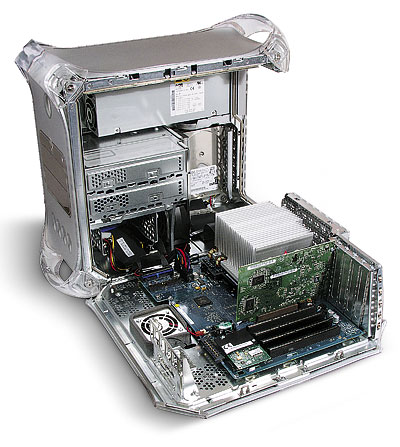
Allow me to paint a more realistic picture: many of those PCs are junky, dusty boxes, running some outdated version of windows, filled with bloatware and riddled with security issues. Inside them are a bunch of spinning platters just waiting to fail. And when they do eventually fail (due to wear, or a virus, et al), someone's Grandmother is going to be shit out of luck, with no way to get at her email, saved photos, or anything else.
A properly configured iPad, leveraging iCloud for device backups, photo backups, email credentials etc, solves all of these problems. And they'll even configure the iPad for you in the store, so grandma doesn't need to know how to do any of it. Do YOU want to be the poor sap attempting data recovery on a failed disk, then realizing that even if you do recover grandma's data, you've still got to go buy a replacement drive, find a copy of windows that grandma knows how to recognize, and install everything exactly as it was before you got there? I've been that guy before, in both a personal and professional capacity. You will eventually fail, memories will be lost, tears will be shed.
We must not gloss over the fact that the iOS ecosystem does solve some very real pain points for real people.