As a non-English speaker, I find the English spoken by non-native speakers far easier to understand and deal with than the English spoken by Americans/British.
I work with Germans, Italians, Spaniards, French, Dutch and I understand them 99% of the time. We use "normal" words (we are not fancy regarding vocabulary) and pronounce them in a non-native way (the way all Europeans that speak English understand)... But the moment our British colleagues join the conversation, then our understanding decreases to around 70%: either because of the usage of "fancy" words or because of pronunciation.
Besides, since we all make the same mistakes when speaking English, we understand each other without asking "sorry, what do you mean?"
> Besides, since we all make the same mistakes when speaking English, we understand each other without asking "sorry, what do you mean?"
That’s likely because the languages you speak all share recent ancestry (if they’re not all Romance languages, they’re at least all descended from Proto-Indo-European.)
Meanwhile, I’ve seen e.g. Mexican and Chinese ESL speakers have very bad mutual intelligibility, because they make very different mistakes.
Funny story, had this happen to me in a hostel in Germany. I had to “translate“ from English with a heavy Italian accent to/from English with a heavy Vietnamese accent between roommates. Basically I just repeated what each said into my California English accent with a few touch ups. Everyone finally understood. :D
Spot on. I've witnessed Chinese and Indians (all with decent English skills) be unable to conduct business meetings due to difficult understanding each other's accents. On that project, I frequently 'translated' from English to English, with little/no change in word choice or sentence structure.
> Meanwhile, I’ve seen e.g. Mexican and Chinese ESL speakers have very bad mutual intelligibility, because they make very different mistakes.
That's true. Assume a monolingual learner. You can predict the kinds of mistakes they will make based on their native language (phonetical, phonological, semantic, etc.). As a person learns more languages, they will likely get better at decoding these things. Particularly cultural based assumptions used in languages.
Immigrants in Japan have the same experience too. We often make the same mistakes and thus have a shared understanding of misunderstandings. I would expect immigrants in other places appphave similar experiences too.
A friend of mine spent a few months in Japan, and he said the strangest part was learning that speaking simple, slower English with a strong Japanese accent was often better for getting around than using his broken Japanese.
One of the fun exchanges I saw transcripts in a linguistics course was between two ESL speakers - one native Spanish, the other native Japanese. Something as simple as not knowing the word “income” and using the Spanish “ingress” which was interpreted by the Japanese speaker as “English” was like the Naked Gun of language comedy for me.
But as an ESL person myself I’ve never thought of English as a language about rules as much as memorizations. It’s the x86 of human languages, for better or worse, and trying to systemize it fully was how I messed up English most as a kid and how my parents tried to teach it to me.
American English speakers can have trouble understanding British English speakers too, fwiw. Mostly due to some dramatically different slang and pronunciation rather than use of more obscure words though.
I worked in California for a while and something that kept throwing people off was that I pronounce my "t"s in the English way rather than drop them to "d"s. So it's buTTer and not 'budder', thirTy not 'thirdy', etc. Once I started dropping them to "d"s too, things improved significantly, and I can see why a lot of British YouTubers and geeks develop this 'trans-Atlantic' affectation.
Another funny one I ran into a few times was how for a time like 8:30, we'd say "half eight" in the UK, but when I would casually say this in the US people would be like "half eight? you mean four?" It had never occurred to me this common British parlance would be unintelligible elsewhere. Of course, there are just as many things the other way around, although watching a lot of US TV will take care of that.
A little more formal would be "half past eight" which clears up the ambiguity, as does "quarter til eight". Not sure who uses that aside from occasionally in US.
I’m from California and I had an Irish colleague there who, despite otherwise being amazingly well integrated, stuck to a hard “t” for certain cases of “th.”
So for instance if I might say “These three things,” he would say “these tree things.”
He was clearly able to make the sounds but in some cases he couldn’t. I never felt comfortable asking about it because I thought it might be a class thing.
The 'th' in Irish is usually dropped to 't' if a consonant is followed or at the the tend of a word. Death become Deat, Teeth become Teet, Thrice becomes Trice, Other stays as Other because a vowel is the next sound.
I also had that problem with the "ew" sound. I'm never understood if I ask for a "Mountain Dew" - I have to translate to "Mountain Doo" even when the context of a drink is clear.
The other one is asking for a cheese sandwich - that seems to throw Americans every time.
I never thought of it this way. I'm American and I can understand fluent English speaking Europeans way better than I can understand British, unless that British person is from London. 70%? That's optimistic. I don't even think I am understanding words, only the most likely context in the flow of a conversation and the most likely way to react.
Fluent Northern European English (Belgium, Netherlands, Scandinavia, North Germany) almost blends into "normal" English to me. It is kind of shocking.
It's not "normal" English, it's specifically American English - a lot of Europeans have learned from (or at least been heavily influenced by) American movies etc., so they speak an American style.
IME as an American, London British can be quite hard to understand, especially at a high word rate (which was my experience). Yes.. it.. turns.. out.. that.. speaking.. slowly.. does.. make.. it.. easier.. to.. understand.
I suspect this is true for most non-native speakers of a language. They will find speaking with other non-native speakers because they will use less culturally encoded language, probably speak slower and are accustomed to speaking with others that have non-native pronunciation.
I'm not a native speaker of English, either, though with perfect American fluency. I find myself switching to "international English" in those contexts.
Actually, the word "international" is a good example -- in my regular American accent it would be pronounced like "innernational", whereas I would distinguish the T when conversing with non-native speakers.
TL;DR, it's not actually "innernational", but rather an alveolar flap on the t that you have a hard time distinguishing between depending on where you grew up.
Actually, according to the link you’ve provided, it seems that’s an alveolar “nasal” flap, which sounds different to American ears from the regular alveolar flap. It would sound like “itternational” pronounced by an American if an alveolar flap were to be used.
I grew up in Australia, so would have considered myself a native English speaker. We’re even a British colony!
I moved to Scotland for a year, and London for a few years later. I’d regularly here phrasing I’d never heard before and would need the speaker to clarify or would look up later. In the vast majority of those cases it was most often an old word that appears to have fallen out of fashionable usage. “Ken” being a synonym for “know” in Scotland being the one I remember most given how frequently it was used.
So it’s not just non-native speakers that struggle at times!
Scots is not technically the same as English - they diverged about 900 years ago, and differences like ken are common (compare to French connaître, or German kennen).
Scots is not the same as Scottish English either. Words like "ken" in Scottish English are borrowed from Scots, but while the vast majority in Scotland speak Scottish English, only about 30% of the population can speak Scots.
Yes, I've heard this before. I've even had to ""translate"" between an Ulsterman and an Afrikaner who both nominally spoke English as a first language but were unable to understand one another's accents a lot of the time. Regional accents and idioms increase confusion, while all International English speakers have a uniform, comprehensible, slightly bland idiom and accent.
It's just what you're used to. Visit Singapore and listen to Singlish. They all understand each other just fine because it's their dialect but if you're not used to it then it takes a while to get used to
I think this is due to where you are on the path of learning English, and maybe because people feel more comfortable asking to repeat something when you are talking amongst not natives. Also not natives speak slower.
Comes a point where you get so used to what is, admittedly, such a weird and non sensical pronunciation, that the same mistakes I used to make as an Italian native I don't understand at all from a Spanish native that doesn't pronounce as well as I'm used to. Only after I realise what the word is I understand where they are coming from.
Also the every day vocabulary is not that big and fancy, I tend to use some "fancy" words sometimes just because that's the word I would have used in Italian, and it's correct in English, but not widely known. Then again I'm now reading Stephen king and having to use the dictionary every few pages, just because something is mostly obvious by the context but I want to double check.
Plus, native speakers tend to use a lot more idiom. Which generally makes things much harder to understand (but arguably more fun) -- this is even quite noticeable when encountering English from different regions.
The distinctions in meaning, understanding, and nuance between vocabulary, grammar, and idiomatic or cultural grasp of a language are profound.
By analogy: elements, valance bonds, and van der Waals forces in chemistry. All matter, some are stronger, subtle variances can have profound differences.
I’ve experienced the same. I’d say people tend to speak way faster in their native tongue.
Regardless, it is very frustrating to know the meaning and the spelling of an English word but not knowing how to pronounce it. Or the inverse, hearing a word I know but not recognising it until someone spells it for me or I see it written.
I learnt most of my English in written form so this happened to me a lot when I moved to London for a couple of years. I remember pronouncing “recipe” like “ree-syp” and my boss had no clue what I meant.
With Spanish and other languages you can learn the pronunciation rules and you’ll be able to read a text correctly even if you don’t know the words. With English you have basically to learn every word, as double o doesn’t sound the same in “door” as in “soon”. I remember being dumbfounded by the pronunciation of words like “tomb” or “womb” or “colonel”.
The most outrageous for me are still the heteronyms like lead the verb and lead the metal. To add insult to injury the past form of the verb is pronounced the same way as the metal even if they are written differently..
Your colleagues might be amused by Europanto[1], a creole created for amusement by professional translators.
My modest proposal is this: it used to annoy the brits that european english differs[2] to their dialect. On the other side, we should incite the possibility to embrace[3] our dialect for international use. Finally, this would paradoxically be a gift to EN-GB speakers, because EN-US speakers might then experience being separated by a common language.
My house has folks from France, Burundi, US and India. The non-US people find it a lot easier to understand each other's accents than Americans do understanding us.
Ironically though, I have a bad habit of using big words in spoken English, because I learnt it as written bookish English first.
FWIW I’m a native English speaker and the same happened to me when I learned Spanish. I suspect that with any language, native speakers have a much wider vocabulary and use more colloquialisms, not to mention speaking much faster and more cultural references etc.
Same for me. I speak "North American" Spanish fluently. I struggle with Cuban, Argentine, and Chilean Spanish. My sweet spot is non-native speakers, as the vocab is usually simplified.
> As a non-English speaker, I find the English spoken by non-native speakers far easier to understand and deal with than the English spoken by Americans/British.
As you allude to, that's typical for any speakers of any foreign language, in my experience. I speak several languages in addition to English, and native speakers of those languages are often the hardest to understand, because they're the most fluent in the language.
This is really obvious and not that remarkable. Replace English with your own mother tongue, German, I guess? And then ask the same exact question to non-native German speakers. The reason why you can't see that is because you're unaware of proficienty of your own mother tongue. Everyone is.
This is fantastic, as it matches exactly my experience in several years of working for US companies, and dealing with both US/UK native and a lot of foreigners like me (I'm Italian).
The hard part is that most of said US/UK native speakers seem to fail to comprehend this simple wisdom of yours.
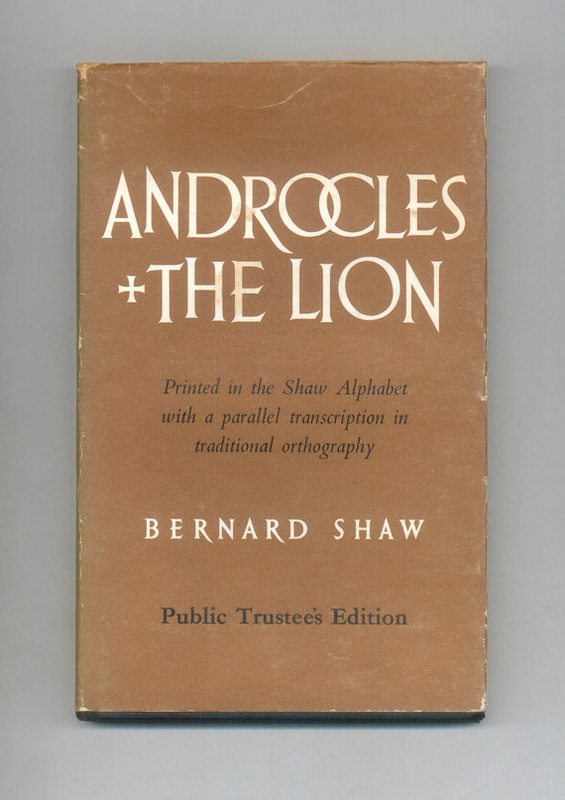
If this irritates anyone, you might be interested in the work of George Bernard Shaw and Kingsley Read to reform English spelling. They proposed a consistent, phonetic, spelling and writing system called Shavian and published a now-rare book using that system. The second iteration made some slight usability and efficiency improvements and called the new work Quikscript.
Of course, in an alternate universe, this superior writing system was adopted along with the full SI unit system.
There has been a very successful, though limited, reform of English spelling, by Noah Webster. It's him you can thank (or blame) for analyze, color, center, defense, and connection replacing their original spellings (analyse, colour, centre, defence, and connexion).
But we didn't learn. We kept at most of it - phoenix, cough, dough etc. He even suggested sensible transformations such as ache → ake, soup → soop, tongue → tung, machine → masheen etc. All of these make phonetical sense unlike the existing spellings (for whatever reason they exist).
I had read about Cut Spelling which, to me, sounds more like SMS lingo - something like "how du u du" - and even though I find SMS lingo really irritating (I have to see that a lot on dating apps) it actually does make sense phonetically :)
First published in Astounding Science Fiction, 1946 (Astounding later become Analog). Often recirculated with accumulated changes. As far as I know, this is the original.
Benjamin Franklin too was an advocate of reforming spelling, and phonetic spelling.
Seems to be a recurring theme for English because it's such a difficult language owing largely to its awful spelling.
But it has never, and probably will never, take off, unless, perhaps, we first have a Jacobin Revolution in the U.S. and UK, complete with a Terror of our own. God forbid. (Though even that didn't fix the French language.)
It seems like proposing both a spelling reform and a script reform at the same time is doomed to failure. It's a fun experiment but if one is serious about proposing a pragmatic reform of English spelling, stick to the Latin alphabet and maybe add a few diacritics if you really need to. Can you imagine the insane amount of churn changing to a completely different script would create?
I don't know, it would make for a clean break with no confusion and middle ground. That might actually be easier to adopt than minor spelling shifts that could easily be seen as mistakes.
Germany had a spelling reform in the 90s that changed words to be spelled more phonetically rather than how they would have been spelled in their origin languages. For example "Delphin" (dolphin) became "Delfin" because German isn't Greek.
And even Greek uses a single letter for the "f" sound. The fact that "φ" is transliterated as "ph" is a historical accident: in ancient Greek the letter was pronounced like p with an extra puff of air, like in "Phuket".
In Spanish on my teen years, which saw the rise of SMS and MSN Messenger, it was very common to see a simplified version of Spanish, where "hola" became "ola" since the h is mute, and similar changes. It was a brief period though, since now everyone (my age) uses proper grammar, and younger generations use English mixed in instead.
It was also very common to write long messages in "translit" (substituting Latin letters for equivalent Cyrillic ones, e.g. ф -> f) back then here in Russia since you could fit in 160 characters using GSM 03.38 (7-bit encoding) instead of 70 characters with UCS-2 (UTF-16 encoded) and SMS messages were quite expensive.
Transliterated messages are still quite popular in Georgia (გამარჯობა, როგორ ხარ? > gamarjoba, rogor xar?), even in places where character limits don't apply. Which makes it practically impossible to use any translation services, as there are many ways to substitute a single letter or a sound, making reversing extremely hard. And if you add to the mix the poor quality of those translation services for Georgian language in general, you get texts that mostly make sense to just native speakers.
My younger Mexican in-laws who still occasionally use text-ese would say "q" instead of "k" (the latter normally being pronounced ka, while q is pronounced que).
Doublings are much more intuitive than powers of 10.
If most logarithms were taken base 2 it would make a big improvement in their comprehensibility to laypeople.
For closest link to western music, use binary logarithms represented using duodecimals. It makes a very nice simple system for approximate arithmetic, since 1 digit after the duodecimal point is enough to represent 3 and 5 reasonably closely. (The same two approximations that make our music sound harmonic also make approximate arithmetic easy and convenient). Of course, that would work even better if we switched to using base twelve for general arithmetic and metrology, overall a big improvement over the often inconvenient decimal system.
Interesting. The pin-pen merger and caught-cot merger have very little (if any) overlap.
It looks like Florida and Texas might soon merge caught and cot, while retaining the pin-pen merger, in which case they'd only have 13 vowels, but I suspect they would probably end up splitting pin and pen eventually as their regional accent gets watered down to be closer to the General American accent.
Seemingly one of the lesser considered adjectives. I have used it in a number of places with no rejections, so far. It was originally the name of a nethack character that attempted to ascend "every" role. And failed, of course...
That is one of the reasons why I think Esperanto has too much more to offer to the World as an international language than English.
I'm not an activist. Besides, I enjoy so many features of English.
But the resources one must invest to learn it as a second language make it unreachable to a huge amount of people around the globe, providing breeding ground to the formation of "linguistic elites" and deepening social and economic inequalities.
Having contact with poor people in my country and others and being a non-native speaker myself make me very aware of that.
I'm a native English speaker who is currently learning German. THANK YOU SO MUCH FOR MAKING YOUR SPELLING Work GERMANY! Sorry about our mess of BS you have to learn to use English.
The European Commission has just announced an agreement whereby English will be the official language of the European Union rather than German, which was the other possibility.
As part of the negotiations, the British Government conceded that English spelling had some room for improvement and has accepted a 5- year phase-in plan that would become known as "Euro-English".
In the first year, "s" will replace the soft "c". Sertainly, this will make the sivil servants jump with joy. The hard "c" will be dropped in favour of "k". This should klear up konfusion, and keyboards kan have one less letter.
There will be growing publik enthusiasm in the sekond year when the troublesome "ph" will be replaced with "f". This will make words like fotograf 20% shorter.
In the 3rd year, publik akseptanse of the new spelling kan be expekted to reach the stage where more komplikated changes are possible.
Governments will enkourage the removal of double letters which have always ben a deterent to akurate speling.
Also, al wil agre that the horibl mes of the silent "e" in the languag is disgrasful and it should go away.
By the 4th yer people wil be reseptiv to steps such as replasing "th" with "z" and "w" with "v".
During ze fifz yer, ze unesesary "o" kan be dropd from vords kontaining "ou" and after ziz fifz yer, ve vil hav a reil sensi bl riten styl.
Zer vil be no mor trubl or difikultis and evrivun vil find it ezi tu understand ech oza. Ze drem of a united urop vil finali kum tru.
That attribution to Twain is bogus. I believe it started as a letter to the editor in some mid-20th century magazine. Let me see if I can dig up the citation.
(Edit 2: the Economist came later! see downthread)
Edit: the joke originated as a letter to the Economist in 1971: https://web.archive.org/web/20200807181810/https://lettersof.... The classic internet version (referencing the European Commission) was a later rewrite—no idea by whom. It's interesting that the original was a UK in-joke ("Haweve, sins xe Wely, xe Airiy, and xe Skots du not spik Ingliy") but the rewrite became more outward-facing, a sort of Euroskeptic joke when light humor about that was still possible (I got it in an email in the 90s), as well as quite a bit funnier.
First published in Astounding Science Fiction, 1946 (Astounding later become Analog). Often recirculated with accumulated changes. As far as I know, this is the original.
You're right! You can tell for sure that this is an antecedent because the last line is almost the same: "his drims fainali keim tru" vs. "Ze drem [...] vil finali kum tru".
Somewhere out there is a web page tracing this joke. When I googled this yesterday, there was just a haystack of drecky results repeating the joke. But once you have two sources, you can search for them together, and that tends to bring up better results. I just did that, and probably the best one I found was this alt.usage.english thread from 1999:
https://groups.google.com/forum/#!topic/alt.usage.english/iw...
Note the marvelous reply: "Thanks for your effort to clear up this ongoing mis-attribution. I remember well "Meihem in ce Klasrum" when John W Campbell Jr published it.
Btw, the author is apparently "Dolton Edwards", not Dalton, and is said to be a pseudonym (which explains the satirical "Dolt") of someone named W.K. Lessing (edit: or K.W.? http://www.isfdb.org/cgi-bin/title.cgi?57114), about whom I didn't find anything when I looked.
I thought we had discussed this on HN before, too, but all I could find was https://news.ycombinator.com/item?id=12108263, which you posted 4 years ago. Perhaps the next time this comes up, several years from now, one of us will at least find the current thread.
I rarely doubt my German spelling (a language I haven't used much in over 10 years) but with English it happens several times a day.
The fact that "spelling bees" are even a thing is proof that something is wrong, at least if you are using an alphabet.
German is a lot better than my mother tongue (what kind of spelling is that? Tounge? Tung??) Swedish, which, while awful, is still better than English.
I would guess that the best in class would be Italian. I took an Italian spelling test (listen and write) and I got 95% correct without knowing any Italian.
Edit: and even though I read and write englush several hour a day, my spelling is still awful. I wrote a small elisp script to find out my most corrected words in flyspell. The list just grew in every direction until I gave up.
Perfectly agree with Italian. Once you know the few rules you can pronounce every word that you read, unlike English.
Spanish would have also been a good example if not for the differences between all the nations that use Spanish, with the most egregious probably being Argentinian Spanish that pronounce ll sh or something like that..
As a german, what I prefer about english spelling:
* You do not capitalize Nouns in your Sentences which is means I don't have to analyse the lexical Structure of a Sentence while writting stuff.
Stuff that is hard in English but rarely talked about because of the prominence of the phonetics-vs-traditional spelling:
* hyphenation (fairly complex, basically one needs to look it up or rely on tooling in english, rarely taught).
* punctuation, especially placement of commas
* capitalization in headings (a bit confusing, conflicting recommendations)
Oh and as for german there are a lot of strange things buried in what superficially looks like a fairly ok system.
* Typically you can infer from the roots of a word whether to spell with `e' or `ä' (i.e. schälen (to peel) is spelled with ä because it stems from Schale [peel]). But for some words that doesn't apply, for example Mehl (flour) is related to `mahlen' (to grind), but not spelled "Mähl".
* Auslautverhärtung is not spelled out but implied. I.e. Hund (dog) is kind of pronounced as if it would end with a -t ("Hunt"), whereas "Hunde" (dogs) has a soft d sound. Turkish makes such things explicit (compare `kitap` and `kitabi`). If we went down the turkish route, we could introduce a soft-s and hard-s distinction in the alphabet (maybe z vs s) and get rid of the `ß/ss` mess.
* `sch` should be replaced by Ş, w -> v (with existing spellings of v being replaced by f where necessary ("von" -> "fon"), z -> "ts", etc.
There is an obscure swiss organisation promoting a spelling reform for German(that differs from my suggestions) https://www.ortografie.ch
Its focus is a lot on vocal lengths and capitalization. Kind of interesting stuff (that will never make its way into the maintstream).
I find the noun capitalization in German nice because there's no ambiguity about whether you should capitalize. Whereas in English we capitalize "proper names" but it's not always clear what is a proper name, and I always have to look up if you're supposed to capitalize things like prepositions in movie titles.
There's a lot of ambiguity and corner cases about what's a noun in German when you drill down to it (It maybe doesn't seem a problem coming English because you don't have to decide every time you write a word whether it's a noun or not). And Germans in highschool are drilled in this apparently, so many grow to hate it a bit. For example, take 'ein Paar'\'ein paar' (a pair) - in english you say oh pair is a noun so great. But in german whether you write it big or small depends on whether you're using it as an indefinite pronoun or a noun. You can apparently use it to distinguish a pair of trousers (in Paar Hosen) from a pair of trousers (ein paar Hosen), though don't ask me which is which...
And there are some fossilised expressions where even though things are nouns they're written small (e.g. 'durch dick und dünn' (through thick and thin.) ), and there are cases of capitalising things that sure look like adjectives though...I don't know how linguistics classify the parts of speech formally...
Or another example - if say "I take part" ("ich nehme teil") in something, is 'part' a noun? The german sentence is a word-for-word translation of the english, and 'Teil' is a noun in german (meaning 'part'), but you don't capitalise it because teil is part of the verb 'teilnehmen' and not independently a noun in this context.
> As a german, what I prefer about english spelling... You do not capitalize Nouns in your Sentences
In the late 19th and early 20th centuries when German was still a lingua franca of various scientific fields (linguistics, archaeology), it actually was the practice of some writers outside Germany to not capitalize nouns. One sees this in many German-language scholarly publications from Sweden and Finland, for example.
Also I think there is a ruleset that is just not really applied by most. That is problematic because it allows for people without good intentions to be strict marking up some students while being lenient with others (a double standard situation).
Yes, and now it is considered healthy for the Swiss to drink masses of beer ("in Maßen" vs. "in Massen") and if you have to pay a fine, you apparently have to pay in buses ("Buße" vs. "Busse"). I could never understand why Swiss Standard German went for a ß -> ss substitution, and not for a ß -> sz substitution, which would've avoided this particular mess and would've also been historically more correct. Now you have to teach children in school that a vocal before a double s is short, but only of the double s was not originally a ß which was originally an sz, so not a double consonant at all. Simple!
yeah, but they didn't get rid of the mess, they kind of made it harder for German-learners to pronounce a written word (in comparison to the post-reform federal german spelling).
i.e. "Fuß" vs swiss "Fuss"
Swiss spelling makes it appear as if "Fuss" (with a long u) could be pronounced like "Nuss" (with a short u), whereas standard German "Fuß" is clear on that.
Prior to the German spelling reform, Nuss was also written "Nuß" and back then the swiss way of spelling had the appeal of avoiding an extra character that is specific to the german language (and wasn't found on french typewriters for example).
What I meant was a spelling like "Fus, Füse, Nuss, Nüsse" but "Gras, Gräzer" (instead of Gras Gräser).
z would be the soft s-sound represented by s in traditional german spelling.
s would be the hard s sound represented by ß or s in traditional german spelling.
Not only that, ß is useful because it disambiguates some words that only differ in usage of ss vs. ß (and in their pronunciation), e.g. Masse (mass) != Maße (measures).
Indeed. A good example in English is Mary/marry/merry. Many speakers pronounce all three words identically, but many speakers distinguish them. Should the spelling be unified? Probably not, because they are three separate words that might sometimes sound the same in speech. Simplifying spelling removes any way of distinguishing them.
English is filled with homophones, and while you can almost always figure out which variant is meant through context, in writing the opportunity is reduced. (You can't ask a book a follow-up question.)
I do think this is a great point but I do think the idea is fun to consider anyways. My first thought would be some (silent) {super,sub}script symbol/letter to indicate distinction between them. Obviously this feels like we'd be right back where we started but if every non-homophone was neatly standardised (and, as my sibling comment pointed out, every homonym made unambiguous) that seems promising! This is, of course, operating under the assumption that homophones are primarily edge cases (or that the other words in the homophone group are not often used in the same context, or at all).
Minimal research turned up two lists. One only lists groups of n > 2 (88 triples; 24 quadruples; 2 quintuples; 1 sextet; and 1 septet) [0]. The other is for British English (441 groups) [1].
Your example, by the way, is a particularly interesting case! From the Wikipedia page [2]: 17% of Americans (primarily in the Northeast and most clearly in Philadelphia, New York City, and Rhode Island) pronounce each distinctly, with a further 26% merging only 2/3 pronunciations. Accordingly, their distinct IPA pronunciations are /ˈme(ə)ɹi/, /ˈmæɹi/, /ˈmɛɹi/, respective to your ordering (the last, merry, is the one we've converged on). More frustrating still, the list of "multinyms" in [0] excludes this example so it's especially difficult to know how many there may be in practice.
Another effect is that the sound variety in the language was reduced. The new alphabet has "n" for both "ŋ" and "n" sounds. Now, in year 2020, no one spells out ŋ. See "taŋrı", "seniŋ", etc.
That's not true I am afraid. Turkish borrows majority of it's vocabulary from Arabic, Persian, French and English. Wovels in those loan words never match the sounds. For example the word "hala" can either mean "aunt" or "still" depending on how long you sound the first a.
For some reasons that I don’t understand I think that spoken Turkish sometimes reminds me of Russian.. Not that I’m fluent in any of them but I usually can recognise Russian quite well and understand some words.
This reminds me of a stack exchange puzzle that uses this same pattern. [0]
While this isn't the "correct" answer I think everyone agrees that it is the "best" answer (or at least the funniest). As a language lover, this is just a beautiful and hilarious.
I think this example is far-fetched and, due to being so far-fetched, is useless. I mean there are no actual english words where "gh" at the beginning of a word would be pronounced as "f", right? And "gh" at the end of a word hints heavily that you should pronounce it as "f", there are no irregularities here.
Riiiiight, so obviously you personally have no problems with the spelling rules of English (which do, in general, exist, contrary to popular belief). But, we need to ask ourselves: if it is at all conceivable that "ghoti" could be sounded out as "fish", just what the fuck is going on here?
Sure, you don't have a problem dealing with this nonsense - I don't have one neither! But I struggle to believe that you've failed to notice that a lot of people do.
Do you object to the fact that the spelling "th" invariably means /þ/ or /ð/, and not /th/? Or mapping "sh" to /ʃ/ and not /sh/? I highly doubt you do.
Here's the thing: spelling rules are context-sensitive, and if you actually understand the underlying sound rules, spelling in English is often not that bad. For example, there is a fricatization process for /t/ and /s/ sounds convert to a /ʃ/ or a /ʒ/--this is how "-tion" is pronounced /ʃən/. Or the tendency of multiple consonants in a cluster to all be voiced or unvoiced (hence why dogs is pronounced /dogz/ and not /dogs/). Even consider the velarization of "n" in the "-ing" suffix, which is pronunced /ŋg/ and not /ng/ (try actually pronouncing /ng/! It's not easy).
I'm not aware of any spelling reforms that would propose to fix the last two examples I give, but the fricatization changes is often one of most common ones people suggest changing. That's a sign that people are willing to tolerate some degree of phonetic inaccuracies.
The real issue with English is our tendency to adopt foreign words with foreign pronunciations, foreign spellings, and sometimes even foreign morphology. And sometimes we even botch that--witness words like "gyro" or "ginkgo". This means that trying to pronounce unusual words often means first guessing what language the words (or even morphemes!) comes from, and then internalizing some bastardized form of that foreign language's phonology.
I don't object to anything, at least not when English spelling is involved. English spelling serves me well, as I don't have a problem with it, and there are people that look down on those that do. I'll let you do the 2x2.
Given how useful writing is, I just feel we should be asking ourselves whether any part of the process could be simplified.
> if it is at all conceivable that "ghoti" could be sounded out as "fish", just what the fuck is going on here?
"It isn't true, but if it could be, wouldn't that be a scandal?"
There's a name for thoughts like that, I just know it.
> Could it not be improved?
Yes, it can be improved. It can be improved multiple ways along multiple axes, whether you wish to emphasize etymology (to help foreign learners) or phonemic fidelity or phonetic fidelity or don't know the difference between phonemic and phonetic and just want words to be spelled like you say them, and those buffoons from across the ocean can suck eggs if the spelling gets all fouled up for them and their silly accents.
It's impossible to satisfy everyone. Once you propose any kind of improvement, therefore, everyone comes out of the woodwork to improve the improvement, leading to something which satisfies no one, because no one feels perfectly well-served. "Utopia Or Bust!" sounds good until you realize other people apparently want to lead you to perdition.
(maybe I do not understand the definition of "conceivable") I think it is totally inconceivable that someone would read this word as "fish"! It would require extreme amount of mind-bending!
Maybe this is why I am so angry with this article. They could have picked less artificial example to demonstrate irregularities.
OK, so "tough" is undeniably proounced "tuff", the "-ough" suffix here being "uff".
What should we infer from this? To one way of thinking, the "-ough" suffix is "uff"... well, mostly... and this says nothing about (say) "gh" as a prefix, which has its own rules. But to another, clearly "gh" can sometimes be pronounced "f"; and, since we have "tough" and "bough", by extension we can assume nothing from (say) "ghost".
Either way, whatever you think of "ghoti", "bough" vs "tough" is (in my view) enough to demonstrate that the current state of affairs is what you might well spell "er kluctureghoucc".
Was there such a point? The person who invented this spelling was 21 years old, if I'm reading the article correctly. Who knows, maybe the entire point of inventing it was to impress opposite sex.
...and then other people tried to use this word to advocate language reforms, of course. All I want to say is that this word doesn't make me feel there's need to change spelling rules. Other examples, like dough-through-enough are more moving.
Once upon a time, I figured out the reason why 'gh' is so inconsistent. It used to be its own sound, but that sound has vanished from the English language.
Neither my wife or me are native, our child started school last year. When we were introduced to the concept of "Tricky words" our reaction was: sorry, do you mean every single word?
Yeah, my four year old daughter is super into learning what words start with right now... I always feel so bad when I have to tell her she is wrong because of the weirdness of English.
Given the variation amongst different varieties of English, a phonetically-based reform would be tricky. E.g., should we spell 'car' as 'kar' or 'kaa'?
(It's also worth mentioning that English spelling is position-dependent: there aren't any real words where 'gh' at the beginning is pronounced as 'f'.)
Typically language reforms "solve" this problem by standardizing on whatever dialect is considered most broadly prestigious (often the dialect of the capital city).
In AmE the dialect would likely be "midwestern speech" since the political history of our "standard dialect" differs from that of many other countries. I would expect with English it might be best to consider the different major dialects separately, but at any point there's a tradeoff and someone gets the short end of the stick. The right way would probably be to bring in many different stakeholders from different speaking communities and hash out some compromises.
Incidentally, I was once chatting with a member of the English Spelling Society (they advocate spelling reform) and asked about this very topic. Shockingly it seemed like that group hadn't thought about it all.
> I would expect with English it might be best to consider the different major dialects separately, but at any point there's a tradeoff and someone gets the short end of the stick.
That seems like a bad idea to me. Standard Written English (which varies only slightly, with minor spelling differences) is fairly intelligible across speakers of different dialects and even quite a few time periods.
If English didn't already have a written standard, all of this might be worth considering. But actual reform would take massive effort for pretty minor benefits, which wouldn't endure long anyway given the ever constant presence of language change.
> Given the variation amongst different varieties of English, a phonetically-based reform would be tricky.
Spanish has managed to do that. It has as much variety in its dialects as English (e.g. some dialects have very different "c" and "s" sounds or "b" and "v" sounds while others don't), yet all in all the orthography is quite regular and phonetic.
That's regular but not phonetic. (I'm not fully convinced that Spanish has quite as much variation as English, but I'll admit I'm not expert on Spanish.) But what do you do when certain segments are not just pronounced differently, but completely absent in some varieties? (E.g. my example about /kɑ:/ vs /kɑ:r/)
Let alone "absent in some varieties", there are sounds that are absent in all varieties but still spelled (e.g. the h in hombre or the u in queso). There was an attempt to regularize that in Latin America but the countries that tried to adopt it reverted back to the old spelling[1] - I guess the same will happen if someone tries to "reform" English
Apropos not much, I’m a native English speaker who is learning Spanish quite intensively, and I can say without a doubt that there is more variation across Spanish dialects than English. Different regions have hugely different lexicons, with many many different words for the same things. Just try to predict the word for “green pea” based on region! Learning Spanish is like learning 15 languages at once. It’s hilarious fun but specialization becomes a concern very very early.
I wasn't talking about lexical variation though. (I also wonder how much experience you have with the wide range of English varieties: there's quite a bit of lexical variation.) Lexical variation is pretty irrelevant for spelling changes.
I'm glad the Wikipedia article included the link to this page (http://zompist.com/spell.html) that give a good breakdown of the actual general rules of English spelling - granted there's almost 60 of them.
Nationalism is rampant and leaking through in this thread. “English” sucks, replace with ______ native tongue is better. Someone posted a thread about cost of their neighborhood road renovation project and immediately an Australian tells the thread that America feels like a third world country from a sample size of exactly 1. I am not even American.
Everyone is getting tribal. Humanity is splitting apart with infighting even on a highly intellectual community as HN.
Folks, please try to be civil and self-introspective, especially if something you say perhaps is hypocritical or fuels your own nationalistic pscyche. Seek truth - the language nature understands, not our evolutionary tribalism and cultures.
Nothing wrong with tribalism as long as we're all seeking to understand people from other tribes instead of imposing our own tribe's[1] ways upon them[2]. A little less "melting pot" and a little more "salad"[3] might go a long way towards whirled peas.
[1] and even that "own tribe" has a fractal nature. Scratch a dialect and one finds a collection of idiolects.
[2] my understanding of swiss german dialect history is that there used to be pressure to educate the lower and middle classes to speak "standard" german, as the upper classes did. Developments in the 1930s put an end to that, so now not only do we encourage Romansh https://rm.wikipedia.org/wiki/Wikipedia:Pagina_principala (Mussolini had claimed they were just peasants who couldn't speak italian correctly) but one can tell where politicians and captains of industry grew up by how they speak. Differences are celebrated, not merely tolerated, or worse, steamrollered away. https://als.wikipedia.org/wiki/Wikipedia:Houptsyte gives the flavour of the dialects, but a more academic reference is required for all the isoglosses. (the variety of isoglosses also means that for informal use, SMS, internet, etc. orthography is a matter of regional taste)
[3] in which the constituents retain their identity but taste much better because they're all mixed together.
TIL the great schism in baptism isn't between (a) the baptists who dance, and (o) the baptists who don't have sex standing up because that might lead to dancing. :-)
I am yet to finish through the thread (I may not) but whatever I've seen are all comments on unintuitive and phonetically absurd spellings of many words in English language.
This is because in English it's not always that you speak what you write. Pronunciation is different for the same letter in different cases. In some languages (mainly Indian) like Hindi, we speak what we write and we write what we speak i.e. Our letters have a definite and unique sounds.
While this is true, the pronunciations are not consistent across languages that use Devanagari script. ज्ञ is pronounced like "gy" in Hindi, but "ny" in Marathi. ज is pronounced like "jy"(with the य sound) in Hindi-ish languages, but without य in Marathi. Some sounds are completely missing/unused is some languages, like ळ and ण.
So non-native speakers with another Devanagari language as mothertongue still get pronunciations wrong.
Also, even within Marathi, at least for the letters ज and च, how you pronounce them depends on the word. You have to know the correct pronunciation beforehand, as it can't really be guessed from the word.
जेजुरी is my favourite example.
चिंच is a close second :)
Ghoti, sure... But the whole world still wants to learn English. Most people are not deterred by the messed up spelling and other irregularities.
Also, English like any language is a living and breathing thing. New words come in, new spellings, etc... Reform would cause even more confusion than benefits
Do you feel like they're laughing in mockery to make you feel bad, or just because it sounds funny and they actually want to laugh with you and not just at you? I was in Sweden for the first time last year. Besides learning the proper pronunciation of my given name ("Ahndairsh" with a slightly hard "sh"), at one point I noticed the words "Hej hej" written on a bunch of things. I asked them what "hedge hedge" means, and they had a good laugh teasing me about it (it's pronounced "hey hey", and seems to mean about the same thing as the English). I laughed with them and it was actually a bonding experience with my new friends.
There's a small category of words, at least in British English, that act as a fairly effective shibboleth when it comes to identify non-native speakers. Usually names for places, but not only:
Lots of place names in US that reveal not just non-native speakers but also native speakers that aren’t locals. Some that come to mind: Worcester, MA; Wilkes-Barre, PA; Versailles, KY; New Berlin, PA; and many others.
How you pronounce “New Orleans” can show not only whether or not you are a local, but which part of town you are from, and how old you are. I can think of at least four or five ways.
I'm a native French speaker and I never know how I'm supposed to pronounce French words and expressions used in English (e.g. Versailles, bon appétit, déjà vu, etc.).
Concerning the spelling reform, is there any language that recently underwent a successful spelling reform? And by recent, I mean in the last 10 years.
The thing is that with the widespread usage of the internet it seems harder to successfully reform the orthography of a language. Every language is, nowadays, in one way or another decentralized and uncontrolled by language authorities.
Not 10 years, but yeah, German was completely reformed some 24 years ago. It is still pretty major as several countries (Germany, Austria, Switzerland and others with german-speaking minorities) had to coordinate and consent.
I as a child started learning the old orthography in school, was taught the "new" one later on and had to use it and even the "new new" one (there was basically a version 2.1 minor update). To this day I am confused about how to correctly spell and write words, and I always end up mixing old/new orthography. The fact that almost all major newspapers refuse to fully adhere to the new orthography and use custom deviations every here and there does not exactly help.
I learned German in high school so I knew a bit about the reform. Compared to French, learning how to read German didn't take more than an hour.
French is another one, however, the transition to the new orthography is still incomplete around the world. I think Frank lately enforced it at schools.
Other examples include the Berber language in Morocco and Algeria. Most people ignore spelling reforms and just pick the spelling they like most. This is mostly because the standardization of Berber came after the introduction of the internet and the proliferation of informal spelling standards.
I was in school during this time as well and before the reform had an entire grade point deducted from most exams because of my bad spelling. The new spelling immediately made sense to me and the issue went away. So much less learning of exceptions that made only historical sense.
But then I'm also the kind of person who thinks we should embrace the positivist calendar and agree on a single language.
> even the "new new" one (there was basically a version 2.1 minor update)
As far as I remember, the update to the update was only about allowing some old forms as valid alternates. Which I like very much. I'm mostly on board with the new style (partly based on upbringing, partly because it makes much more sense), but you'll never see me write "Portmonee".
Portuguese has frequent spelling reforms, with over 10 reforms since 1911. The most recent one started in 2009 and had a transition period that ended in 2016.
Most of exUSSR countries de facto making transition from russian language to their own. Some parts of these languages wasn't used in many fields (science, street language, popular music) for 50-70 years and only exists in the books. Push is mostly centralized by government or people who pay them. Correct me if I'm wrong, russian speaking population lost about 50 millions speakers in last 10-20 years. Most of these users made switch to languages that before was almost lost. Also some countries changed Cyrillic letters to latin.
I dont want to attack you personally, but idea that languages are uncontrolled is quite opposite. It is centralized more than many things. I think McDonald's is less centralized than this.
That's why I specified the last 10 years only. An example that I cited above is that of the Berber languages in Morocco and Algeria. There is the official spelling, the spelling used by renowned writers and publishers, and the "standard" used by people in their everyday life and online. No matter how many reforms are pushed, no one really cares.
If the reforms you mentioned were pushed in the last 10 years, maybe they were strictly enforced (plus, the limited free speech rights)?
It is correct the English spelling is really messy. Maybe, it is because they use Latin alphabets; Latin alphabets are good for writing in Latin (and, I suppose, Romantic languages), but for English perhaps isn't as good; but, it is what we have now, so it is what we are going to do. Germanic (futhorc) alphabets might be better way for writing English, maybe.
In Lapland you can often see Germans and Finns use particularly "phonetic" English. The writing system is similar, so it is easier to pronounce words as they are written, instead of trying some fancy Hollywood way.
This might be the future of spoken English as most other languages have same wholesome writing system, and thus there are no ambiguities.
"Jäniskoski Bridge" comes to mind. There are no perceived differences between "b" and "p", or "g" and "k". And the "ʒ"-sound is not possible for most humans. So the correct pronounciation in year 2235 will be "prid-key".
This is, incidentally, one of the tricky parts of trying to add a phonetic spelling to English.
Should the phonetic spelling of "mention" be "menshin" or "menchin"? Should the spelling be the same everywhere, with people pronouncing it the other way having to learn to spell it correctly, or should it be spelled differently depending on the dialect of the speaker?
The letters "n" and "t" have the same place of articulation in this context so it's not surprising that <menshun> might shift to <mentchun> in some dialects.
Dearest creature in creation,
Study English pronunciation.
I will teach you in my verse
Sounds like corpse, corps, horse, and worse.
I will keep you, Suzy, busy,
Make your head with heat grow dizzy.
Tear in eye, your dress will tear.
So shall I! Oh hear my prayer.
Just compare heart, beard, and heard,
Dies and diet, lord and word,
Sword and sward, retain and Britain.
(Mind the latter, how it's written.)
Now I surely will not plague you
With such words as plaque and ague.
But be careful how you speak:
Say break and steak, but bleak and streak;
Cloven, oven, how and low,
Script, receipt, show, poem, and toe.
Hear me say, devoid of trickery,
Daughter, laughter, and Terpsichore,
Typhoid, measles, topsails, aisles,
Exiles, similes, and reviles;
Scholar, vicar, and cigar,
Solar, mica, war and far;
One, anemone, Balmoral,
Kitchen, lichen, laundry, laurel;
Gertrude, German, wind and mind,
Scene, Melpomene, mankind.
Billet does not rhyme with ballet,
Bouquet, wallet, mallet, chalet.
Blood and flood are not like food,
Nor is mould like should and would.
Viscous, viscount, load and broad,
Toward, to forward, to reward.
And your pronunciation's OK
When you correctly say croquet,
Rounded, wounded, grieve and sieve,
Friend and fiend, alive and live.
Ivy, privy, famous; clamour
And enamour rhymes with hammer.
River, rival, tomb, bomb, comb,
Doll and roll and some and home.
Stranger does not rhyme with anger,
Neither does devour with clangour.
Souls but foul, haunt but aunt,
Font, front, wont, want, grand, and grant,
Shoes, goes, does. Now first say finger,
And then singer, ginger, linger,
Real, zeal, mauve, gauze, gouge and gauge,
Marriage, foliage, mirage, and age.
Query does not rhyme with very,
Nor does fury sound like bury.
Dost, lost, post and doth, cloth, loth.
Job, nob, bosom, transom, oath.
Though the differences seem little,
We say actual but victual.
Refer does not rhyme with deafer.
Foeffer does, and zephyr, heifer.
Mint, pint, senate and sedate;
Dull, bull, and George ate late.
Scenic, Arabic, Pacific,
Science, conscience, scientific.
Liberty, library, heave and heaven,
Rachel, ache, moustache, eleven.
We say hallowed, but allowed,
People, leopard, towed, but vowed.
Mark the differences, moreover,
Between mover, cover, clover;
Leeches, breeches, wise, precise,
Chalice, but police and lice;
Camel, constable, unstable,
Principle, disciple, label.
Petal, panel, and canal,
Wait, surprise, plait, promise, pal.
Worm and storm, chaise, chaos, chair,
Senator, spectator, mayor.
Tour, but our and succour, four.
Gas, alas, and Arkansas.
Sea, idea, Korea, area,
Psalm, Maria, but malaria.
Youth, south, southern, cleanse and clean.
Doctrine, turpentine, marine.
Compare alien with Italian,
Dandelion and battalion.
Sally with ally, yea, ye,
Eye, I, ay, aye, whey, and key.
Say aver, but ever, fever,
Neither, leisure, skein, deceiver.
Heron, granary, canary.
Crevice and device and aerie.
Face, but preface, not efface.
Phlegm, phlegmatic, ass, glass, bass.
Large, but target, gin, give, verging,
Ought, out, joust and scour, scourging.
Ear, but earn and wear and tear
Do not rhyme with here but ere.
Seven is right, but so is even,
Hyphen, roughen, nephew Stephen,
Monkey, donkey, Turk and jerk,
Ask, grasp, wasp, and cork and work.
Pronunciation -- think of Psyche!
Is a paling stout and spikey?
Won't it make you lose your wits,
Writing groats and saying grits?
It's a dark abyss or tunnel:
Strewn with stones, stowed, solace, gunwale,
Islington and Isle of Wight,
Housewife, verdict and indict.
Finally, which rhymes with enough?
Though, through, plough, or dough, or cough?
Most interesting problem of English language is that it is not direct. Good example is small talks. In many cultures direct question assume direct answer. If somebody asks you "how are you" you kinda obligated to give response with your real feelings and events happened to you last time. In USA mostly every stranger can start this conversation and expect only unsalted response. This tradition is much deeper than you think. On some lever you will never understand price for thing you buy, or will never get invite to the party or have no chance to get investment to your startup. And these games everywhere in English culture.
I think this depends on the intimacy of the two people having the conversation. "How are you?" does always yield a (grammatically) direct answer: "great!" "good" "fine, thank you!" "ok...", but which of these someone chooses depends on how much time the other person wants to spend talking about it. You are right that it is uncommon to ask "how are you" because the questioner wants a detailed assessment of your mental health. It is just a set greeting. "I greet you!" would work just as well in many cases.
Not going into any depth here is a proxy for the relationship not being very deep. When I check out with my groceries, "how are you" is always exchanged. I am sure that neither of us really care about the details, so the details aren't discussed. Similarly, the kind of person that you have this superficial relationship with isn't going to give you a special price, invite you to their party, or invest in your startup. That is a deeper relationship that has to be cultivated somehow. That is not unique to English, that's just how people work.
A related issue is how people try to avoid random conversations with strangers. The people you see on the sidewalk walking at a brisk pace, looking at their phone, never making eye contact, wearing noise cancelling headphones are sending a clear message that they do not want to have a random conversation with you.
I don't know if this is unique to English. But I'd say it's culturally acceptable in America, Canada, the UK, etc. to use the passive voice and qualify all statements so that you can mean something entirely different or have a way of weaseling out of any commitments implied by what you say.
If you speak in the active voice and use simple, direct statements, people assume that you're in the military, giving orders, or perhaps a charlatan if you're trying to sell something.
In English school I was taught that when someone asks "How do you do?" the appropriate response is to also ask "How do you do?". Neither speaker gives or expects an answer to the question.




I work with Germans, Italians, Spaniards, French, Dutch and I understand them 99% of the time. We use "normal" words (we are not fancy regarding vocabulary) and pronounce them in a non-native way (the way all Europeans that speak English understand)... But the moment our British colleagues join the conversation, then our understanding decreases to around 70%: either because of the usage of "fancy" words or because of pronunciation.
Besides, since we all make the same mistakes when speaking English, we understand each other without asking "sorry, what do you mean?"